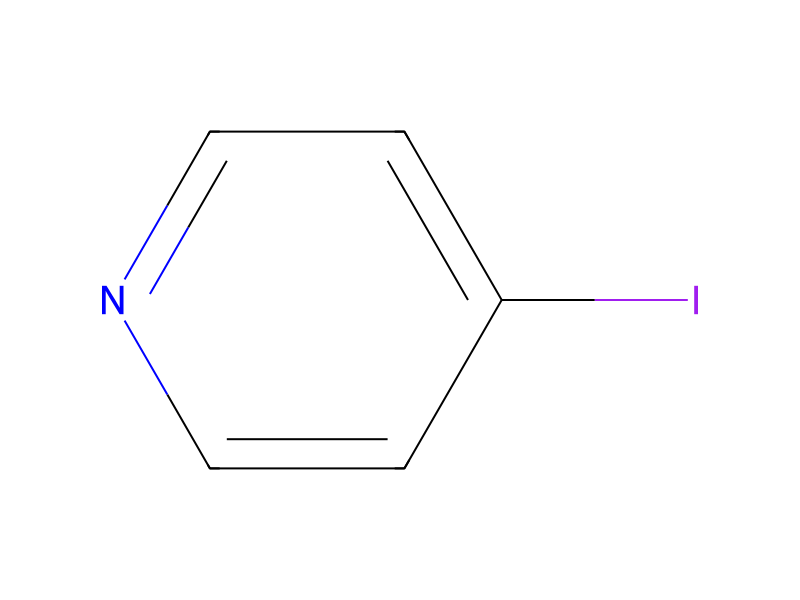
5,7,8,9-Tetrahydro-1H-spiro[cyclohepta[f]indazole-6,2′-[1,3]dioxolane] (28.283 g, 116 mmol), potassium phosphate (49.2 g, 232 mmol), copper(I) iodide (2.205 g, 11.58 mmol) and (1R,2R)-cyclohexane-1,2-diamine (2.64 g, 23.16 mmol) were added to a round bottomed flask, followed by the addition of 1,4-dioxane (300 mL). 4-Iodopyridine (35.6 g, 174 mmol) was added and the mixture was heated to about 105° C. for about 8 h. The reaction was cooled to rt and filtered. The filter cake was rinsed with excess EtOAc. The filtrate was washed with sat. a.q NH4Cl (100 mL) followed by brine (100 mL), dried over MgSO4, filtered and concentrated in vacuo to about ¼ the original volume. The resulting solids were collected by filtration to provide a first crop of product. The mother liquor was fully concentrated and then taken into DCM and sonicated to provide additional solids, which were collected by filtration to provide an additional crop of product. The filtrate was then purified on silica gel (120 g) eluting with a gradient of 10-100% EtOAc/DCM. The product containing fractions were concentrated in vacuo then combined with the previous collections to provide 1-(pyridin-4-yl)-5,7,8,9-tetrahydro-1H-spiro[cyclohepta[f]indazole-6,2′-[1,3]dioxolane] (82, R1=4-Pyridyl), (31.8 g, 85%); LC/MS, method 3, Rt=1.98 min, MS m/z 322 (M+H)+, 1H NMR (400 MHz, DMSO) δ 8.72-8.66 (m, 2H), 8.38-8.36 (m, 1H), 7.94-7.86 (m, 3H), 7.64 (s, 1H), 4.11-3.86 (m, 2H), 3.87-3.80 (m, 2H), 3.15 (s, 2H), 3.02-2.96 (m, 2H), 1.95-1.83 (m, 2H), 1.76-1.60 (m, 2H).