Reaction equation
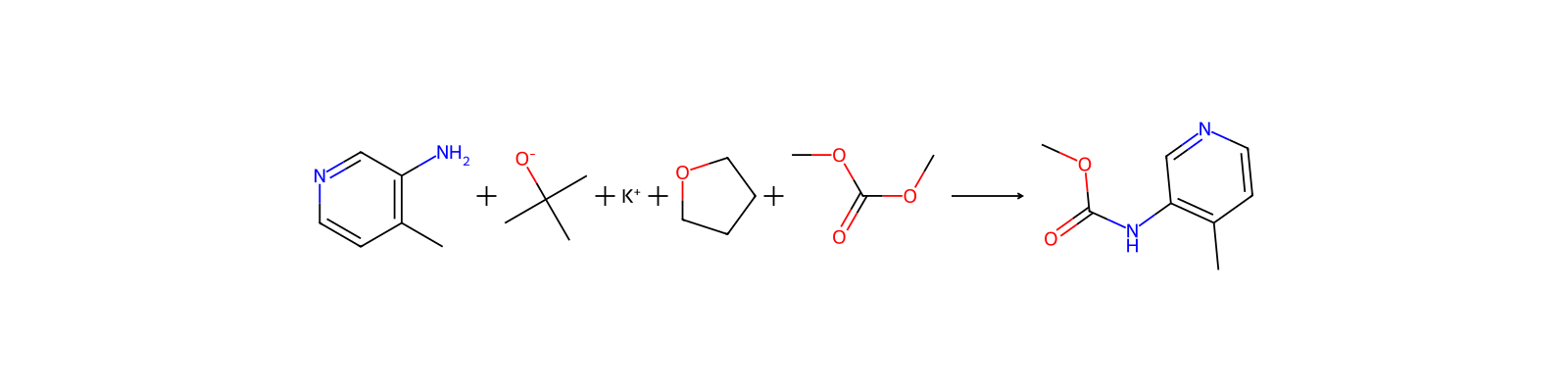
[CH3:1][C:2]1[CH:7]=[CH:6][N:5]=[CH:4][C:3]=1[NH2:8].CC(C)([O-])C.[K+].C1COCC1.[C:20](=O)([O:23]C)[O:21][CH3:22]>>[CH3:22][O:21][C:20](=[O:23])[NH:8][C:3]1[CH:4]=[N:5][CH:6]=[CH:7][C:2]=1[CH3:1]Participants




Procedure
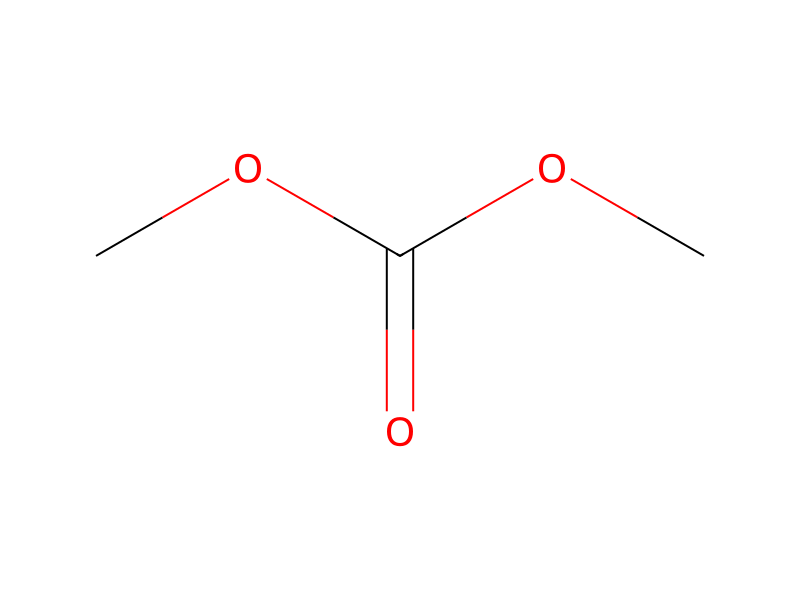
The synthesis was carried out by charging 2 grams (1 equiv., 18.5 mmol) 4-Methyl-pyridin-3-ylamine to a solution of 6.55 grams potassium t-butoxide (3 equiv., 55.5 mmol) in 10 ml THF (6.66 euiv., 123 mmol) at 0° C. Upon anion formation, 2.34 ml dimethyl carbonate (1.5 equiv., 27.7 mmol) were charged to the reaction at a rate so that the temperature stayed below 0° C. The reaction was complete within 30 minutes and the red slurry was quenched with 50 ml water (25 volumes) and extracted in 50 ml ethyl acetate (25 volumes). The aqueous layer was extracted with 50 ml ethyl acetate (25 volumes) and then the orange organic layers were concentrated to an orange solid. NMR data showed that t-butanol existed in the product so the solids were slurried in 10 ml toluene (5 volumes) and then concentrated to dryness. This operation was performed three times in order to give very clean light orange solids. (89% yield). 1H NMR: δ8.90 (1 H, brs), 8.28 (1 H, d, J=4.8), 7.16-7.14 (1 H, m), 6.54 (1 H, brs), 3.80 (3 H, s), 2.29 (3 H, s).
Workup
- customat 0° C
- customstayed below 0° C
- customthe red slurry was quenched with 50 ml water (25 volumes)
- extractionextracted in 50 ml ethyl acetate (25 volumes)
- extractionThe aqueous layer was extracted with 50 ml ethyl acetate (25 volumes)
- concentrationthe orange organic layers were concentrated to an orange solid
- concentrationconcentrated to dryness
- customto give very clean light orange solids
Sources & evidence
- ORD record
- ord-e06d4b89f2bc4de2b374369e3673ac29
- Source dataset
- uspto-grants-2006_08
- Patent number
- US07084277B2
Linked notes
Loading…