HomeMCPWorkbenchSkills
HomeWorkbenchNotificationsMe
llms.txt · MCP GuidePrivacy Policy · Terms of Service · Supportv1.8.3
  1. Home
  2. /Reaction

Benzyl mercaptan → 4-Benzylthio-2-picoline-N-oxide

HRID 725812
Print

Reaction equation

HRID 725812 reaction equation
[CH2:1]([SH:8])[C:2]1[CH:7]=[CH:6][CH:5]=[CH:4][CH:3]=1.[N:9]1[O:10]C=[C:12]2[C:17]=1[CH:16]=[CH:15][CH:14]=[CH:13]2.[N+](C1C=C(C)[N+]([O-])=CC=1)([O-])=O.[K+].[Br-]>>[CH2:1]([S:8][C:15]1[CH:14]=[C:13]([CH3:12])[N+:9]([O-:10])=[CH:17][CH:16]=1)[C:2]1[CH:7]=[CH:6][CH:5]=[CH:4][CH:3]=1
ParticipantsConditionsProcedureWorkupSources & evidenceReaction notes

Participants

5

Reactant 4

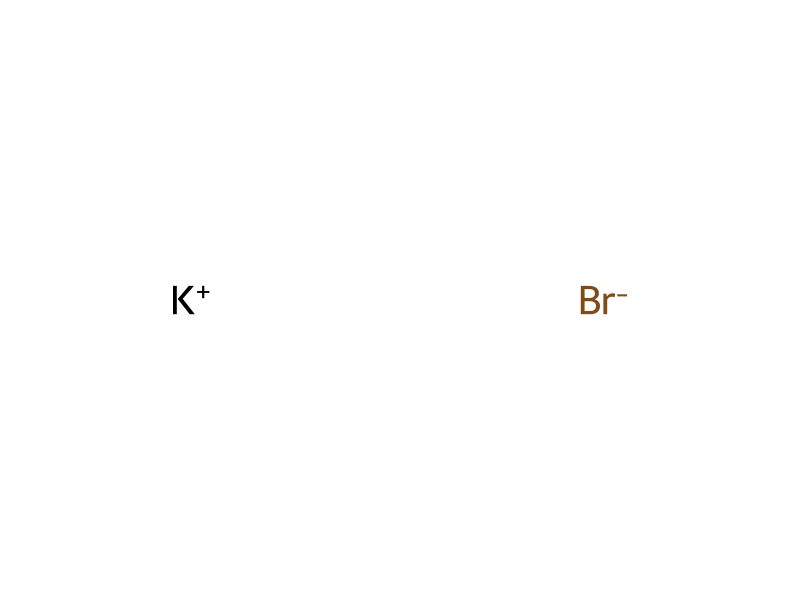
HCID 7509Benzyl mercaptanHCID 674982,1-BenzisoxazoleHCID 95291Pyridine, 2-methyl-4-nitro-, 1-oxideHCID 253877Potassium Bromide

Product 1

HCID 104439004-Benzylthio-2-picoline-N-oxideYield 30%

Conditions

Temperature
0 °C

Procedure

Mineral oil was removed from potassium hydride (0.11M; 35 wt. % dispersion in mineral oil) by several washings with petroleum ether (5×50 ml). The remaining petroleum ether was removed under vacuum. To this dry solid, 350 ml of anhydrous THF was added cautiously. The well stirred suspension was cooled to 0° C. To this mixture, 14.1 ml (0.12 mol) of benzylmercaptan was added dropwise over a period of 30 minutes. The resultant milky white mixture was warmed to room temperature and allowed to stir for an additional 30 minutes. The mixture was then cooled to -30° C., and 15 41 g (0.1 mol) of 4-nitro 2-picoline-N-oxide was added portionwise. The mixture became dark orange-brown in color. Once warmed to room temperature, the mixture was refluxed for one hour. At this time, the reaction was cooled to 0° C. and quenched with 50 ml of water. The pH of the mixture was adjusted to approximately 6 with 2M HCl, and extracted with dichloromethane (3×300 ml). The combined organic layers were dried (anhydrous Na2SO4), and the solvent was removed under reduced pressure. The crude residue was chromatographed on flash silica gel with MeOH/CH2Cl2 (Gradient: 3:97, 4:96, 5:95). The pure product was isolated (6.94 g; 30% yield) as a tan solid: M.P. 98°-99° C.; IR (KBr) 3063, 3028, 1612, 1466, 1236, 831, 715, 675 cm-1 ; 1H NMR (CDCl3) δ 2.45 (s, 3H), 4.16 (s, 2H), 6.97 (dd, 1H, J=6.8, 2.7 Hz), 7.07 (d, 1H, J=2.7 Hz), 7.32 (m, 5H), 8.09 (d, 1H, J=6.8 Hz). Anal. Calcd. for C13H13NOS: C, 67.50; H, 5.66; N, 6.05; S, 13.86. Found: C, 67.51; H, 5.69; N, 6.08; S, 13.77.

Workup

  1. customMineral oil was removed from potassium hydride (0.11M; 35 wt. % dispersion in mineral oil) by several washings with petroleum ether (5×50 ml)
  2. customThe remaining petroleum ether was removed under vacuum
  3. additionTo this dry solid, 350 ml of anhydrous THF was added cautiously
  4. temperatureThe resultant milky white mixture was warmed to room temperature
  5. stirringto stir for an additional 30 minutes
  6. temperatureThe mixture was then cooled to -30° C.
  7. temperatureOnce warmed to room temperature
  8. temperaturethe mixture was refluxed for one hour
  9. temperatureAt this time, the reaction was cooled to 0° C.
  10. customquenched with 50 ml of water
  11. extractionextracted with dichloromethane (3×300 ml)
  12. dry with materialThe combined organic layers were dried (anhydrous Na2SO4)
  13. customthe solvent was removed under reduced pressure
  14. customThe crude residue was chromatographed on flash silica gel with MeOH/CH2Cl2 (Gradient: 3:97, 4:96, 5:95)
  15. customThe pure product was isolated (6.94 g; 30% yield) as a tan solid

Sources & evidence

ORD record
ord-78d348ae4447404c992fefb6c62cad96
Source dataset
uspto-grants-1998_01
DOI
10.6084/m9.figshare.5104873.v1
Patent number
US05707992

Reaction notes

On this pageParticipantsConditionsProcedureWorkupSources & evidenceReaction notes