HomeMCPSkillsWorkbenchOpenChem
HomeWorkbenchNotificationsMe
llms.txt · skill.md · MCP GuidePrivacy Policy · Terms of Service · Supportv1.8.5
  1. Home
  2. /Reaction

Methylhydrazine → PF-04981517

HRID 72702
Print

Reaction equation

ClC1C(C(C2[CH:11]=[N:12][N:13](C)C=2C2C=CC(C)=CC=2)=O)=C(Cl)N=CN=1.C(N(CC)C(C)C)(C)C.N1CC[C@H](N2CCCCC2)C1.Cl[C:45]1[C:50]([C:51]([C:53]2[CH:54]=[N:55][N:56]([CH3:65])[C:57]=2[C:58]2[CH:63]=[CH:62][C:61]([CH3:64])=[CH:60][CH:59]=2)=O)=[C:49]([N:66]2[CH2:70][CH2:69][C@H:68]([N:71]3[CH2:76][CH2:75][CH2:74][CH2:73][CH2:72]3)[CH2:67]2)[N:48]=[CH:47][N:46]=1.CNN>C(#N)C>[CH3:11][N:12]1[C:45]2=[N:46][CH:47]=[N:48][C:49]([N:66]3[CH2:70][CH2:69][C@H:68]([N:71]4[CH2:72][CH2:73][CH2:74][CH2:75][CH2:76]4)[CH2:67]3)=[C:50]2[C:51]([C:53]2[CH:54]=[N:55][N:56]([CH3:65])[C:57]=2[C:58]2[CH:59]=[CH:60][C:61]([CH3:64])=[CH:62][CH:63]=2)=[N:13]1
ParticipantsProcedureWorkupSources & evidenceReaction notes

Participants

7

Reactant 5

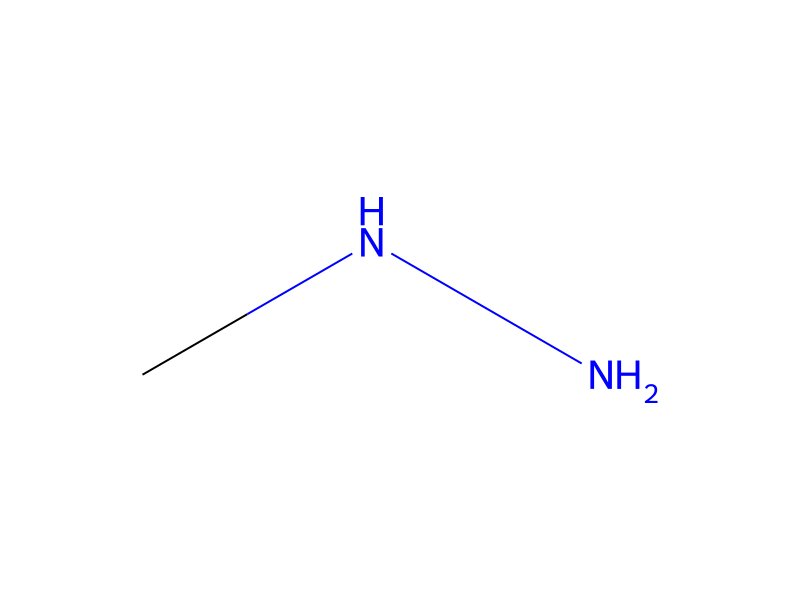
HCID 6061MethylhydrazineHCID 81531DiisopropylethylamineHCID 71763141-(3S)-3-Pyrrolidinyl-piperidineHCID 86712558(4,6-dichloropyrimidin-5-yl)[1-methyl-5-(4-methylphenyl)-1H-pyrazol-4-yl]methanoneHCID 86712560{4-chloro-6-[(3S)-3-(piperidin-1-yl)pyrrolidin-1-yl]pyrimidin-5-yl}[1-methyl-5-(4-methylphenyl)-1H-pyrazol-4-yl]methanone

Product 1

HCID 71315139PF-04981517Yield 90%

Reagents, catalysts & solvents 1

HCID 6342AcetonitrileSolvent2×

Procedure

To a mixture of (4,6-dichloropyrimidin-5-yl)[1-methyl-5-(4-methylphenyl)-1H-pyrazol-4-yl]methanone (C5) (7.3 g, 21 mmol) and N,N-diisopropylethylamine (13.56 g, 104.9 mmol) in acetonitrile (100 mL) was added 1-[(3S)-pyrrolidin-3-yl]piperidine (4.8 g, 31 mmol), and the resulting reaction mixture was stirred at room temperature for 3 hours. To this solution of {4-chloro-6-[(3S)-3-(piperidin-1-yl)pyrrolidin-1-yl]pyrimidin-5-yl}[1-methyl-5-(4-methylphenyl)-1H-pyrazol-4-yl]methanone (C7) was added drop-wise a solution of methylhydrazine (12.1 g, 262 mol) in acetonitrile (20 mL). After being stirred overnight at room temperature, the reaction mixture was concentrated in vacuo and partitioned between dichloromethane (100 mL) and water (100 mL). The aqueous layer was extracted with dichloromethane (2×100 mL). The combined organic layers were dried over sodium sulfate, filtered and concentrated; purification via silica gel chromatography (Gradient: 10% to 50% ethyl acetate in petroleum ether) afforded the product as a white solid. Yield: 8.64 g, 18.9 mmol, 90% yield. LCMS m/z 457.3 (M+1). 1H NMR (400 MHz, CDCl3) δ 1.39-1.49 (br m, 2H), 1.53-1.73 and 2.00-2.25 (br multiplets, presumed 8H), 2.31 (s, 3H), 2.32-2.45 (br m, 2H), 2.56-2.68 (br m, 1H), 2.90-3.16 (v br m, 1H), 3.26-3.78 (br m, 3H), 3.87 (s, 3H), 4.00 (s, 3H), 7.16 (br AB quartet, JAB=8 Hz, ΔνAB=26 Hz, 4H), 7.66 (s, 1H), 8.29 (s, 1H).

Workup

  1. customthe resulting reaction mixture
  2. stirringAfter being stirred overnight at room temperature
  3. concentrationthe reaction mixture was concentrated in vacuo
  4. custompartitioned between dichloromethane (100 mL) and water (100 mL)
  5. extractionThe aqueous layer was extracted with dichloromethane (2×100 mL)
  6. dry with materialThe combined organic layers were dried over sodium sulfate
  7. filtrationfiltered
  8. concentrationconcentrated
  9. custompurification via silica gel chromatography (Gradient: 10% to 50% ethyl acetate in petroleum ether)

Sources & evidence

ORD record
ord-4460796c9c5844aeb4eff27a26d42044
Source dataset
uspto-grants-2014_09
DOI
10.6084/m9.figshare.5104873.v1
Patent number
US08829010B2

Reaction notes

On this pageParticipantsProcedureWorkupSources & evidenceReaction notes