Reaction equation

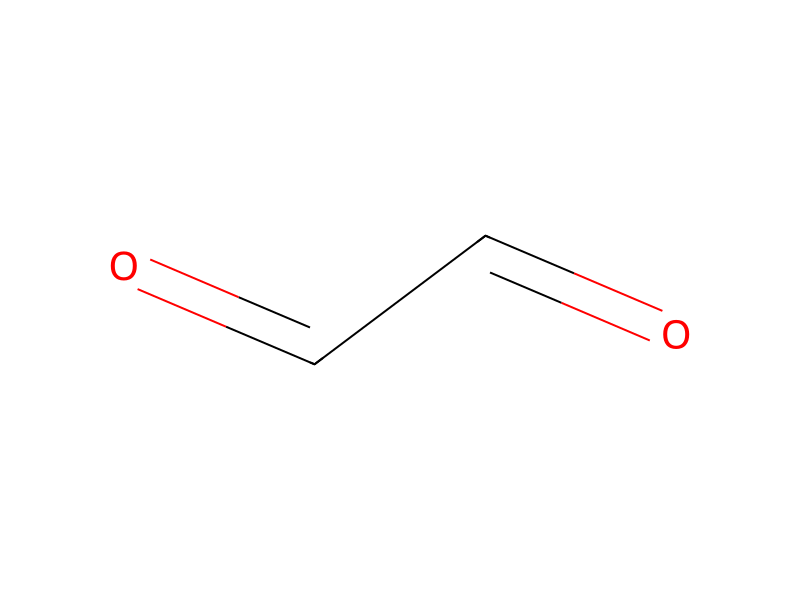
N1C2C(=CC(N)=CC=2)N=[CH:3][CH:2]=1.[N+:12]([C:15]1[CH:20]=[CH:19][C:18]([NH2:21])=[C:17]([NH2:22])[CH:16]=1)([O-:14])=[O:13].C(C=O)=O>C(#N)C>[N+:12]([C:15]1[CH:16]=[C:17]2[C:18](=[CH:19][CH:20]=1)[N:21]=[CH:3][CH:2]=[N:22]2)([O-:14])=[O:13]Participants
5
Reactant 3
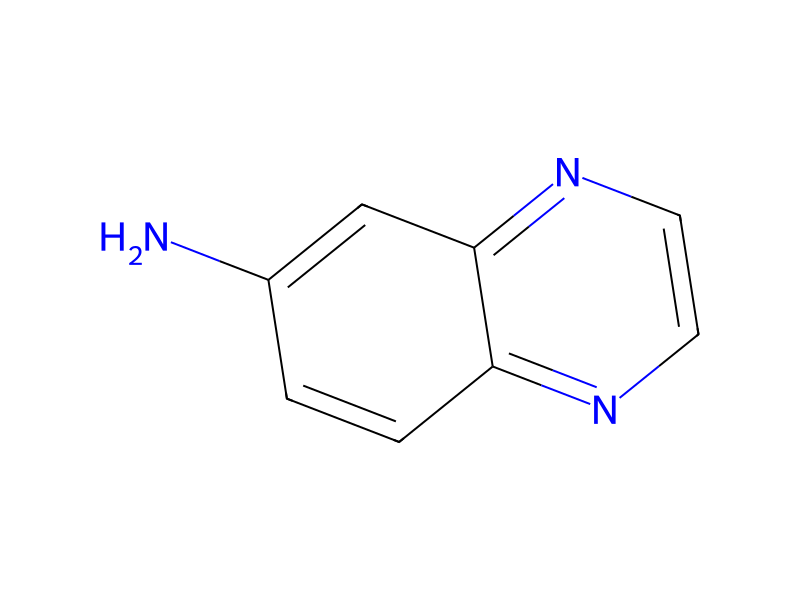

Product 1

Reagents, catalysts & solvents 1

Procedure
Quinoxaline-6-ylamine. To a round-bottomed flask equipped with magnetic stirring was added 4-nitro-1,2-phenylenediamine (1.0 g, 6.5 mmol, Aldrich), acetonitrile (10 mL) and glyoxal (2.2 mL, 19 mmol, 40 wt. % in water, Aldrich). The reaction mixture was allowed to stir at 50° C. for 12 h, then concentrated in vacuo to yield 1.1 g crude 6-nitro-quinoxaline. The crude product was dissolved in methanol, treated with 10% Pd/C (10 mg, Aldrich) and stirred under H2 (1 atm) at 25° C. overnight. The reaction mixture was filtered through Celite and the filtrate was concentrated in vacuo to provide the title product. MS (ESI, pos. ion) m/z: 146 (M+1).
Workup
- customTo a round-bottomed flask equipped
- stirringto stir at 50° C. for 12 h
- concentrationconcentrated in vacuo
Sources & evidence
- ORD record
- ord-b7881e4a193d4b18a16b0c58fc1c307b
- Source dataset
- uspto-grants-2009_09
- Patent number
- US07582657B2
Linked notes
Loading…