Reaction equation
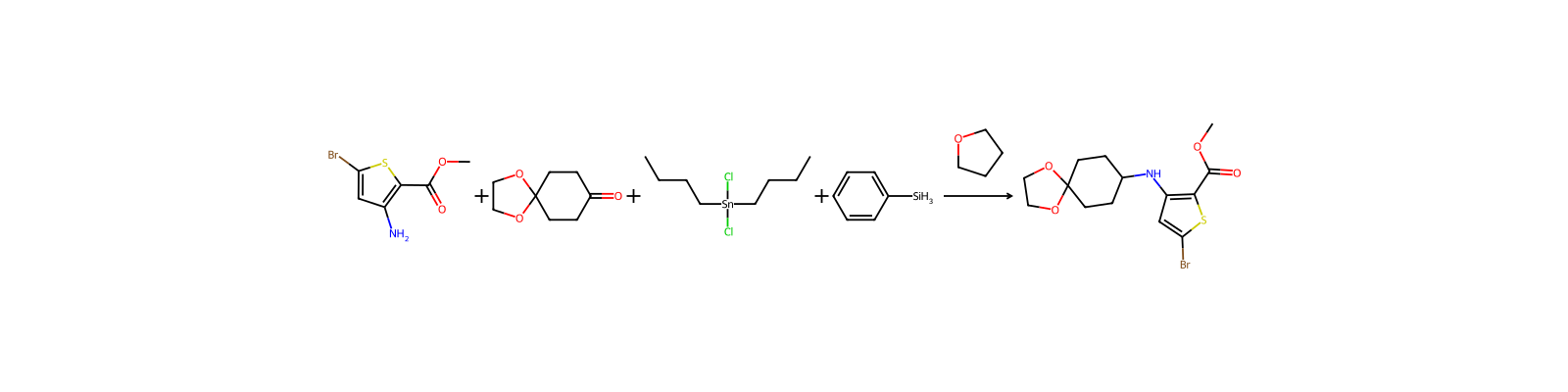
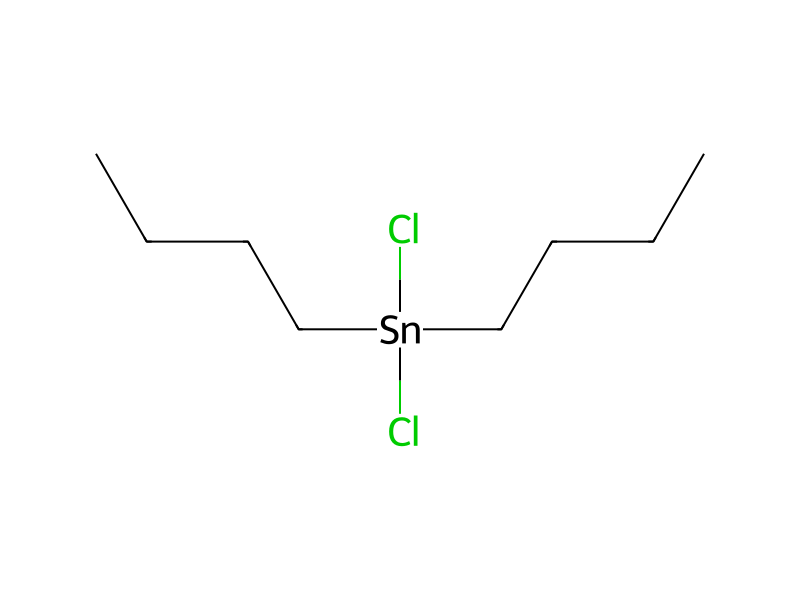
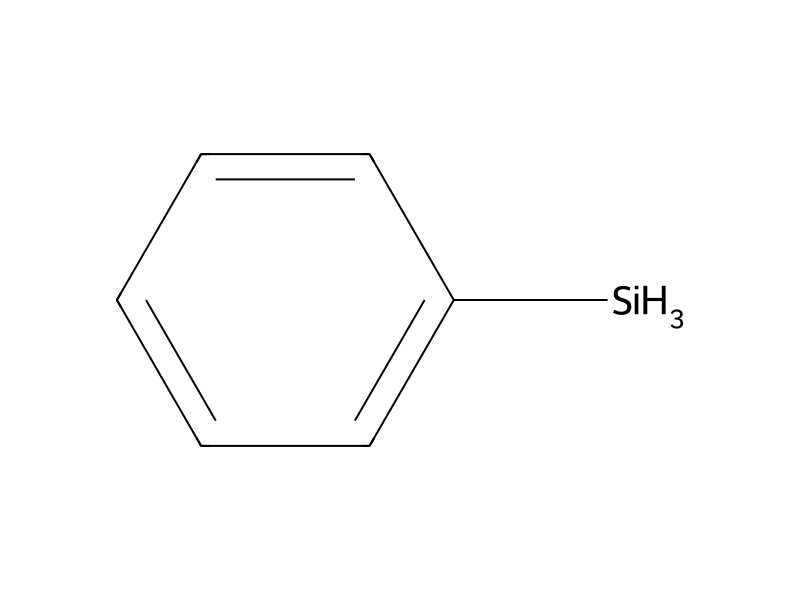
[CH3:1][O:2][C:3]([C:5]1[S:6][C:7]([Br:11])=[CH:8][C:9]=1[NH2:10])=[O:4].[CH2:12]1[O:22][C:15]2([CH2:20][CH2:19][C:18](=O)[CH2:17][CH2:16]2)[O:14][CH2:13]1.C([Sn](Cl)(Cl)CCCC)CCC.C1([SiH3])C=CC=CC=1>C1COCC1>[CH3:1][O:2][C:3]([C:5]1[S:6][C:7]([Br:11])=[CH:8][C:9]=1[NH:10][CH:18]1[CH2:19][CH2:20][C:15]2([O:22][CH2:12][CH2:13][O:14]2)[CH2:16][CH2:17]1)=[O:4]Participants
Reactant 4


Product 1

Reagents, catalysts & solvents 1

Procedure
A suspension of 3-Amino-5-bromo-thiophene-2-carboxylic acid methyl ester (1.03 g, 4.38 mmol) in dry THF (1.1 ml) was treated with 1,4-cyclohexanedione monoethylene ketal (684 mg, 4.38 mmol), followed by dibutyltin dichloride (133 mg, 0.44 mmol). After 5 min, phenyl silane (877 μL, 4.8 mmol) was added and the reaction mixture was stirred at room temperature for 2 days when a clear solution resulted. The solution was then concentrated and the residue purified by silica gel column chromatography using EtOAc:hexanes as eluent to furnished 5-Bromo-3-(1,4-dioxa-spiro[4.5]dec-8-ylamino)-thiophene-2-carboxylic acid methyl ester (1.11 g, 68% yield). 1H NMR (CDCl3, 400 MHz): 6.90 (br s, 1H), 6.65 (s, 1H), 3.95 (s, 4H), 3.78 (s, 3H), 3.35 (m, 1H), 2.00 (m, 2H), 1.80 (m, 2H), 1.65 (m, 4H).
Workup
- customresulted
- concentrationThe solution was then concentrated
- customthe residue purified by silica gel column chromatography
Sources & evidence
- ORD record
- ord-5874dcee268a413983764313e58718d9
- Source dataset
- uspto-grants-2014_09
- Patent number
- US08829030B2
Linked notes
Loading…