7-benzyloxy-1-methyl-1H-indole-2-carboxylic acid (2-tert-butyl-5-methoxy-pyridin-4-yl)-amide → HCID 58980657, compound
HRID 735789
Reaction equation

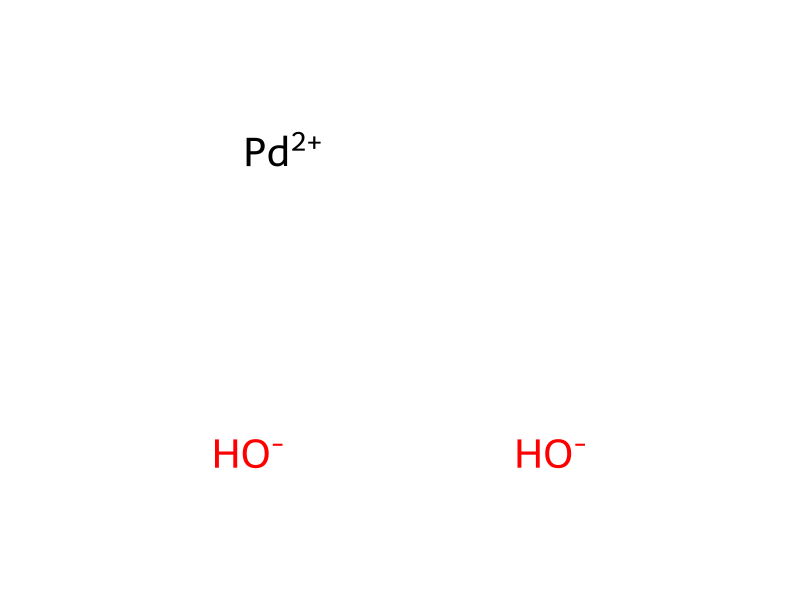
[C:1]([C:5]1[CH:10]=[C:9]([NH:11][C:12]([C:14]2[N:15]([CH3:31])[C:16]3[C:21]([CH:22]=2)=[CH:20][CH:19]=[CH:18][C:17]=3[O:23]CC2C=CC=CC=2)=[O:13])[C:8]([O:32][CH3:33])=[CH:7][N:6]=1)([CH3:4])([CH3:3])[CH3:2]>C(O)C.C(OCC)(=O)C.[OH-].[OH-].[Pd+2]>[C:1]([C:5]1[CH:10]=[C:9]([NH:11][C:12]([C:14]2[N:15]([CH3:31])[C:16]3[C:21]([CH:22]=2)=[CH:20][CH:19]=[CH:18][C:17]=3[OH:23])=[O:13])[C:8]([O:32][CH3:33])=[CH:7][N:6]=1)([CH3:4])([CH3:2])[CH3:3]Participants
4



Procedure
Pd(OH)2 (20% on C, 24 mg) was added to a solution of the above indole (231 mg, 0.52 mmol) in ethanol/ethyl acetate (3:2, 5.0 mL) at room temperature. The solution was placed under a hydrogen atmosphere (1 atm) and stirred at room temperature for 18 h. The mixture was filtered through diatomaceous earth and concentrated in vacuo to provide 7-hydroxy-1-methyl-1H-indole-2-carboxylic acid (2-tert-butyl-5-methoxy-pyridin-4-yl)-amide (199 mg, 99%) as a pale brown solid.