Reaction equation

[I-].[Na+].Cl[CH2:4][C:5]1[CH:10]=[CH:9][CH:8]=[CH:7][C:6]=1[C:11]([F:14])([F:13])[F:12].[P:15]([O:22]CC)([O:19][CH2:20][CH3:21])[O:16][CH2:17][CH3:18]>C(#N)C>[CH2:17]([O:16][P:15]([CH2:4][C:5]1[CH:10]=[CH:9][CH:8]=[CH:7][C:6]=1[C:11]([F:14])([F:13])[F:12])(=[O:22])[O:19][CH2:20][CH3:21])[CH3:18]Participants
Reactant 3

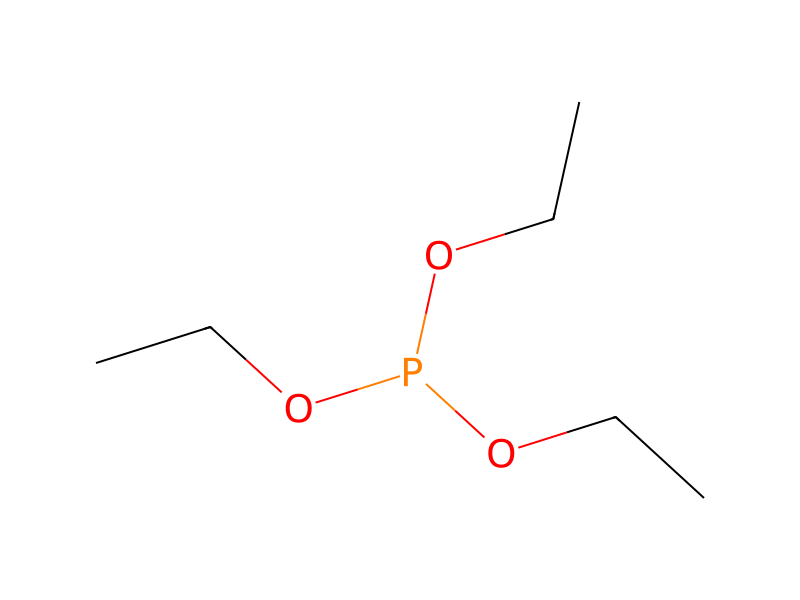

Product 1

Reagents, catalysts & solvents 1

Procedure
To a suspension of sodium iodide (3.85 g, 25.6 mmol, 1 equiv.) in acetonitrile at room temperature under argon is added neat 1-chloromethyl-2-trifluoromethyl-benzene (commercially available from Acros Organics USA). To the resulting milky suspension is added freshly distilled triethyl phosphite (4.26 g, 25.6 mmol, 1 equiv.) and the resulting solution is stirred overnight at room temperature. After that time further triethyl phosphite (2.13 g, 12.9 mmol, 0.5 equiv.) is added and the reaction mixture heated at reflux for 1 hour. After cooling down to room temperature all volatiles were evaporated under reduced pressure. The residue is taken-up in dichloromethane and filtered through paper and the filtrate is concentrated under reduced pressure to yield the desired material as a clear oil pure enough to be used in the following step without further purification (7.46 g, 98%).
Workup
- temperaturethe reaction mixture heated
- temperatureat reflux for 1 hour
- temperatureAfter cooling down to room temperature all volatiles
- customwere evaporated under reduced pressure
- filtrationfiltered through paper
- concentrationthe filtrate is concentrated under reduced pressure
Sources & evidence
- ORD record
- ord-866ca2e02fe7473f80b86807ac5b81a6
- Source dataset
- uspto-grants-2009_09
- Patent number
- US07595315B2
Linked notes
Loading…