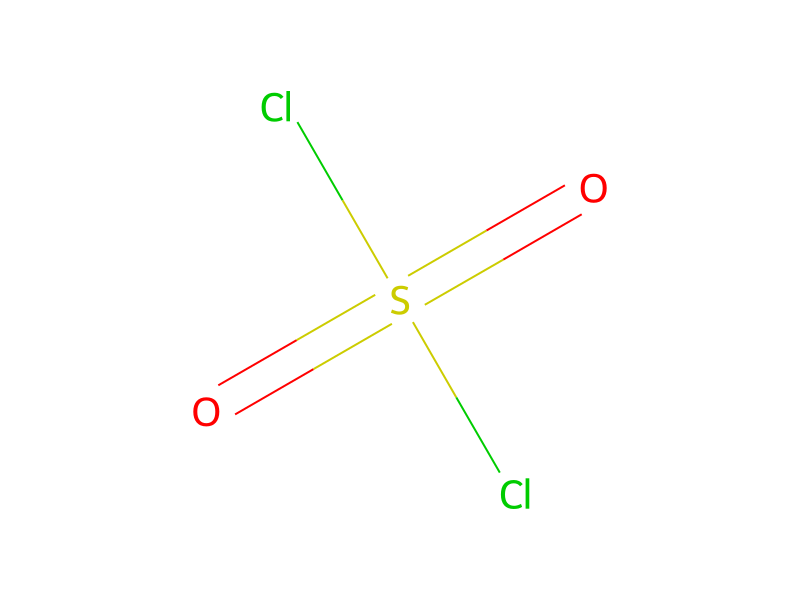
FC(F)(F)OC1C=CC(N2C(=O)C=CS2)=CC=1.[F:18][C:19]([F:35])([F:34])[O:20][C:21]1[CH:26]=[CH:25][C:24]([N:27]2[C:31](=[O:32])[CH:30]=[C:29]([Cl:33])[S:28]2)=[CH:23][CH:22]=1.S(Cl)([Cl:39])(=O)=O.C(=O)([O-])O.[Na+]>ClCCl>[F:35][C:19]([F:18])([F:34])[O:20][C:21]1[CH:26]=[CH:25][C:24]([N:27]2[C:31](=[O:32])[C:30]([Cl:39])=[C:29]([Cl:33])[S:28]2)=[CH:23][CH:22]=1First, a mixture containing 6.4 g of 2-(4-trifluorornethoxyphenyl)-4-isothiazolin-3-on and 5.1 g of 2-(4-trifluoromethoxyphenyl)-5-chloro-4-isothiazolin-3-on was suspended in 100 ml of dichloromethane, after which 19 g of sulfuryl chloride was then added dropwise to the suspension dropwise at room temperature, and the resultant mixture was stirred for 12 hours. After completion of the reaction, 200 ml of a saturated aqueous solution of sodium hydrogencarbonate was added to the reaction mixture, and the dichloromethane layer was separated. The aqueous layer was extracted with 150 ml of dichloromethane. The combined dichloromethane layer was washed with water, dried with magnesium sulfate, and concentrated. The concentrate was purified by column chromatography (hexane: ethyl acetate=6:1) to give 4 g of 2-(4-trifluoromethoxyphenyl)-4,5-dichloro-4-isothiazolin-3-on (compound (13); m.p., 129°-130° C.).