Reaction equation

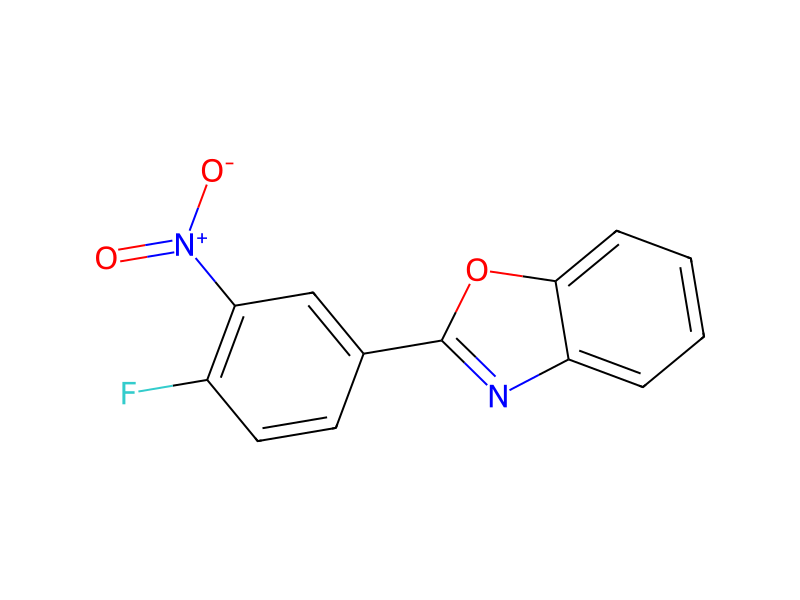
F[C:2]1[CH:7]=[CH:6][C:5]([C:8]2[O:9][C:10]3[CH:16]=[CH:15][CH:14]=[CH:13][C:11]=3[N:12]=2)=[CH:4][C:3]=1[N+:17]([O-:19])=[O:18].C(=O)([O-])O.[Na+].[CH3:25][O:26][C:27]1[CH:32]=[CH:31][C:30]([NH2:33])=[CH:29][CH:28]=1>C(O)C>[CH3:25][O:26][C:27]1[CH:32]=[CH:31][C:30]([NH:33][C:2]2[CH:7]=[CH:6][C:5]([C:8]3[O:9][C:10]4[CH:16]=[CH:15][CH:14]=[CH:13][C:11]=4[N:12]=3)=[CH:4][C:3]=2[N+:17]([O-:19])=[O:18])=[CH:29][CH:28]=1Participants
5
Reactant 3


Product 1

Reagents, catalysts & solvents 1

Procedure
To a suspension of 2-(4-fluoro-3-nitrophenyl)benzoxazole (see Working Example 15-2) (300 mg, 1.19 mmol) in ethanol (5 mL) was added sodium hydrogen carbonate (295 mg, 2.32 mmol) and p-anisidine (357 mg, 2.90 mmol), and this was heated to reflux with stirring for 4 hours. After the reaction was complete, this was cooled to room temperature, the precipitated crystals were filtered off, and after washing with water and ethanol the crystals were dried to yield the title compound (359 mg, 86% yield) as orange crystals.
Workup
- temperaturethis was heated
- temperatureto reflux
- filtrationthe precipitated crystals were filtered off
- washafter washing with water and ethanol the crystals
- customwere dried
Sources & evidence
- ORD record
- ord-971270a2eab341f2963d927eae88f57b
- Source dataset
- uspto-grants-2014_09
- Patent number
- US08829035B2
Linked notes
Loading…