Triethylamine → 2-(2-(Tetrahydropyran-4-yl)ethyl)benzoxazole
Reaction equation

F[C:2]1[CH:7]=[CH:6][C:5]([C:8]2[O:9][C:10]3[CH:16]=[CH:15][CH:14]=[CH:13][C:11]=3[N:12]=2)=C[C:3]=1[N+]([O-])=O.[O:20]1CCC(CCN)[CH2:22][CH2:21]1.C(N(CC)CC)C.[H][H]>[C].[Pd].O.C(#N)C>[O:20]1[CH2:3][CH2:2][CH:7]([CH2:6][CH2:5][C:8]2[O:9][C:10]3[CH:16]=[CH:15][CH:14]=[CH:13][C:11]=3[N:12]=2)[CH2:22][CH2:21]1Participants
Reactant 4


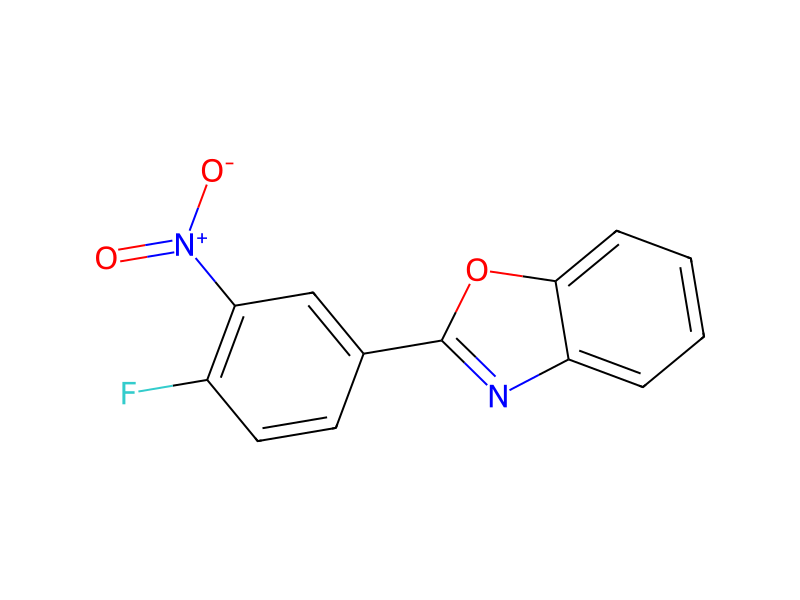

Product 1

Reagents, catalysts & solvents 3



Procedure
2-(4-Fluoro-3-nitrophenyl)benzoxazole (see Working Example 15-2) (800 mg, 3.1 mmol) was added to an acetonitrile (5 mL) solution containing 2-(tetrahydropyran-4-yl)ethylamine (520 mg, 3.9 mmol) and triethylamine (500 mg, 3.9 mmol), and this was heated to reflux for 3 hours. After the reaction was complete, this was cooled to room temperature, water was added, and the precipitated crystals were filtered, washed with water and then dried. To a tetrahydrofuran solution (20 mL) of the crystals obtained was added 10% palladium-carbon (100 mg). A hydrogen atmosphere was substituted in the flask, and this was stirred overnight at room temperature. After the reaction was complete, this was filtered through Celite and the filtrate was concentrated. The residue obtained was purified by silica gel column chromatography to yield the title compound (450 mg, 43% yield) as a syrup.
Workup
- temperaturethis was heated
- temperatureto reflux for 3 hours
- filtrationthe precipitated crystals were filtered
- washwashed with water
- customdried
- customTo a tetrahydrofuran solution (20 mL) of the crystals obtained
- filtrationthis was filtered through Celite
- concentrationthe filtrate was concentrated
- customThe residue obtained
- customwas purified by silica gel column chromatography
Sources & evidence
- ORD record
- ord-03e46c74cfcc46ce80ee728acd94820c
- Source dataset
- uspto-grants-2014_09
- Patent number
- US08829035B2
Reaction notes
Loading…