Reaction equation

[NH2:1][C:2]1[C:7]([N+:8]([O-:10])=[O:9])=[C:6]([CH3:11])[CH:5]=[CH:4][N:3]=1.N1C=CC=CC=1.[CH:18]1([C:21](Cl)=[O:22])[CH2:20][CH2:19]1.C(Cl)(Cl)Cl>O>[CH:18]1([C:21]([NH:1][C:2]2[C:7]([N+:8]([O-:10])=[O:9])=[C:6]([CH3:11])[CH:5]=[CH:4][N:3]=2)=[O:22])[CH2:20][CH2:19]1Participants


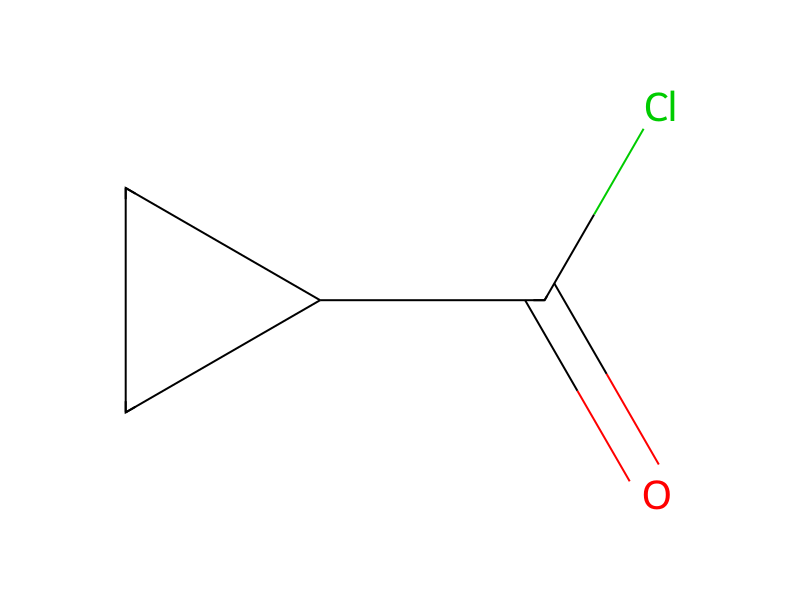



Conditions
- Temperature
- 110 °C
Procedure
A mixture comprising 5.0 g (32.6 mmol) of 2-amino-4-methyl-3-nitropyridine and 5.2 g of pyridine was heated at 110° C. in a nitrogen atmosphere. 3.8 g (36 mmol) of cyclopropanecarbonyl chloride was dropwise added thereto, followed by further stirring at 110° C. for 5 hours. The reaction mixture was brought to room temperature, followed by the addition of chloroform (50 ml) and water (50 ml). The organic phase was separated and the aqueous phase was further extracted with chloroform (50 ml) twice. The organic phases were combined and washed with water (20 ml) and a saturated aqueous solution (20 ml) of common salt, successively. The resultant organic phase was dried over anhydrous magnesium sulfate and concentrated. The residue was purified by silica gel column chromatography (a n-hexane/ethyl acetate system) to give 5.4 g of the title compound (yield 75%).
Workup
- customwas brought to room temperature
- customThe organic phase was separated
- extractionthe aqueous phase was further extracted with chloroform (50 ml) twice
- washwashed with water (20 ml)
- dry with materialThe resultant organic phase was dried over anhydrous magnesium sulfate
- concentrationconcentrated
- customThe residue was purified by silica gel column chromatography (a n-hexane/ethyl acetate system)
Sources & evidence
- ORD record
- ord-bd6cce84614a4c53bd5565dc68454204
- Source dataset
- uspto-grants-1996_09
- Patent number
- US05559236
Linked notes
Loading…