Reaction equation

[Cl:1][C:2]1[N:7]=[C:6]([NH:8][C:9]2[CH:14]=[CH:13][C:12]3OCCO[C:11]=3[CH:10]=2)[C:5]([F:19])=[CH:4][N:3]=1.ClC1N=C(Cl)C(F)=CN=1.NC1C=CC([CH2:34][OH:35])=CC=1>>[Cl:1][C:2]1[N:7]=[C:6]([NH:8][C:9]2[CH:10]=[CH:11][C:12]([CH2:34][OH:35])=[CH:13][CH:14]=2)[C:5]([F:19])=[CH:4][N:3]=1Participants
4
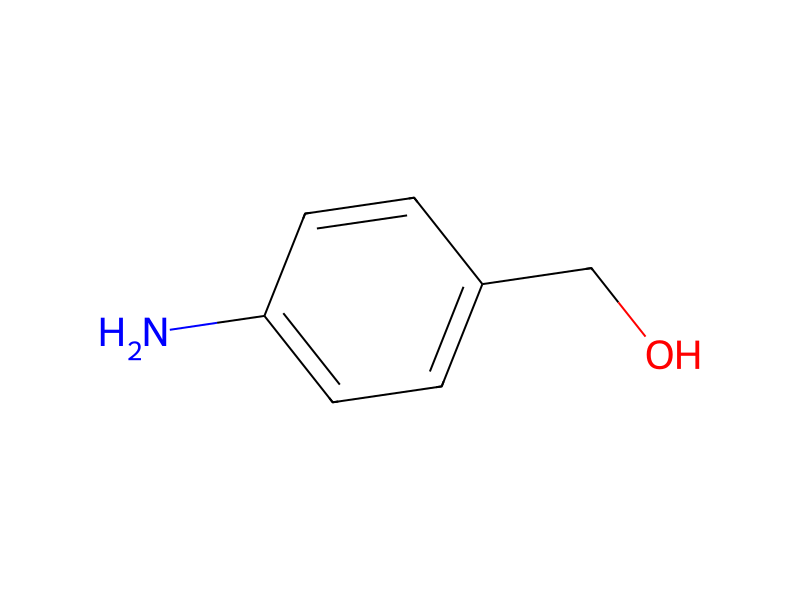


Procedure
In a manner similar to the preparation of 2-chloro-N4-(3,4-ethylenedioxyphenyl)-5-fluoro-4-pyrimidineamine, 2,4-dichloro-5-fluoropyrimidine and 4-aminobenzylalcohol were reacted to yield 2-chloro-5-fluoro-N4-[4-(hydroxymethyl)phenyl]-4-pyrimidineamine. 1H NMR (CDCl3): δ 8.08 (d, 1H, J=2.7 Hz), 7.62 (d, 2H, J=9.0 Hz), 7.40 (d, 2H, J=8.1 Hz), 6.99 (bs, 1H), 4.70 (s, 2H); 19F NMR (CDCl3): −44570 (s, 1F); LCMS: ret. time: 19.57 min.; purity: 99%; MS (m/e): 254 (MH+).
Workup
- customwere reacted
Sources & evidence
- ORD record
- ord-f4d862f775394242af15e035956fc33b
- Source dataset
- uspto-grants-2014_09
- Patent number
- US08835430B2
Linked notes
Loading…