Reaction equation

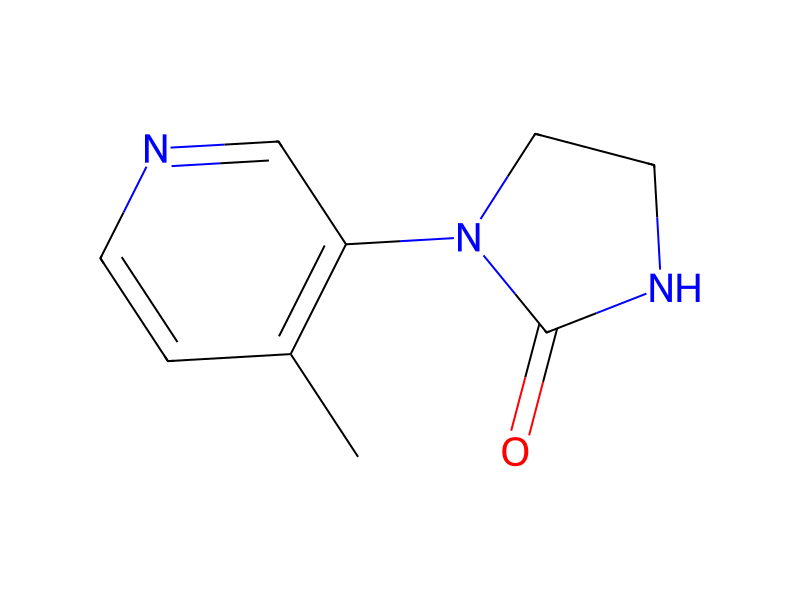
[CH3:1][C:2]1[CH:7]=[CH:6][N:5]=[CH:4][C:3]=1[N:8]1[CH2:12][CH2:11][NH:10][C:9]1=[O:13].Br[C:15]1[CH:20]=[CH:19][C:18]([O:21][CH3:22])=[C:17]([F:23])[CH:16]=1.N[C@@H]1CCCC[C@H]1N.P([O-])([O-])([O-])=O.[K+].[K+].[K+]>[Cu](I)I.O1CCOCC1>[F:23][C:17]1[CH:16]=[C:15]([N:10]2[CH2:11][CH2:12][N:8]([C:3]3[CH:4]=[N:5][CH:6]=[CH:7][C:2]=3[CH3:1])[C:9]2=[O:13])[CH:20]=[CH:19][C:18]=1[O:21][CH3:22]Participants
7
Reactant 4



Product 1

Reagents, catalysts & solvents 2


Procedure
Using the same reaction conditions as in Example 14, 1-(4-methyl-pyridin-3-yl)-imidazolidin-2-one (I-14b: 150 mg, 0.8474 mmol) was reacted with 4-bromo-2-fluoro-1-methoxy-benzene (191 mg, 0.932 mmol), 1,4-dioxane (20 mL), copper iodide (16 mg, 0.08474 mmol), trans-1,2-diamino cyclohexane (29.4 mg, 0.2542 mmol) and potassium phosphate (449 mg, 2.11 mmol) to afford 220 mg of the product (86% yield).
Sources & evidence
- ORD record
- ord-51cd44c75a394dba97314f672693a99b
- Source dataset
- uspto-grants-2014_09
- Patent number
- USRE045173E1
Linked notes
Loading…