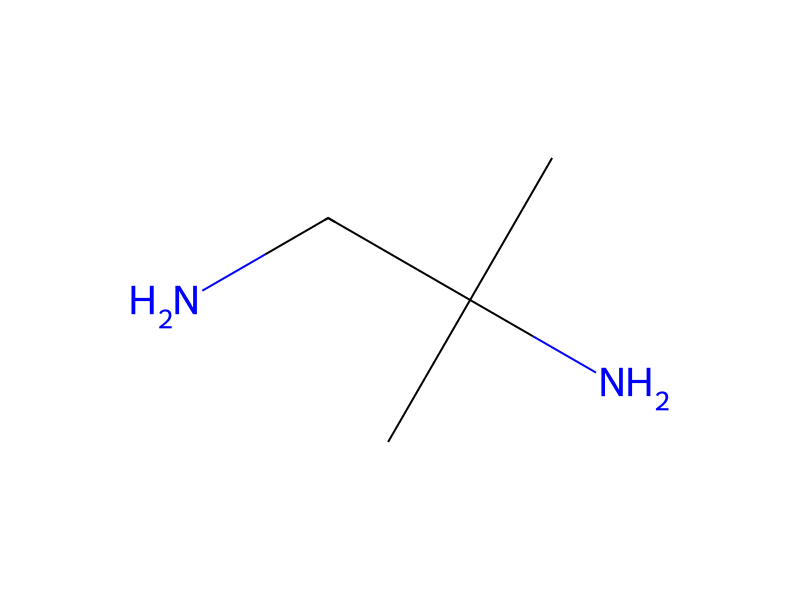
[NH2:1][CH2:2][C:3]([NH2:6])([CH3:5])[CH3:4].Cl[C:8]1[C:17]2[C:12](=[CH:13][CH:14]=[CH:15][N:16]=2)[N:11]=[CH:10][C:9]=1[N+:18]([O-:20])=[O:19].C(N(CC)CC)C>ClCCl>[N+:18]([C:9]1[CH:10]=[N:11][C:12]2[C:17]([C:8]=1[NH:1][CH2:2][C:3]([CH3:5])([NH2:6])[CH3:4])=[N:16][CH:15]=[CH:14][CH:13]=2)([O-:20])=[O:19]1,2-Diamino-2-methylpropane (8.4 mL, 80.0 mmol) was added to a chilled (0° C.) solution of 4-chloro-3-nitro[1,5]naphthyridine (15.2 g, 72.7 mmol) and triethylamine (20.2 mL, 145 mmol) in dichloromethane (350 mL). The reaction mixture was stirred overnight and then concentrated under reduced pressure. The residue was combined with water (300 mL) and heated at reflux with stirring for 1 hour. The reaction mixture was cooled and filtered. The isolated solid was washed with water and then dried under high vacuum to provide 18.5 g of N1-(3-nitro[1,5]naphthyridin-4-yl)-2-methylpropane-1,2-diamine as a bright yellow powder.
Loading…