Reaction equation
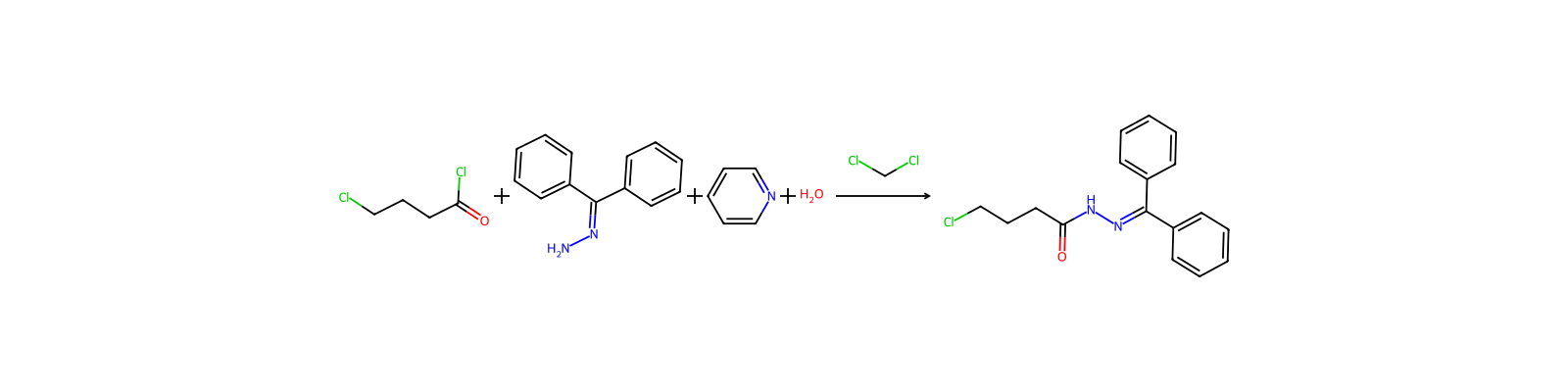
[Cl:1][CH2:2][CH2:3][CH2:4][C:5](Cl)=[O:6].[C:8](=[N:21][NH2:22])([C:15]1[CH:20]=[CH:19][CH:18]=[CH:17][CH:16]=1)[C:9]1[CH:14]=[CH:13][CH:12]=[CH:11][CH:10]=1.N1C=CC=CC=1.O>ClCCl>[C:8](=[N:21][NH:22][C:5](=[O:6])[CH2:4][CH2:3][CH2:2][Cl:1])([C:15]1[CH:16]=[CH:17][CH:18]=[CH:19][CH:20]=1)[C:9]1[CH:14]=[CH:13][CH:12]=[CH:11][CH:10]=1Participants
6
Reactant 4


Product 1

Reagents, catalysts & solvents 1

Procedure
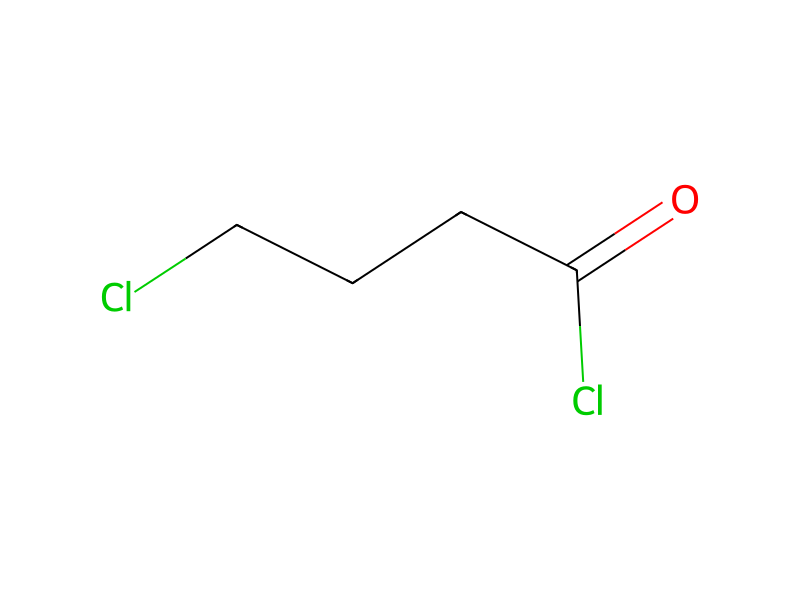
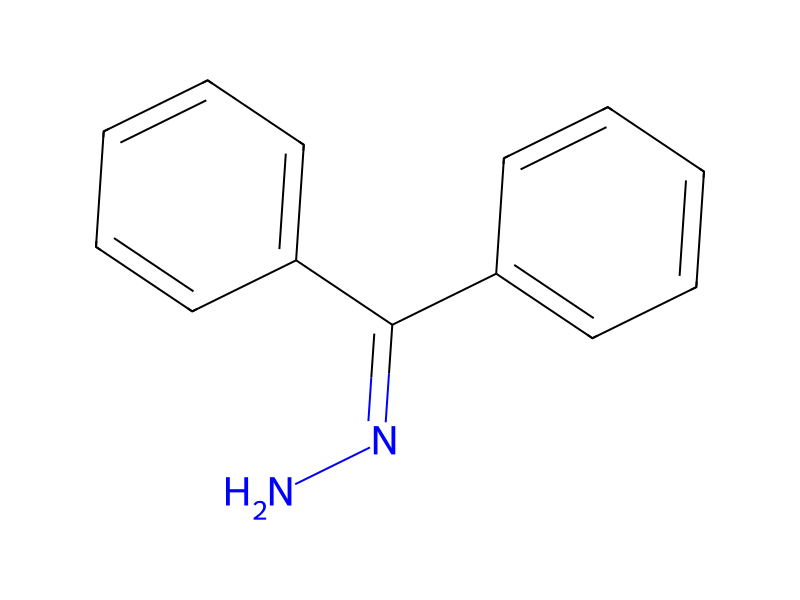
4-Chlorobutyryl chloride (57 mL, 510 mmol) is added to a solution of benzophenone hydrazone (100 g, 510 mmol) and pyridine (41 mL, 510 mmol) in anhydrous dichloromethane (520 mL) under nitrogen at a rate that maintains a gentle reflux throughout the addition. The mixture is stirred for 0.5 h and poured into water (1 L). The layers are separated and the organic layer washed with brine, dried (sodium sulfate), filtered, and concentrated in vacuo to yield 4-chloro-butyric acid benzhydrylidene-hydrazide as a residue.
Workup
- temperaturea gentle reflux throughout the addition
- customThe layers are separated
- washthe organic layer washed with brine
- dry with materialdried (sodium sulfate)
- filtrationfiltered
- concentrationconcentrated in vacuo
Sources & evidence
- ORD record
- ord-6e9f813cdbf440e28165af869bd6f9f1
- Source dataset
- uspto-grants-2006_08
- Patent number
- US07087626B2
Linked notes
Loading…