Reaction equation

[N+:1]([C:4]1[O:8][C:7]([C:9]2[C:13]([C:14](Cl)=[O:15])=[CH:12][N:11]([C:17]3[CH:22]=[CH:21][CH:20]=[CH:19][CH:18]=3)[N:10]=2)=[CH:6][CH:5]=1)([O-:3])=[O:2].[C:23]1([NH:29][NH2:30])[CH:28]=[CH:27][CH:26]=[CH:25][CH:24]=1.O.C1C=CC=CC=1.C(O)C>N1C=CC=CC=1>[N+:1]([C:4]1[O:8][C:7]([C:9]2[C:13]([C:14]([NH:30][NH:29][C:23]3[CH:28]=[CH:27][CH:26]=[CH:25][CH:24]=3)=[O:15])=[CH:12][N:11]([C:17]3[CH:22]=[CH:21][CH:20]=[CH:19][CH:18]=3)[N:10]=2)=[CH:6][CH:5]=1)([O-:3])=[O:2]Participants
6




Procedure
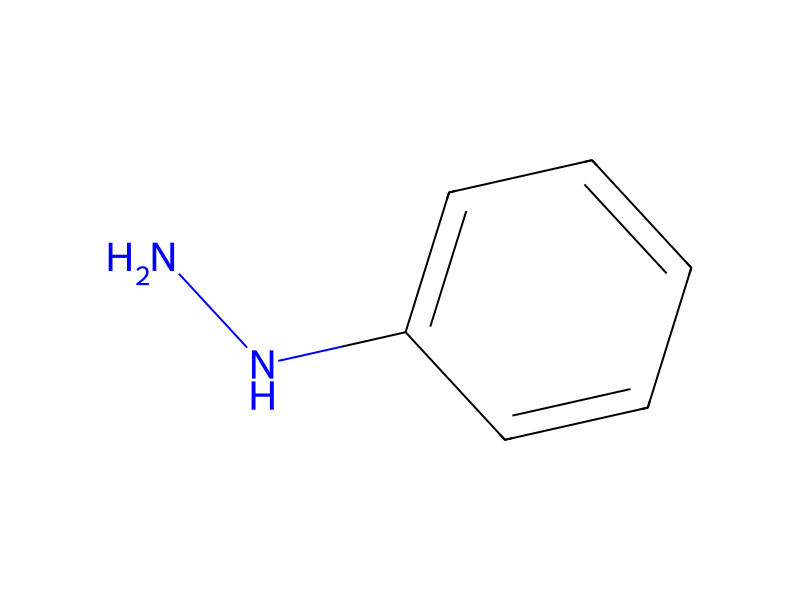
Add a solution of 1.0 g of 3-(5-nitro-2-furyl)-1-phenylpyrazole-4-carboxylic acid chloride in 50 ml of pyridine dropwise to a solution of 0.31 ml of phenyl hydrazine in 5 ml of pyridine and stir the resulting reaction mixture at room temperature for 4 hours. Pour the thus-produced solution onto ice and water and chromatograph on silica gel with benzene/ethanol (9:1) to obtain 3-(5-nitro-2-furyl)-1,N'-diphenylpyrazole-4-carbohydrazide.
Workup
- customthe resulting reaction mixture at room temperature for 4 hours
Sources & evidence
- ORD record
- ord-f708c25433c149f2be8ac9c3234d74ce
- Source dataset
- uspto-grants-1978_06
- Patent number
- US04093812
Linked notes
Loading…