HomeMCPWorkbenchSkills
HomeWorkbenchNotificationsMe
llms.txt · MCP GuidePrivacy Policy · Terms of Service · Supportv1.8.3
  1. Home
  2. /Reaction

2-Bromopropanoyl chloride → HCID 22619783, compound

HRID 840563
Print

Reaction equation

HRID 840563 reaction equation
[Cl:1][C:2]1[CH:7]=[CH:6][C:5]([N+:8]([O-])=O)=[C:4]([NH:11][CH:12]2[CH2:14][CH2:13]2)[CH:3]=1.[H][H].[Br:17][CH:18]([CH3:22])[C:19](Cl)=[O:20].C(=O)([O-])O.[Na+]>CO.[Ni].COCCOC>[Cl:1][C:2]1[CH:7]=[CH:6][C:5]([NH:8][C:19](=[O:20])[CH:18]([Br:17])[CH3:22])=[C:4]([NH:11][CH:12]2[CH2:14][CH2:13]2)[CH:3]=1
ParticipantsConditionsProcedureWorkupSources & evidenceReaction notes

Participants

8

Reactant 4

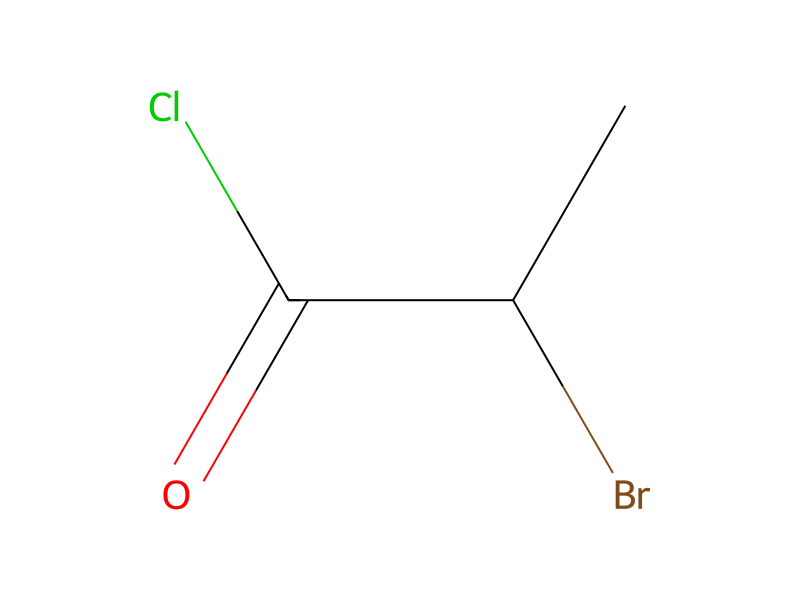
HCID 979802-Bromopropanoyl chlorideHCID 516892Sodium BicarbonateHCID 29219845-chloro-N-cyclopropyl-2-nitroanilineHCID 178418361HCID 178418361, compound2×

Product 1

HCID 22619783HCID 22619783, compound

Reagents, catalysts & solvents 3

HCID 935
Nickel
Catalyst
HCID 887MethanolSolvent
HCID 80711,2-DimethoxyethaneSolvent

Conditions

Temperature
-60 °C

Procedure

4-Chloro-2-cyclopropylaminonitrobenzene (2.10 g, 0.01 mol) was hydrogenated in 100 ml of methanol with Raney nickel catalysis, using 1 atm hydrogen. After the calculated amount of hydrogen had been taken up, the process was stopped, the catalyst was removed by filtration with suction, and the solvent was stripped off in vacuo. To remove water completely, the mixture was taken up twice in methanol and reconcentrated. 4-Chloro-2-cyclopropylaminoaniline (1.80 g), which remained in the form of a brown oil, was dissolved in 50 ml of anhydrous 1,2-dimethoxyethane and cooled to −60° C., with stirring. A solution of 1.1 ml (0.01 mol) of 2-bromopropionyl chloride in 5 ml of anhydrous 1,2-dimethoxyethane was slowly added dropwise, and stirring of the reaction mixture was continued for 2 hours at −60-−70° C. The mixture was then allowed to warm to approx. −20° C. and poured into 150 ml of ice-cold, saturated aqueous sodium hydrogen carbonate solution. The mixture was extracted twice using ethyl acetate, and the organic phase was washed once with water, dried (sodium sulfate) and concentrated in vacuo. After crystallization with diethyl ether/pentane, 2.51 g (79%) of the desired product of melting point 130° C. remained.

Workup

  1. customthe catalyst was removed by filtration with suction
  2. customTo remove water completely
  3. dissolutionwas dissolved in 50 ml of anhydrous 1,2-dimethoxyethane
  4. stirringstirring of the reaction mixture
  5. temperatureto warm to approx. −20° C.
  6. extractionThe mixture was extracted twice using ethyl acetate
  7. washthe organic phase was washed once with water
  8. dry with materialdried (sodium sulfate)
  9. concentrationconcentrated in vacuo
  10. customAfter crystallization with diethyl ether/pentane, 2.51 g (79%) of the desired product of melting point 130° C.

Sources & evidence

ORD record
ord-ab444c196cb74a6ab2345a8b4383c1b6
Source dataset
uspto-grants-2002_04
DOI
10.6084/m9.figshare.5104873.v1
Patent number
US06369057B1

Reaction notes

On this pageParticipantsConditionsProcedureWorkupSources & evidenceReaction notes