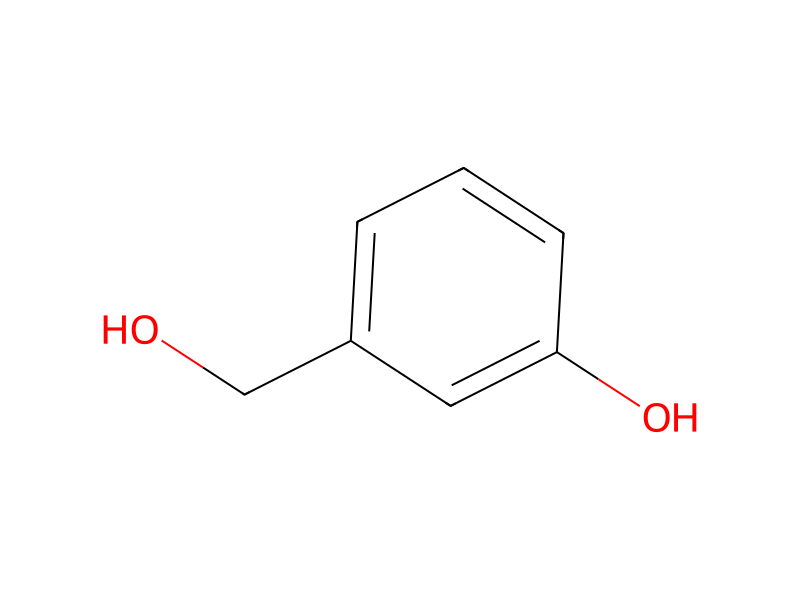
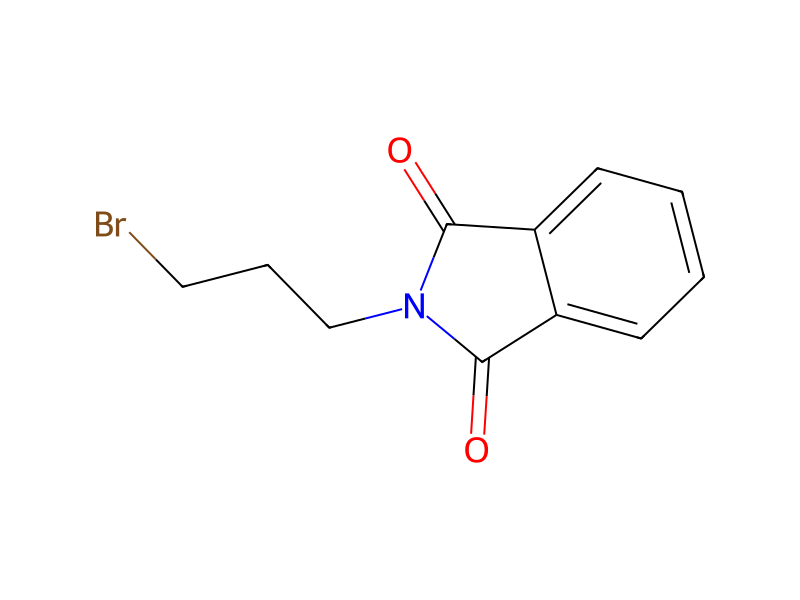
[OH:1][C:2]1[CH:3]=[C:4]([CH:7]=[CH:8][CH:9]=1)[CH2:5][OH:6].[H-].[Na+].Br[CH2:13][CH2:14][CH2:15][N:16]1[C:20](=[O:21])[C:19]2=[CH:22][CH:23]=[CH:24][CH:25]=[C:18]2[C:17]1=[O:26]>CS(C)=O>[OH:6][CH2:5][C:4]1[CH:3]=[C:2]([CH:9]=[CH:8][CH:7]=1)[O:1][CH2:13][CH2:14][CH2:15][N:16]1[C:20](=[O:21])[C:19]2=[CH:22][CH:23]=[CH:24][CH:25]=[C:18]2[C:17]1=[O:26]A solution of 2.6 g of 3-hydroxybenzyl alcohol in 10 ml of dry dimethylsulfoxide was added dropwise with stirring under ice cooling to a suspension of 0.88 g of 60% sodium hydride in 5 ml of dry dimethylsulfoxide. After the addition, the mixture was stirred at room temperature for 20 minutes, and 6 g of N-bromopropylphthalimide was added. The mixture was reacted at room temperature for 1 hour, and ice water was added. The mixture was extracted with ether, washed with water, and dried over anhydrous sodium sulfate. The solvent was distilled off, and the residue was crystallized with ether to afford 2.6 g of N-[3-[3-(hydroxymethyl)phenoxy]propyl]phthalimide.