Reaction equation
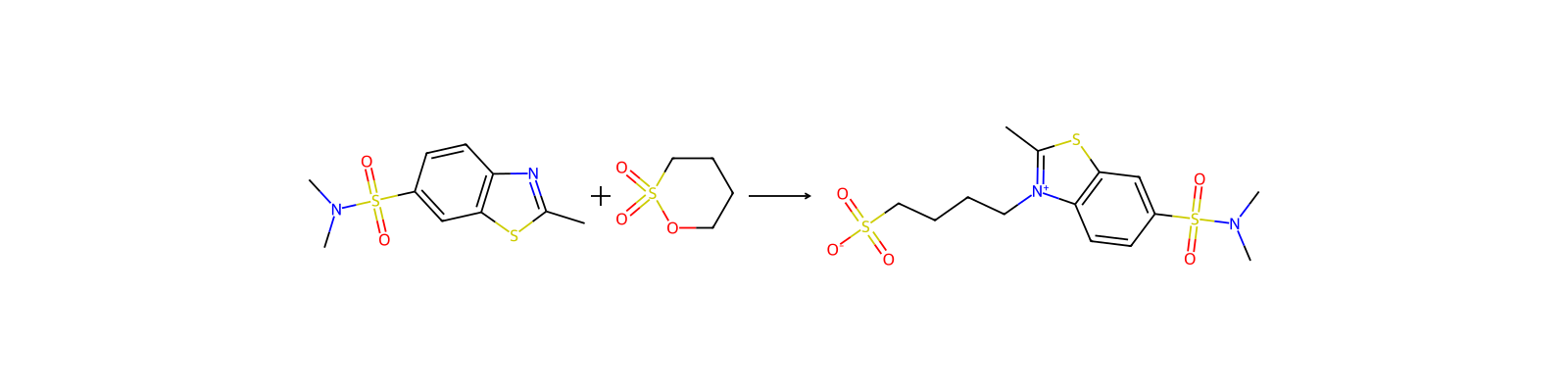
[CH3:1][N:2]([CH3:16])[S:3]([C:6]1[CH:15]=[CH:14][C:9]2[N:10]=[C:11]([CH3:13])[S:12][C:8]=2[CH:7]=1)(=[O:5])=[O:4].[CH2:17]1[CH2:24][O:23][S:20](=[O:22])(=[O:21])[CH2:19][CH2:18]1>>[CH3:16][N:2]([CH3:1])[S:3]([C:6]1[CH:15]=[CH:14][C:9]2[N+:10]([CH2:24][CH2:17][CH2:18][CH2:19][S:20]([O-:23])(=[O:22])=[O:21])=[C:11]([CH3:13])[S:12][C:8]=2[CH:7]=1)(=[O:4])=[O:5]Participants
3

Conditions
- Temperature
- 160 °C
Procedure
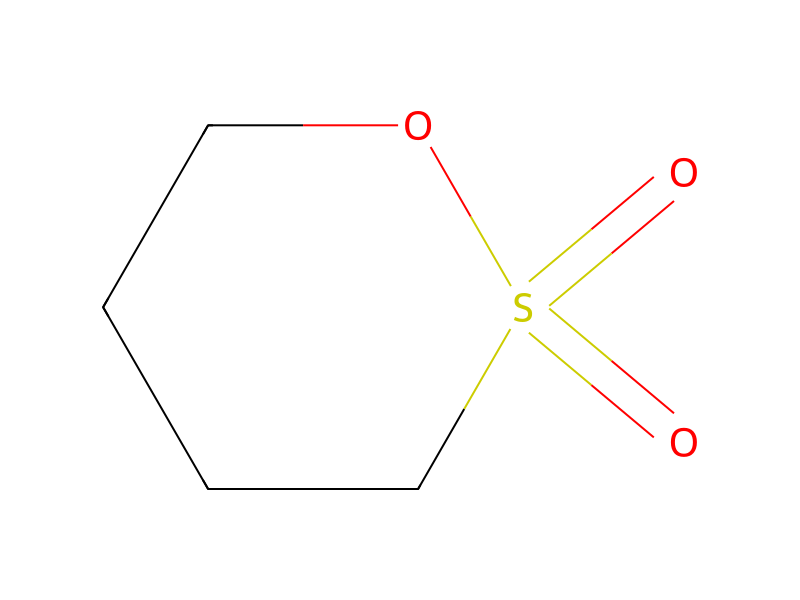
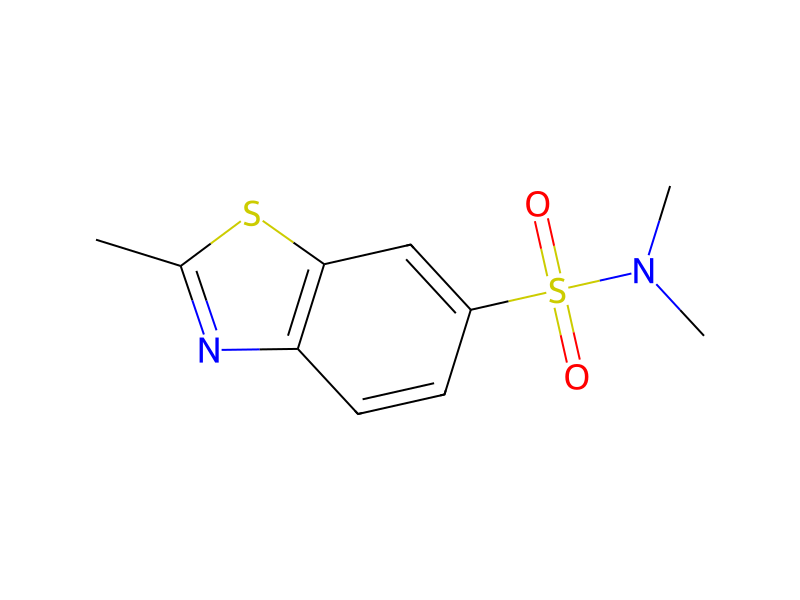
A mixture of Compound 24 (2.55 g, 10.0 mmol) from step (a) of Example 27 and 1-4-butane sultone (2.98 g, 21.9 mmol) was heated in a pressure tube at 160° C. for 17 hours. The mixture was allowed to cool to room temperature, and the resulting mass was triturated with ethyl acetate (40 ml) until a pink solid separated. The solid was collected by centrifugation, washed with ethyl acetate and dried under vacuum to yield 3.58 g (92%) of Compound 26 with the structure:
Workup
- temperatureto cool to room temperature
- customthe resulting mass was triturated with ethyl acetate (40 ml) until a pink solid
- customseparated
- customThe solid was collected by centrifugation
- washwashed with ethyl acetate
- customdried under vacuum
Sources & evidence
- ORD record
- ord-735dd4ad5e9545f9b92bec416f0fb797
- Source dataset
- uspto-grants-2014_09
- Patent number
- US08846952B2
Linked notes
Loading…