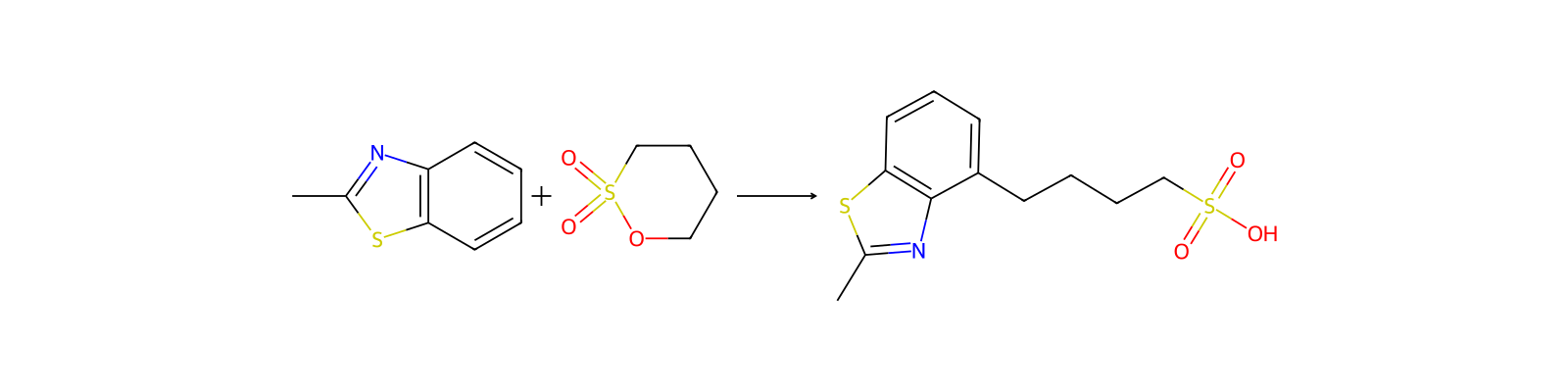
1,4-Butane sultone
Completing data — refresh the page later to see the latest
Basic information
- CAS
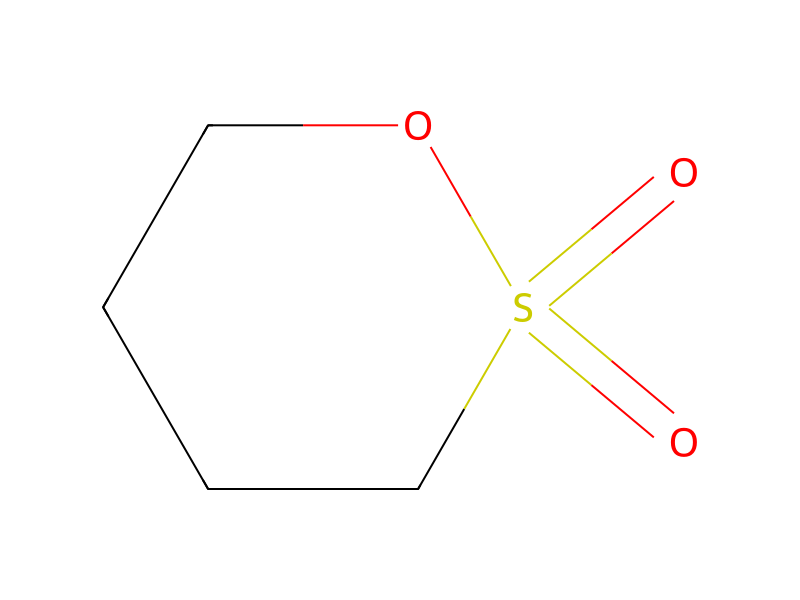
1633-83-6- Standard SMILES
O=S1(=O)CCCCO1- InChIKey
MHYFEEDKONKGEB-UHFFFAOYSA-N- Molecular formula
- C4H8O3S
- Average molar mass
- 136.17 g/mol
- Monoisotopic mass
- 136.01941529
Names & identifiers
- Preferred name
- 1,4-Butane sultone
- IUPAC
- oxathiane 2,2-dioxide
- English name
- 1,4-Butane sultone
- Molecular formula
- C4H8O3S
- Molecular weight
- 136.17
Names & synonyms
1,4-BUTANE SULTONE1,4-ButanesultoneButane sultone1,2-Oxathiane, 2,2-dioxide1,2-Oxathiane 2,2-dioxideButanesulfoneButanesultone1,4-Butylene sulfone1,4-Butanesulfone1(4)-ButanesultoneBRN 0110588HSDB 5846
Show more names
-Sultone1,4-Butane1,4-BUTANE SULTON1,4-butylenesulfoneBusulfan Impurity 71,4-Butane suLJACS-1633-83-6δ-Valerosultone
deltaValerosultoneUNII-4E0C1CLI2CEINECS 216-647-9NSC 71999DTXSID4061836NSC-719995-19-01-00010 (Beilstein Handbook Reference)1-BUTANESULFONIC ACID, 4-HYDROXY-, .DELTA.-SULTONE
Database identifiers
- CAS
1633-83-6- PubChem CID
- 15411
- DTXSID
DTXSID4061836- UNII
- 4E0C1CLI2C
- EC Number
- 216-647-9
- Nikkaji
- J3.676E
Properties
Computed structural propertiesFilling in
- XLogP
- 0.1
- Topological polar surface area
- 51.8 Ų
- Hydrogen bond donors
- 0
- Hydrogen bond acceptors
- 3
- Rotatable bonds
- 0
- Heavy atoms
- 8
- Formal charge
- 0
- Complexity
- 153
Experimental & physicochemical properties
Chemical ClassesOther Classes -> Sulfur Compounds
Physical Description
Liquid
Clear faintly brownish-yellow liquid; [MSDSonline]
Physicochemical properties
- Melting point
- 12 · 12-15 °C (lit.)
- Boiling point
- 165 °C/25 · >165 °C/25 mmHg (lit.)
- Density
- 1.331 g/mL · 1.331 g/mL at 25 °C (lit.)
- refractive index
- 20 · n20/D 1.464(lit.)
- Flash point
- 230 °F · >230 °F
- storage temp.
- 30 °C · Store below +30°C.
- solubility
- 54 g/l · 54g/l (decomposition)
- form
- Liquid
- color
- Clear colorless to yellow
- Water Solubility
- 54 g/L · 54 g/L (20 ºC) decomposes
Safety & regulation
Safety information is for reference only and does not replace the supplier’s Safety Data Sheet (SDS), applicable regulations, or professional assessment.
GHS classification
GHS Classification
This chemical does not meet GHS hazard criteria for 0.6% (1 of 167) of reports.
Warning
H302 (99.4%): Harmful if swallowed [Warning Acute toxicity, oral]
P203, P261, P264, P264+P265, P270, P271, P273, P280, P301+P317, P302+P352, P304+P340, P305+P351+P338, P318, P319, P321, P330, P332+P317, P337+P317, P362+P364, P403+P233, P405, and P501 (click each P-code to see the statement)
Aggregated GHS information provided per 167 reports by companies from 12 notifications to the ECHA C&L Inventory. Each notification may be associated with multiple companies.
Hazard information
Regulatory Information
1,2-Oxathiane, 2,2-dioxide is listed on the EPA's Chemical Data Reporting (CDR) system. Manufacturers and importers of 1,2-Oxathiane, 2,2-dioxide are required to report information about their production and use of this chemical to the EPA under the Toxic Substances Control Act (TSCA). (40 eCFR Part 711)
REACH registered substance: 1(4)-butanesultone (EC: 216-647-9)
1,4-Butanesultone: Does not have an individual approval but may be used under an appropriate group standard
Hazards SummaryA mutagen and equivocal tumorigen; [RTECS] May cause irritation; [MSDSonline] See Propane sultone.
Special Reports
THIS IS A REVIEW OF THE HOST MEDIATED ASSAY AND BODY FLUID ASSAY AS REPORTED FOR 208 CHEMICALS. 1,4-BUTANE SULTONE WAS POSITIVE FOR AN UNSPECIFIED STRAIN OF SALMONELLA TYPHIMURIUM.[LEGATOR MS ET AL; AN EVALUATION OF THE HOST MEDIATED ASSAY AND BODY FLUID ANALYSIS A REPORT OF THE USA ENVIRONMENTAL PROTECTION AGENCY GENE-TOX PROGRAM; MUTAT RES 98 (3): 319-74 (1982)]
Hazard Classes and CategoriesAcute Tox. 4 (99.4%)
Chemistry & industry
Uses & manufacturing
Uses
Used as research chemical (alkylating agent); Not commercially produced in the US; [HSDB]
RESEARCH CHEMICAL (ALKYLATING AGENT)
U.S. Exports
(1979) No Data
(1981) No Data
U.S. Imports
(1979) No Data
(1981) No Data
U.S. Production
2023: <50,000 lb
(1979) NOT PRODUCED COMMERCIALLY IN U.S.
(1981) NOT PRODUCED COMMERCIALLY IN U.S.
Industry UsesIntermediate
Methods of ManufacturingPROBABLY BY DEHYDRATION OF 4-HYDROXY-1-BUTANESULFONIC ACID
General Manufacturing Information
All Other Basic Organic Chemical Manufacturing
1,2-Oxathiane, 2,2-dioxide: ACTIVE
Applications
Description1,4-Butane sultone is an impurity in sulfobutyl ether β-cyclodextrin (SBE-β-CD), and has been reported to be a weak carcinogen. 1,4-Butane sultone can be used for preparation of Brnsted acidic ionic liquids and the ionic liquid is green, highly water soluble, thermally stable, specific and catalytically stable, and can be used for the preparation of symmetrical 3,3'-diaryloxyoctanone compounds[1-2].
Uses1,4-Butane Sultone is an alkylating agent with weak carcinogenic activity.
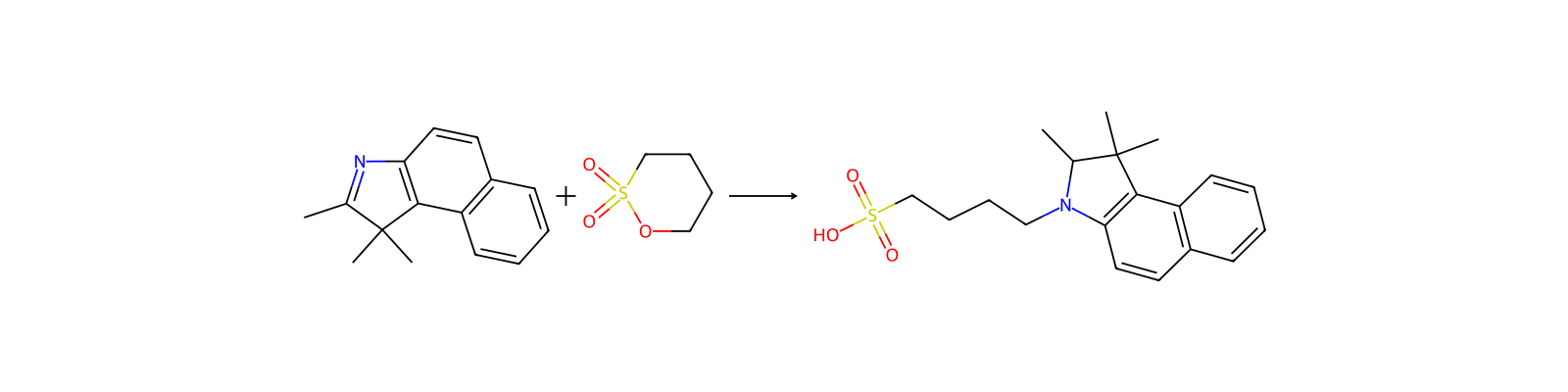
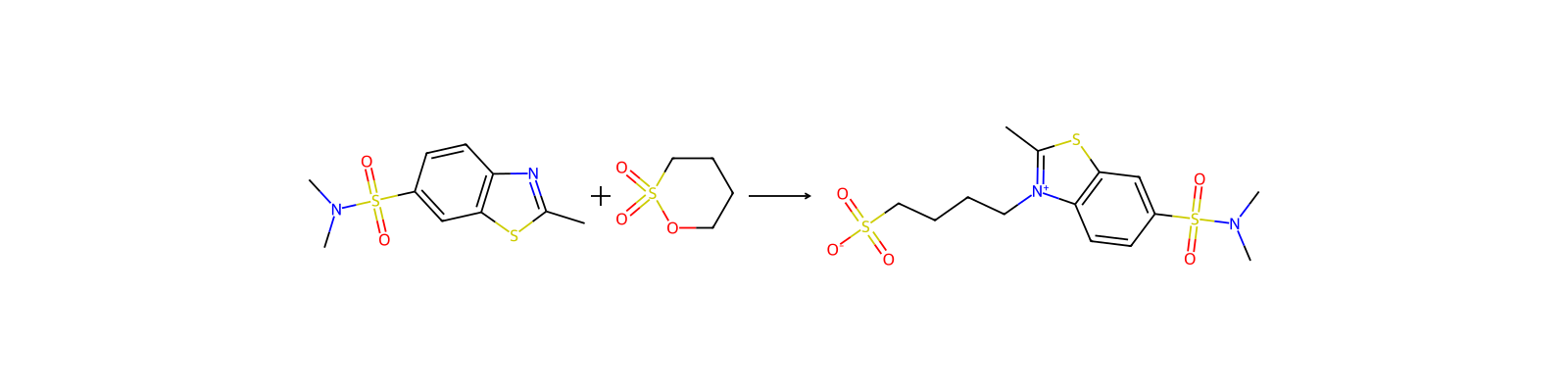
Uses1,4-Butane sultone can be employed as a reactant in the preparation of conjugated polymers which include polybetaine, poly[2-ethynyl-N-(4-sulfobutyl)pyridinium betaine] (PESPB).It can also be used in the preparation of Bronsted acid catalysts such as 4-(succinimido)-1-butane sulfonic acid and poly(4-vinylpyridinium butane sulfonic acid) hydrogen sulfate. These catalysts facilitate the synthesis of 1-amidoalkyl-2-naphthols, substituted quinolines, and pyrano[4,3-b]pyran derivatives.
Related reactions
71 records



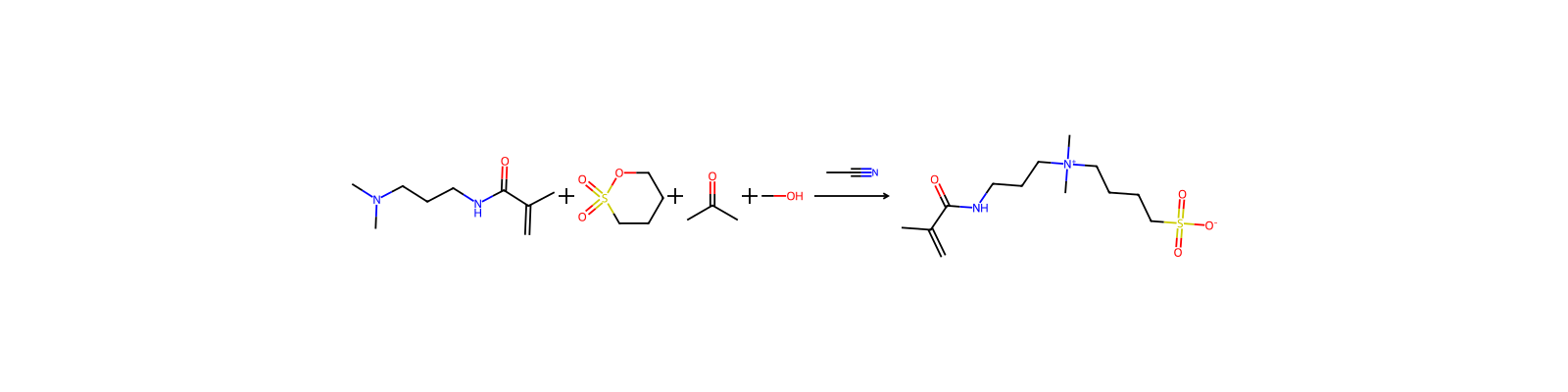
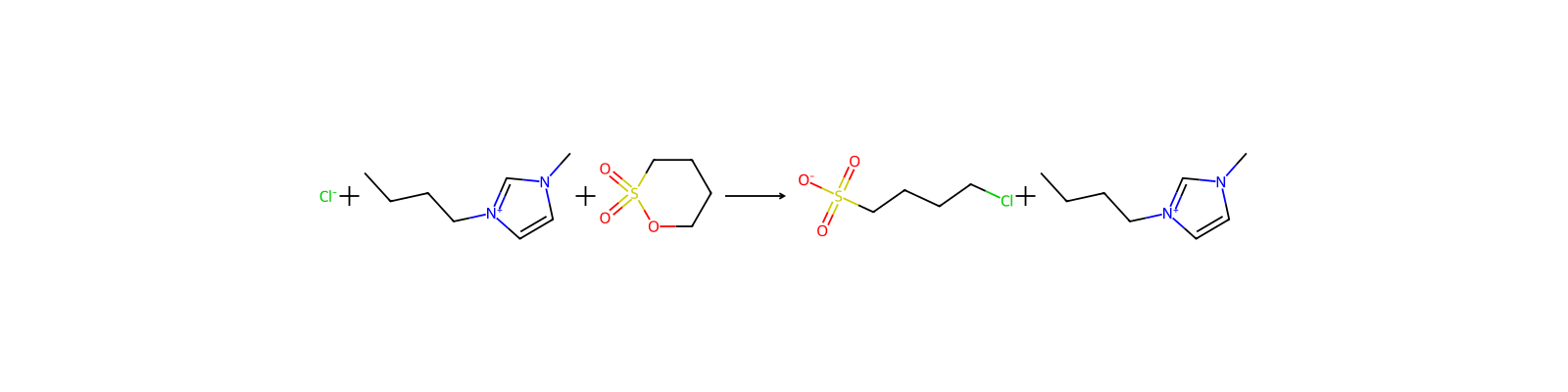
Compound notes
Loading…