HomeMCPWorkbenchSkills
HomeWorkbenchNotificationsMe
llms.txt · MCP GuidePrivacy Policy · Terms of Service · Supportv1.8.0
  1. Home
  2. /Reaction

Dibenzyl → Diphenylacetylene

HRID 851457
Notes
Print preview

Reaction equation

HRID 851457 reaction equation
[C:1]1(/[CH:7]=[CH:8]\[C:9]2[CH:14]=[CH:13][CH:12]=[CH:11][CH:10]=2)[CH:6]=[CH:5][CH:4]=[CH:3][CH:2]=1.C1(/C=C/C2C=CC=CC=2)C=CC=CC=1.C1(CCC2C=CC=CC=2)C=CC=CC=1>[Pd].C(O)C>[C:1]1([C:7]#[C:8][C:9]2[CH:10]=[CH:11][CH:12]=[CH:13][CH:14]=2)[CH:6]=[CH:5][CH:4]=[CH:3][CH:2]=1
ParticipantsProcedureWorkupSources & evidenceReaction notes

Participants

6

Reactant 3

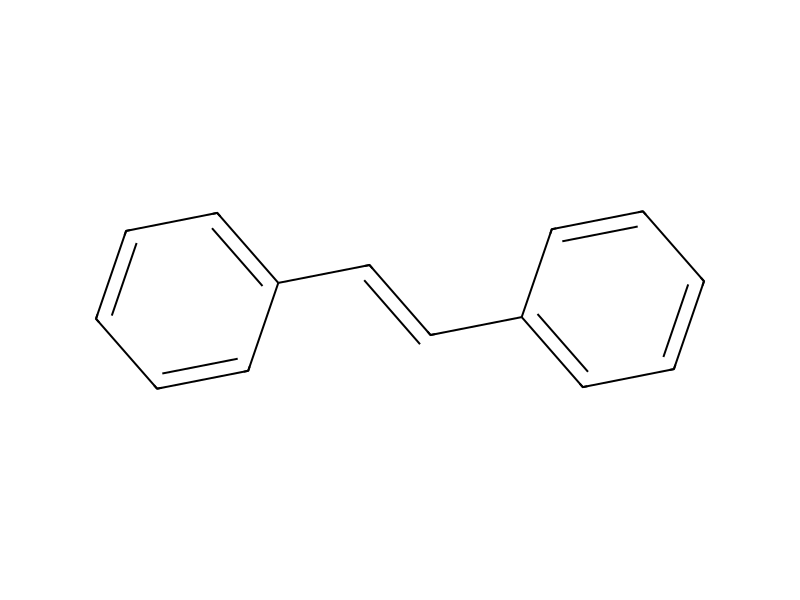
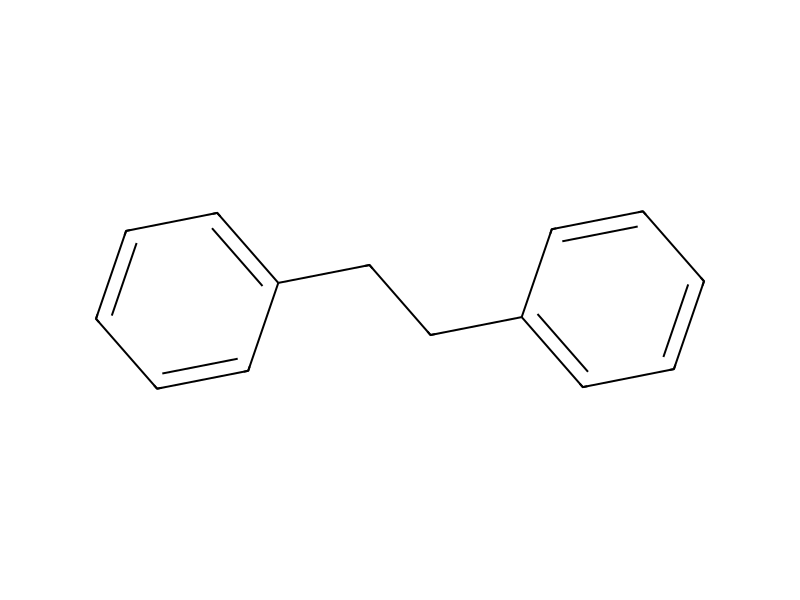
HCID 7647DibenzylHCID 638088trans-StilbeneHCID 5356785cis-Stilbene

Product 1

HCID 10390Diphenylacetylene

Reagents, catalysts & solvents 2

HCID 23938PalladiumCatalystHCID 702EthanolSolvent

Procedure

The relevant reactions are shown in equations below. the first step, hydrogenation of the triple bond to form an olefin, can give two isomeric products, designated cis or trans depending on the orientation of the substituents about the double bond. These molecules can be further hydrogenated to the saturated product as also shown in such equations ##STR5## The palladium-loaded pyridyl catalyst of Example 6 hydrogenated diphenylacetylene under only 50 psig pressure of H2 : an ethanol solution of the substrate was 100% converted to a product mixture consisting of 80.7% cis-stilbene, 16.1% trans-stilbene, and 3.2% 1,2-diphenylethane. The low pressure used in this experiment made it difficult to monitor the course of the reaction, for the pressure gauge on the Parr bomb is not very sensitive or accurate in this regime. No pressure decrease was observed when the reaction mixture was stirred at room temperature for 3 hrs. and upon warming to 80° C. the pressure increased to 60 psig (the ideal gas law predicts 59 psig if no reaction occurred). No pressure increase was observed when the temperature was next raised to 100° C., and it remained steady on holding the reactor at this temperature for 1 hr. Upon cooling to room temperature the pressure was found to be 35 psig; it thus appears that the reaction occurred during the warming from 80° C.

Workup

  1. customcan give two isomeric products
  2. customthe course of the reaction
  3. temperatureand upon warming to 80° C. the pressure
  4. temperatureincreased to 60 psig (the ideal gas law
  5. temperatureNo pressure increase
  6. temperaturewas next raised to 100° C.
  7. customfor 1 hr
  8. temperatureUpon cooling to room temperature the pressure
  9. customwarming from 80° C.

Sources & evidence

ORD record
ord-f73863fec19c4efd894771d1f6c18208
Source dataset
uspto-grants-1983_05
DOI
10.6084/m9.figshare.5104873.v1
Patent number
US04384981

Reaction notes

Loading…

On this pageParticipantsProcedureWorkupSources & evidenceReaction notes