HomeMCPWorkbenchSkills
HomeWorkbenchNotificationsMe
llms.txt · MCP GuidePrivacy Policy · Terms of Service · Supportv1.8.0
  1. Home
  2. /Reaction

Potassium Carbonate → 3-Bromo-1-(2,6-dimethyl-4-nitrophenyl)pyridin-2(1H)-one

HRID 85223
Notes
Print preview

Reaction equation

HRID 85223 reaction equation
[Br:1][C:2]1[C:3](=[O:8])[NH:4][CH:5]=[CH:6][CH:7]=1.[C:9](=O)([O-])[O-].[K+].[K+].F[C:16]1[CH:21]=[C:20](C)[C:19]([N+:23]([O-:25])=[O:24])=[CH:18][C:17]=1[CH3:26].O.Cl>CS(C)=O>[Br:1][C:2]1[C:3](=[O:8])[N:4]([C:16]2[C:17]([CH3:26])=[CH:18][C:19]([N+:23]([O-:25])=[O:24])=[CH:20][C:21]=2[CH3:9])[CH:5]=[CH:6][CH:7]=1
ParticipantsConditionsProcedureWorkupSources & evidenceReaction notes

Participants

6

Reactant 4

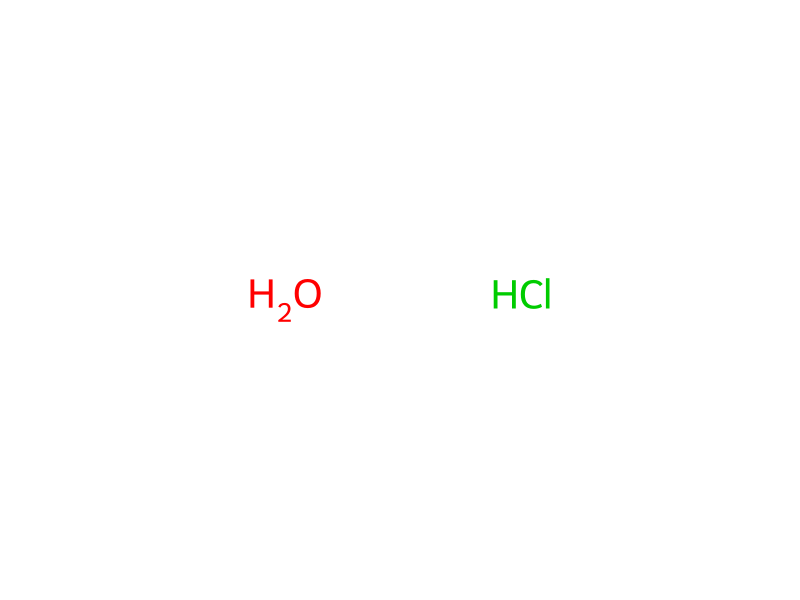
HCID 11430Potassium CarbonateHCID 8185493-Bromo-2-hydroxypyridineHCID 21885828Hydrate;hydrochlorideHCID 232344381-Fluoro-2,5-dimethyl-4-nitrobenzene

Product 1

HCID 594102073-Bromo-1-(2,6-dimethyl-4-nitrophenyl)pyridin-2(1H)-one

Reagents, catalysts & solvents 1

HCID 679
Dimethyl Sulfoxide
Solvent
2×

Conditions

Temperature
120 °C

Procedure

150 g (750 mmol) of 3-bromopyridin-2(1H)-one (O. S. Tee, M. Pavent, J. Am. Chem. Soc. 1982, 104, 4142-4146.) and 207 g (1.50 mol) of potassium carbonate are dissolved in 2.9 l of dimethyl sulphoxide and heated to 120° C. At this temperature, a solution of 317 g (750 mmol) of 1-fluoro-2,5-dimethyl-4-nitrobenzene in 700 ml of dimethyl sulphoxide is added dropwise over a period of 60 min, and the mixture is stirred at 120° C. for 3.5 h. After cooling, the reaction solution is stirred into a water/hydrochloric acid mixture. The mixture is extracted with ethyl acetate, the phases are separated and the aqueous phase is once more extracted with ethyl acetate. The combined organic phases are then washed with water. The phases are separated, and the organic phase is dried over sodium sulphate. After concentration under reduced pressure, the residue is purified by chromatography on silica gel (dichloromethane, then ethyl acetate/dichloromethane 1:20). The product-containing fractions are combined, the solvents are removed and the residue is triturated with diethyl ether. This gives 112 g (46% of theory) of the desired compound.


Workup

  1. temperatureAfter cooling
  2. extractionThe mixture is extracted with ethyl acetate
  3. customthe phases are separated
  4. extractionthe aqueous phase is once more extracted with ethyl acetate
  5. washThe combined organic phases are then washed with water
  6. customThe phases are separated
  7. dry with materialthe organic phase is dried over sodium sulphate
  8. concentrationAfter concentration under reduced pressure
  9. customthe residue is purified by chromatography on silica gel (dichloromethane
  10. customthe solvents are removed
  11. customthe residue is triturated with diethyl ether

Sources & evidence

ORD record
ord-c673b12610924e689171909943fcbd37
Source dataset
uspto-grants-2014_09
DOI
10.6084/m9.figshare.5104873.v1
Patent number
US08846934B2

Reaction notes

Loading…

On this pageParticipantsConditionsProcedureWorkupSources & evidenceReaction notes