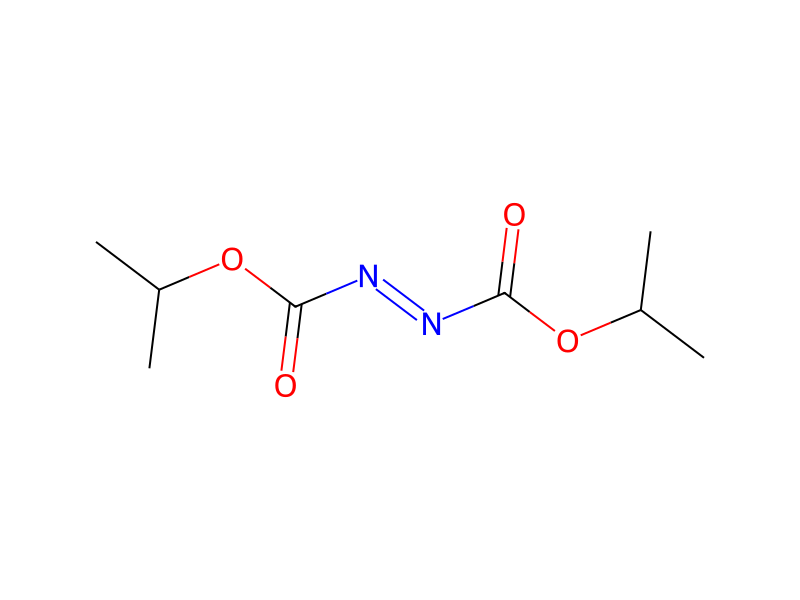
[CH2:1]([S:5]([NH:8][C:9]1[CH:10]=[C:11]([CH:16]=[C:17]([CH2:19][CH2:20][CH3:21])[CH:18]=1)[C:12]([O:14][CH3:15])=[O:13])(=[O:7])=[O:6])[CH2:2][CH:3]=[CH2:4].[CH2:22](O)[CH:23]=[CH2:24].C1(P(C2C=CC=CC=2)C2C=CC=CC=2)C=CC=CC=1.N(C(OC(C)C)=O)=NC(OC(C)C)=O>C1(C)C=CC=CC=1>[CH2:1]([S:5]([N:8]([CH2:24][CH:23]=[CH2:22])[C:9]1[CH:10]=[C:11]([CH:16]=[C:17]([CH2:19][CH2:20][CH3:21])[CH:18]=1)[C:12]([O:14][CH3:15])=[O:13])(=[O:7])=[O:6])[CH2:2][CH:3]=[CH2:4]To a solution of methyl 3-[(3-buten-1-ylsulfonyl)amino]-5-propylbenzoate (D134) (1.3 g, 4.2 mmol, 1 equiv), 2-propen-1-ol (280 μl, 4.2 mmol, 1 equiv) and triphenylphosphine (1.28 g, 4.9 mmol, 1.15 equiv) in toluene (20 ml) at room temperature was slowly added diisopropyl azodicarboxylate (964 ml, 4.9 mmol, 1.15 equiv). The resulting solution was stirred at this temperature for 30 min then concentrated in vacuo. Purification of the residue by flash chromatography on silica gel (iso-hexane/AcOEt: 4:1) gave methyl 3-[(3-buten-1-ylsulfonyl)(2-propen-1-yl)amino]-5-propylbenzoate (D135) (1.1 g, 75%) as a yellow oil. [M+H]+=352.1, RT=3.63 min.