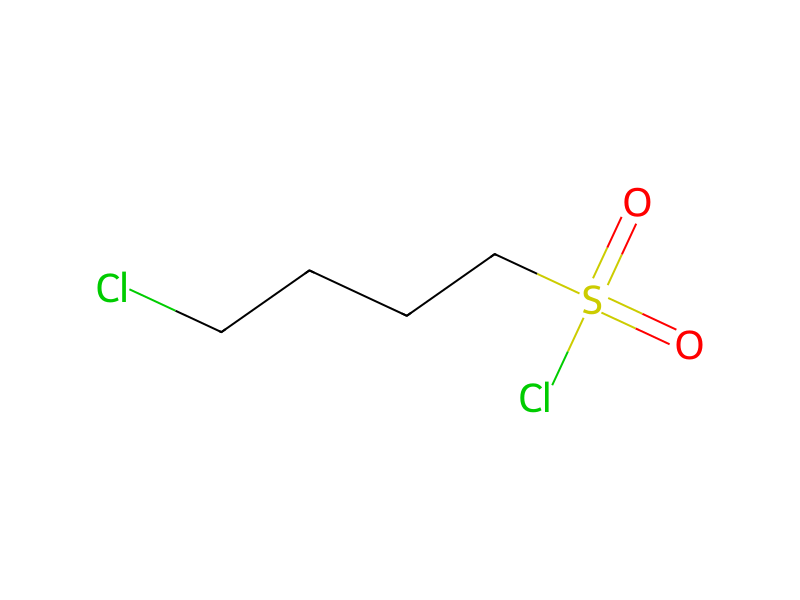
[NH2:1][C:2]1[C:10]2[N:9]=[CH:8][NH:7][C:6]=2[CH:5]=[C:4]([C:11]([O:13][CH3:14])=[O:12])[CH:3]=1.N1C=CC=CC=1.[Cl:21][CH2:22][CH2:23][CH2:24][CH2:25][S:26](Cl)(=[O:28])=[O:27]>C(Cl)Cl.CN(C1C=CN=CC=1)C>[Cl:21][CH2:22][CH2:23][CH2:24][CH2:25][S:26]([NH:1][C:2]1[C:10]2[N:9]=[CH:8][NH:7][C:6]=2[CH:5]=[C:4]([C:11]([O:13][CH3:14])=[O:12])[CH:3]=1)(=[O:28])=[O:27]To a solution of methyl 4-amino-1H-benzimidazole-6-carboxylate (D251) (1.1 g, 5.76 mmol, 1 equiv) in CH2Cl2 (80 ml) at room temperature were added pyridine (1.02 ml, 12.67 mmol, 2.2 equiv), 4-chloro-1-butanesulfonyl chloride (D20) (2.31 g, 12.1 mmol, 2.1 equiv) and DMAP (704 mg, 5.76 mmol, 1 equiv) and the resulting mixture was stirred for 1 h then concentrated in vacuo. The residue was diluted with AcOEt and the organic phase was washed with a 2N aqueous HCl solution and brine, then dried over MgSO4 and concentrated in vacuo. Purification of the residue by flash chromatography on silica gel (AcOEt/iso-hexane: 2/3) gave methyl 4-{[(4-chlorobutyl)sulfonyl]amino}-1H-benzimidazole-6-carboxylate (D252) (1 g, 50%) as a colorless oil. [M+H]+=346.1, RT=2.97 min.