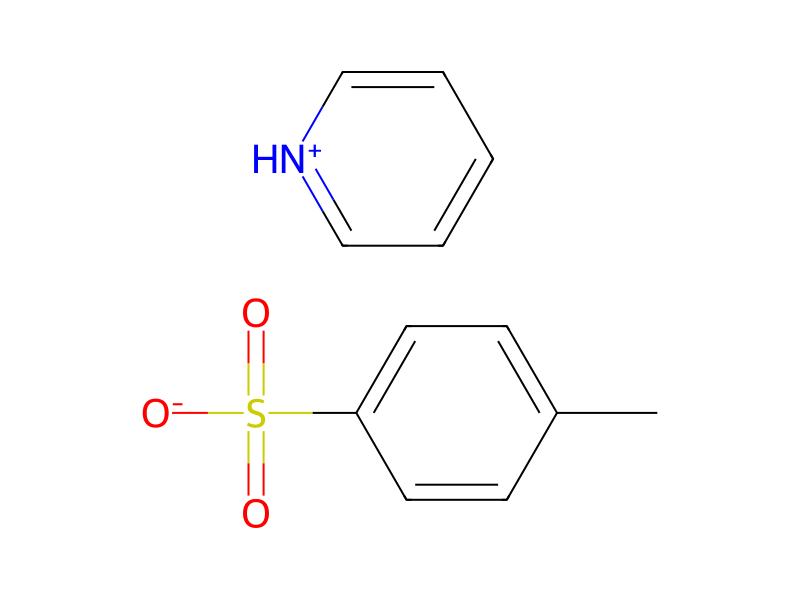
[C:1]1([C@@H:7]([C@H:9]([C:11]2[CH:16]=[CH:15][CH:14]=[CH:13][CH:12]=2)[OH:10])[OH:8])[CH:6]=[CH:5][CH:4]=[CH:3][CH:2]=1.[C:17]1([CH3:27])[CH:22]=[CH:21][C:20](S([O-])(=O)=O)=CC=1.[NH+]1C=CC=CC=1.C1(=O)CCC=C1>C1CCCCC1>[C:11]1([C@H:9]2[C@H:7]([C:1]3[CH:2]=[CH:3][CH:4]=[CH:5][CH:6]=3)[O:8][C:17]3([CH2:22][CH2:21][CH:20]=[CH:27]3)[O:10]2)[CH:16]=[CH:15][CH:14]=[CH:13][CH:12]=1A solution of (S,S)-hydrobenzoin (10.0 g, 46.7 mmol), pyridinium p-toluene sulfonate (1.4 g, 5.6 mmol), 2-cyclopentene-1-one (20 mL, 238.7 mmol) and cyclohexane (200 mL) was heated under reflux for 4 h with a Dean-Stark trap to remove water formed during the reaction. The mixture was then cooled in an ice bath for 20 min, and the insolubles were filtered off through filter aid. The resulting solution was washed with a 10% aqueous potassium bicarbonate solution (2×25 mL) and water (2×25 mL), and then dried over anhydrous sodium sulfate. The dried solution was passed through a pad of silica gel 60 (26 g of 230-400 mesh). The pad was further eluted with additional hexanes (475 mL). The resulting solution was concentrated in vacuo to afford 2(S),3(S)-diphenyl-1,4-dioxa-spiro[4.4]non-6-ene (10.55 g, 81%) as a white solid.
Loading…