2-Bromohexane → 3-Methyl-heptanoic acid
HRID 867772
Reaction equation

[Na].C(OCC)(=O)[CH2:3][C:4]([O-:6])=[O:5].Br[CH:12]([CH2:14][CH2:15][CH2:16][CH3:17])[CH3:13]>C(O)C>[CH3:13][CH:12]([CH2:14][CH2:15][CH2:16][CH3:17])[CH2:3][C:4]([OH:6])=[O:5]Participants
5
Reactant 3

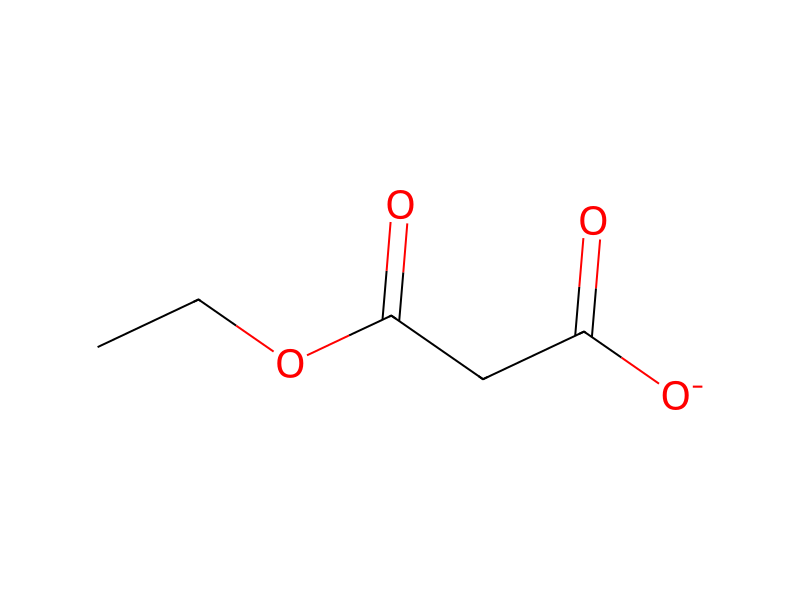

Product 1

Reagents, catalysts & solvents 1

Procedure
Under argon atmosphere, to a solution of sodium metal (70.6 g, 3.07 mol) in absolute ethanol (900 ml) was added ethyl malonate (510 g, 3.18 mol) with stirring. Further, 2-bromohexane (475 g, 2.88 mol) was added dropwise gradually and, after sodium bromide was precipitated, in such a rate that ethanol was slowly refluxed. After addition reflux was continued for 4 hours. After cooling the mixture to room temperature 50% aqueous potassium hydroxide solution (843 g) was added dropwise and the reaction mixture was refluxed for 5 hours. Ethanol was distilled off and the residue was neutralized with concentrated hydrochloric acid (600 ml). The resulting solution was then extracted with ether (one liter×3) and the extracts were dried over anhydrous sodium sulfate. After concentration, the residue was heated at 130° C. for 2 hours and at 180° C. for 2.5 hours. The distillation of the residue under reduced pressure gave dl-3-methylheptanoic acid (310 g, 2.15 mol, 75%, b.p.: 124°-125° C./25 mmHg).