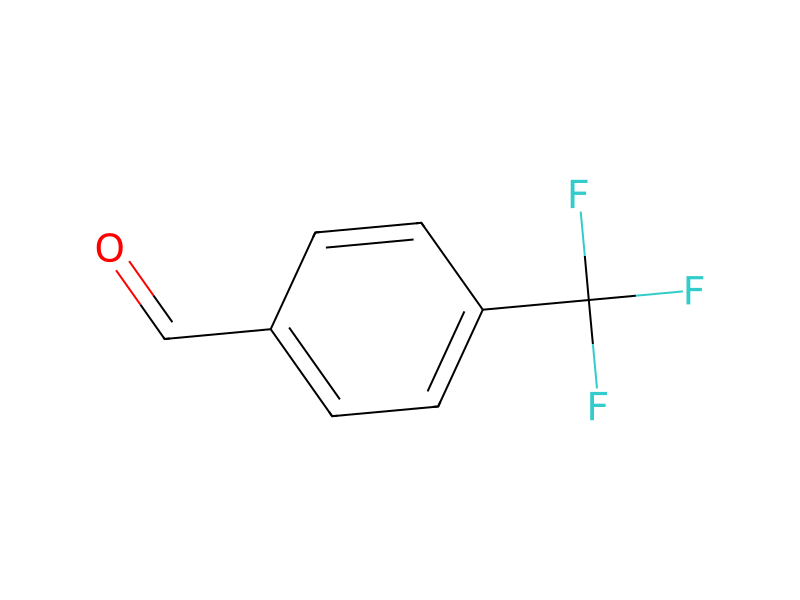
To a vigorously stirred solution of 3,4-dibromo-2,5-dimethylthiophene (53.2 g, 197 mmol) from Example 11, Step 1, in a mixture of diethyl ether (1 L) and tetrahydrofuran (80 mL) at −74° C. under nitrogen is added n-butyllithium (1.6 M/hexanes, 123 mL, 197 mmol) with a syringe slowly such as to maintain an internal temperature between −70° C. and −74° C. The reaction is stirred for an additional 30 minutes. A solution of p-trifluoromethylbenzaldehyde (27.0 mL, 200 mmol) in 30 mL of diethyl ether is added over 3 minutes. The reaction is stirred for 5 minutes. The cold bath was removed and the solution was stirred for 15 minutes while warming up. It was quenched with 5 mL of methanol then with 300 mL of 1N hydrochloric acid and stirred for 30 minutes. The phases are separated. The organic layer is washed with brine (200 mL), dried over magnesium sulphate and concentrated under reduced pressure to afford the desired compound as a faint yellow oil.