Reaction equation

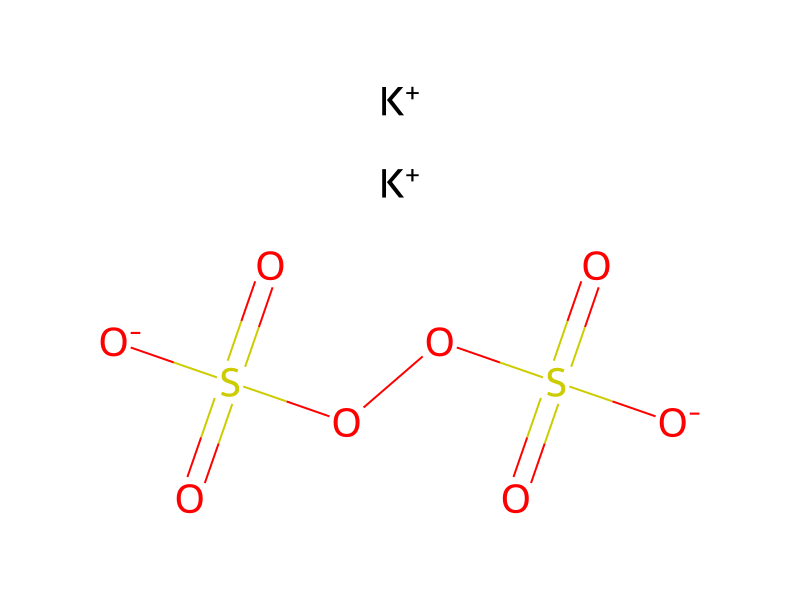
[CH:1]([Cl:3])=[CH2:2].[C:4]([O:7][CH:8]=[CH2:9])(=[O:6])[CH3:5].S(OOS([O-])(=O)=O)([O-])(=O)=O.[K+].[K+].C(OS(C1C=CC=CC=1)(=O)=O)CCCCCCCCCCC.[Na]>O>[C:4]([O:7][CH:8]=[CH2:9])(=[O:6])[CH3:5].[CH:1]([Cl:3])=[CH2:2]Participants
Reactant 4



Product 1

Reagents, catalysts & solvents 1

Conditions
- Temperature
- 60 °C
Procedure
Deionized water (600 g), a monomer mixture composed of 438.8 g of a vinyl chloride monomer (97.5% by weight based on total charge monomer amount), 11.2 g of vinyl acetate (2.5% by weight based on total monomer charge amount), and 2.25 g of potassium persulfate were charged into a 2.5-L autoclave. The reaction mixture was stirred with a stirring blade while maintaining the rotation speed at 120 rpm, and the temperature of the reaction mixture was raised to 60° C. to start a polymerization. A 5% (by weight) aqueous solution of sodium dodecylbenzenesulfonate (180 g, 2% by weight based on total monomer charge amount) was continuously added from the start of the polymerization to 4 hr after the start of the polymerization, and the polymerization was stopped when the polymerization pressure was dropped by 0.6 MPa from a saturated vapor pressure of the vinyl chloride monomer at 60° C. Thereafter, the residual monomer was recovered to obtain a vinyl chloride-vinyl acetate emulsion.
Workup
- additionwere charged into a 2.5-L autoclave
- temperaturewhile maintaining the rotation speed at 120 rpm
- customa polymerization
- customafter the start of the polymerization
- customthe polymerization pressure
- customThereafter, the residual monomer was recovered
Sources & evidence
- ORD record
- ord-4226907c530e4fd9940da8fa32d68df8
- Source dataset
- uspto-grants-2015_03
- Patent number
- US08986796B2
Linked notes
Loading…