HomeMCPWorkbenchSkills
HomeWorkbenchNotificationsMe
llms.txt · MCP GuidePrivacy Policy · Terms of Service · Supportv1.8.3
  1. Home
  2. /Reaction

Diisopropylamine → tert-Butyl 1-(3-bromobenzyl)cyclopropanecarboxylate

HRID 877204
Print

Reaction equation

HRID 877204 reaction equation
C(NC(C)C)(C)C.C([Li])CCC.[CH:13]1([C:16]([O:18][C:19]([CH3:22])([CH3:21])[CH3:20])=[O:17])[CH2:15][CH2:14]1.[Br:23][C:24]1[CH:25]=[C:26]([CH:29]=[CH:30][CH:31]=1)[CH2:27]Br.[Cl-].[NH4+]>C1COCC1>[Br:23][C:24]1[CH:25]=[C:26]([CH:29]=[CH:30][CH:31]=1)[CH2:27][C:13]1([C:16]([O:18][C:19]([CH3:22])([CH3:21])[CH3:20])=[O:17])[CH2:15][CH2:14]1
ParticipantsConditionsProcedureWorkupSources & evidenceReaction notes

Participants

7

Reactant 5

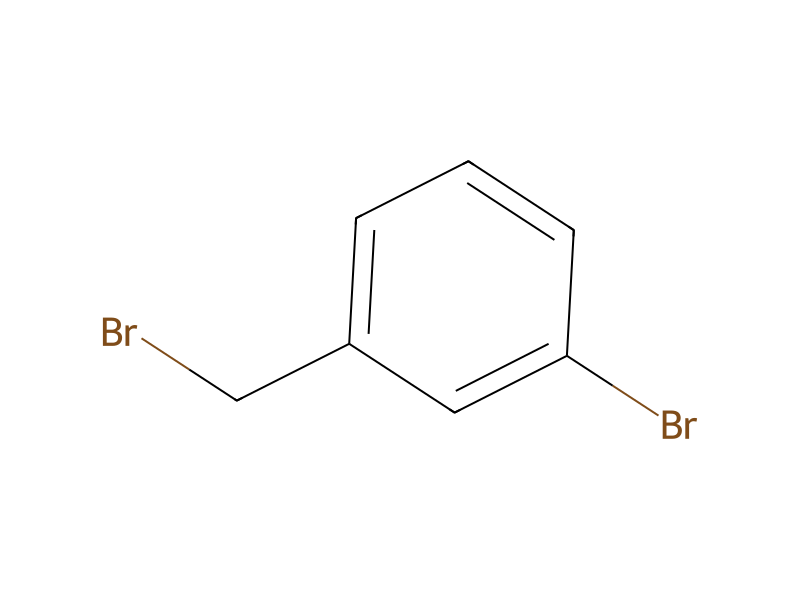
HCID 7912DiisopropylamineHCID 25517Ammonium ChlorideHCID 699793-Bromobenzyl bromideHCID 13676038tert-Butyl cyclopropanecarboxylateHCID 178418339Butyllithium

Product 1

HCID 58136610tert-Butyl 1-(3-bromobenzyl)cyclopropanecarboxylate

Reagents, catalysts & solvents 1

HCID 8028TetrahydrofuranSolvent3×

Conditions

Temperature
-40 °C

Procedure

Under argon, 14.8 ml (105.48 mmol) of diisopropylamine were initially charged in 66 ml of dry THF, and the mixture was cooled to −40° C. 42.2 ml (105.48 mmol) of n-butyllithium solution (2.5 M in hexane) were slowly added dropwise, and the mixture was stirred for 30 min. The reaction solution was then cooled to −78° C., and a solution of 10.0 g (70.32 mmol) of tert-butyl cyclopropanecarboxylate in 17 ml of THF were added. After 4 h of stirring at −78° C., a solution of 19.34 g (77.36 mmol) of 3-bromobenzyl bromide in 17 ml of THF was added. Slowly, the reaction mixture was warmed to RT overnight, ammonium chloride solution was then added carefully and the mixture was extracted three times with ethyl acetate. The combined organic phases were washed with saturated sodium chloride solution, dried over magnesium sulfate and concentrated under reduced pressure. The crude product was purified by chromatography on 750 g of silica gel (mobile phase cyclohexane/dichloromethane 50:1, then 5:1). This gave 13.3 g (60.7% of theory) of the title compound.


Workup

  1. temperatureThe reaction solution was then cooled to −78° C.
  2. stirringAfter 4 h of stirring at −78° C.
  3. temperatureSlowly, the reaction mixture was warmed to RT overnight
  4. extractionthe mixture was extracted three times with ethyl acetate
  5. washThe combined organic phases were washed with saturated sodium chloride solution
  6. dry with materialdried over magnesium sulfate
  7. concentrationconcentrated under reduced pressure
  8. customThe crude product was purified by chromatography on 750 g of silica gel (mobile phase cyclohexane/dichloromethane 50:1

Sources & evidence

ORD record
ord-7f8f30805a814b1c9f1edd263ead40ae
Source dataset
uspto-grants-2015_03
DOI
10.6084/m9.figshare.5104873.v1
Patent number
US08987256B2

Reaction notes

On this pageParticipantsConditionsProcedureWorkupSources & evidenceReaction notes