HomeMCPSkillsWorkbenchOpenChem
HomeWorkbenchNotificationsMe
llms.txt · skill.md · MCP GuidePrivacy Policy · Terms of Service · Supportv1.8.5
  1. Home
  2. /Reaction

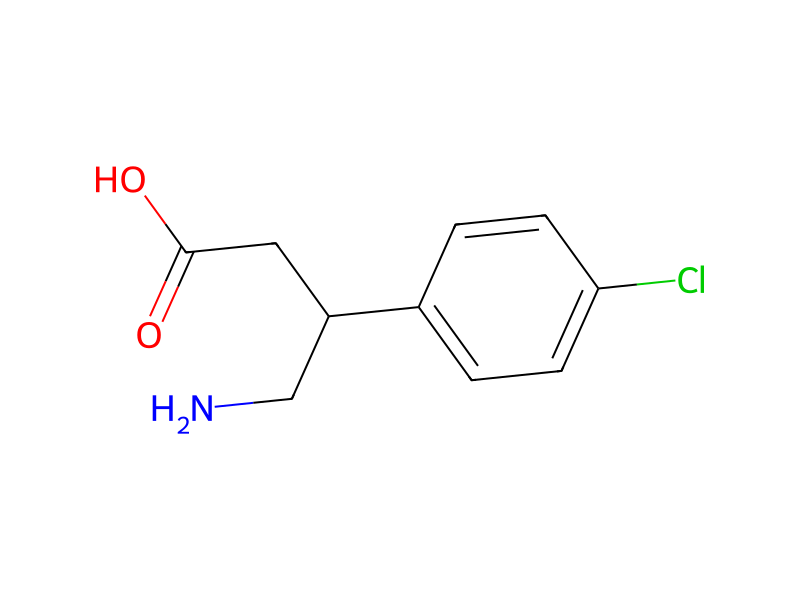
Baclofen → 4-(4-Chlorophenyl)-2-pyrrolidinone

HRID 885413
Print

Reaction equation

[CH:1]1[C:6]([CH:7]([CH2:12][NH2:13])[CH2:8][C:9](O)=[O:10])=[CH:5][CH:4]=[C:3]([Cl:14])[CH:2]=1.S(Cl)(Cl)=O.C(N(C(C)C)CC)(C)C>C(Cl)Cl>[Cl:14][C:3]1[CH:4]=[CH:5][C:6]([CH:7]2[CH2:12][NH:13][C:9](=[O:10])[CH2:8]2)=[CH:1][CH:2]=1
ParticipantsProcedureSources & evidenceReaction notes

Participants

5

Reactant 3

HCID 2284BaclofenHCID 24386Thionyl ChlorideHCID 81531Diisopropylethylamine

Product 1

HCID 1854904-(4-Chlorophenyl)-2-pyrrolidinone

Reagents, catalysts & solvents 1

HCID 6344DichloromethaneSolvent

Procedure

To Baclofen (1.0 g, 4.7 mmol) in CH2Cl2 (20 mL) was added thionyl chloride (0.38 mL, 5.2 mmol), and the reaction was stirred for 10 minutes. Diisopropylethylamine (1.5 mL) was added, and the mixture was worked-up to give the title compound.

Sources & evidence

ORD record
ord-417fc5766c154604aeaddd8638a0c2ee
Source dataset
uspto-grants-2012_08
DOI
10.6084/m9.figshare.5104873.v1
Patent number
US08242145B2

Reaction notes

On this pageParticipantsProcedureSources & evidenceReaction notes