HomeMCPWorkbenchSkills
HomeWorkbenchNotificationsMe
llms.txt · MCP GuidePrivacy Policy · Terms of Service · Supportv1.8.3
  1. Home
  2. /Reaction

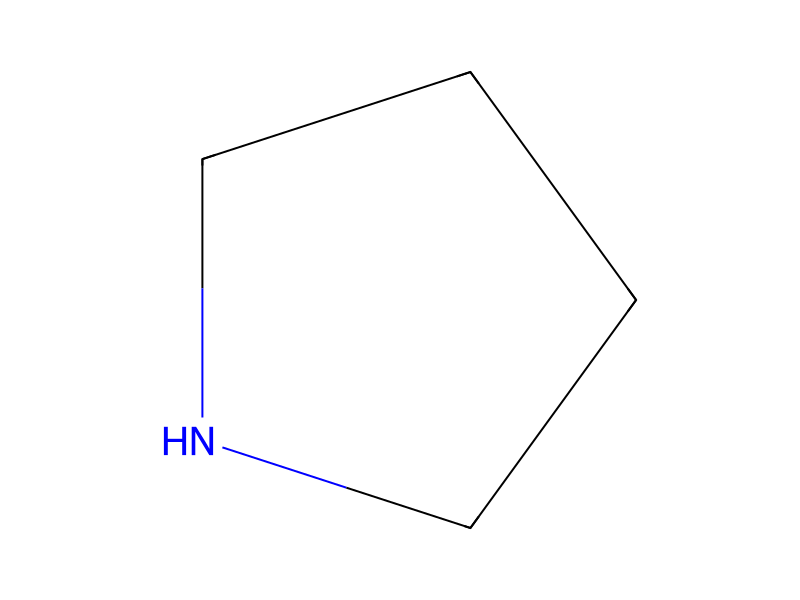
Pyrrolidine → 6,6-Dimethyl-2-{6-[(6-(pyrrolidin-1-yl)pyridin-2-yl)oxy]-2,3-dihydro-4h-1,4-benzoxazin-4-yl}-6,7-dihydro[1,3]thiazolo[5,4-c]pyridin-4(5h)-one

HRID 885988
Print

Reaction equation

HRID 885988 reaction equation
Br[C:2]1[N:7]=[C:6]([O:8][C:9]2[CH:10]=[CH:11][C:12]3[O:17][CH2:16][CH2:15][N:14]([C:18]4[S:19][C:20]5[C:21](=[O:29])[NH:22][C:23]([CH3:28])([CH3:27])[CH2:24][C:25]=5[N:26]=4)[C:13]=3[CH:30]=2)[CH:5]=[CH:4][CH:3]=1.[NH:31]1[CH2:35][CH2:34][CH2:33][CH2:32]1.CC(C)([O-])C.[Na+]>C1(C)C=CC=CC=1.CC(P(C(C)(C)C)C1[CH-]C=CC=1)(C)C.CC(P(C(C)(C)C)C1[CH-]C=CC=1)(C)C.[Cl-].[Cl-].[Fe+2].[Pd+2]>[CH3:27][C:23]1([CH3:28])[NH:22][C:21](=[O:29])[C:20]2[S:19][C:18]([N:14]3[C:13]4[CH:30]=[C:9]([O:8][C:6]5[CH:5]=[CH:4][CH:3]=[C:2]([N:31]6[CH2:35][CH2:34][CH2:33][CH2:32]6)[N:7]=5)[CH:10]=[CH:11][C:12]=4[O:17][CH2:16][CH2:15]3)=[N:26][C:25]=2[CH2:24]1
ParticipantsConditionsProcedureWorkupSources & evidenceReaction notes

Participants

6

Reactant 3

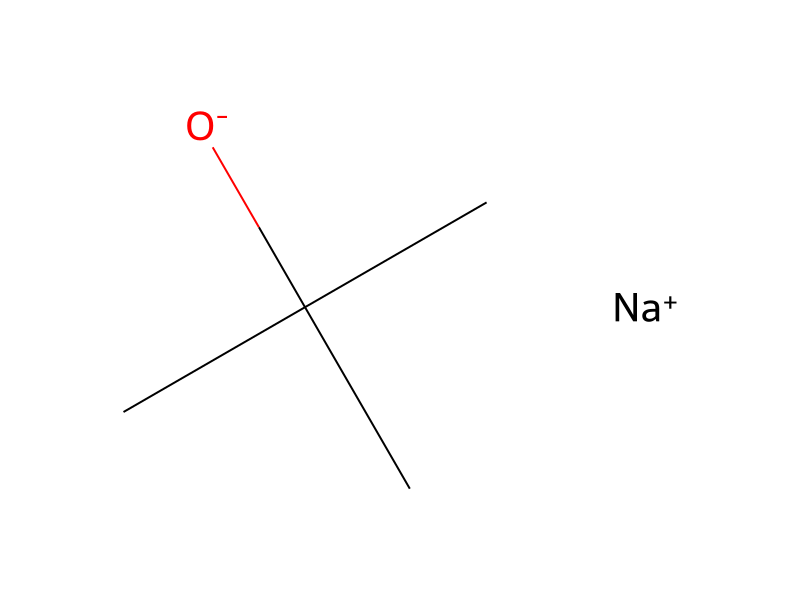
HCID 31268PyrrolidineHCID 23676156Sodium t-butoxideHCID 873022572-{6-[(6-Bromopyridin-2-yl)oxy]-2,3-dihydro-4h-1,4-benzoxazin-4-yl}-6,6-dimethyl-6,7-dihydro[1,3]thiazolo[5,4-c]pyridin-4(5h)-one

Product 1

HCID 685970836,6-Dimethyl-2-{6-[(6-(pyrrolidin-1-yl)pyridin-2-yl)oxy]-2,3-dihydro-4h-1,4-benzoxazin-4-yl}-6,7-dihydro[1,3]thiazolo[5,4-c]pyridin-4(5h)-oneYield 35%

Reagents, catalysts & solvents

2
HCID 53384307Dichloro[1,1'-bis(di-tert-butylphosphino)ferrocene]palladium(II)CatalystHCID 1140TolueneSolvent

Conditions

Temperature
140 °C

Procedure

To a suspension of Example 382 (50 mg, 0.103 mmol) in toluene (4 mL) was added pyrrolidine (0.025 ml, 0.308 mmol), sodium tert-butoxide (20 mg, 0.206 mmol) and [1,1′-bis(di-tert-butylphosphino)ferrocene]palladium(II) dichloride (10 mg, 20% wt). The reaction was heated to 140° C. under microwave irradiation for 90 minutes then cooled to room temperature. The mixture was partitioned between DCM (50 mL) and water (50 mL); the organic phase was washed with brine (50 mL), dried (MgSO4), and concentrated in vacuo. The residue was purified by preparative HPLC (Method 6) to give the title compound (17 mg, 35%) as an off-white solid. δH (CDCl3) 7.91 (1H, d, J 2.4 Hz), 7.39 (1H, t, J 7.9 Hz), 6.93 (1H, d, J 8.9 Hz), 6.88 (1H, dd, J 8.9 and 2.4 Hz), 6.02 (1H, d, J 8.1 Hz), 5.91 (1H, d, J 7.7 Hz), 5.29 (1H, s), 4.38-4.29 (2H, m), 4.15-4.06 (2H, m), 3.45-3.37 (4H, m), 2.85 (2H, s), 2.01-1.92 (4H, m), 1.37 (6H, s). LCMS (ES+) 478.0 (M+H)+, RT 3.96 minutes (Method 1).

Workup

  1. temperaturethen cooled to room temperature
  2. customThe mixture was partitioned between DCM (50 mL) and water (50 mL)
  3. washthe organic phase was washed with brine (50 mL)
  4. dry with materialdried (MgSO4)
  5. concentrationconcentrated in vacuo
  6. customThe residue was purified by preparative HPLC (Method 6)

Sources & evidence

ORD record
ord-844457968e2547dfba3990918931a85f
Source dataset
uspto-grants-2012_08
DOI
10.6084/m9.figshare.5104873.v1
Patent number
US08242116B2

Reaction notes

On this pageParticipantsConditionsProcedureWorkupSources & evidenceReaction notes