Reaction equation

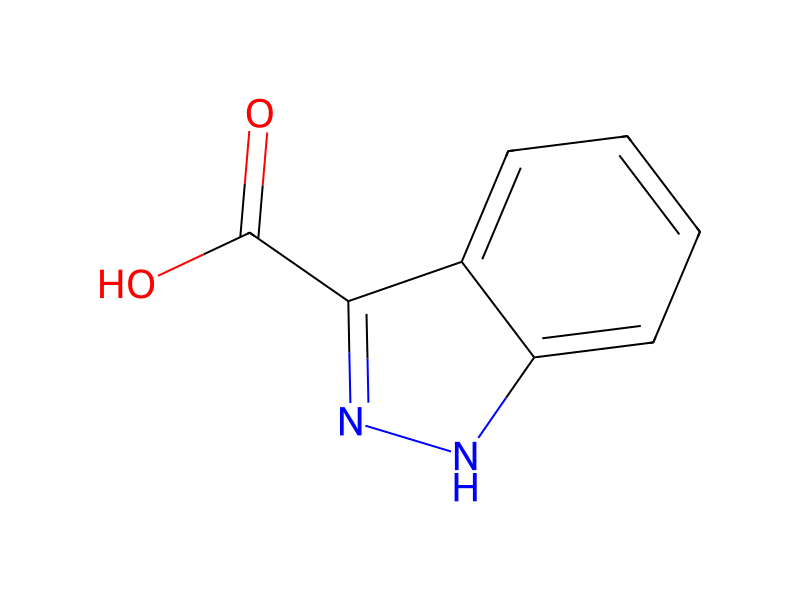
[NH:1]1[C:9]2[C:4](=[CH:5][CH:6]=[CH:7][CH:8]=2)[C:3]([C:10]([OH:12])=O)=[N:2]1.[NH2:13][C:14]1[CH:19]=[CH:18][C:17]([N:20]2[CH2:24][CH2:23][CH2:22][C:21]2=[O:25])=[CH:16][CH:15]=1.C1N(P(Cl)(N2C(=O)OCC2)=O)C(=O)OC1.O>C(Cl)Cl.CCN(CC)CC>[O:25]=[C:21]1[CH2:22][CH2:23][CH2:24][N:20]1[C:17]1[CH:18]=[CH:19][C:14]([NH:13][C:10]([C:3]2[C:4]3[C:9](=[CH:8][CH:7]=[CH:6][CH:5]=3)[NH:1][N:2]=2)=[O:12])=[CH:15][CH:16]=1Participants
7
Reactant 4



Product 1

Reagents, catalysts & solvents 2


Procedure
To a solution of 50 mg 1H-Indazole-3-carboxylic acid in 2 mL DCM and 0.2 mL NEt3, 108 mg 1-(4-Amino-phenyl)-pyrrolidin-2-one and 79 mg BOP-Cl were added at RT and the mixture was stirred for 16 h. After the addition of 5 mL water the mixture was filtered through a chem elut® cartridge by elution with ethyl acetate and then concentrated under reduced pressure. The residue was directly subjected to the subsequent alkylation reaction without further purification.
Workup
- filtrationwas filtered through a chem elut® cartridge by elution with ethyl acetate
- concentrationconcentrated under reduced pressure
- customThe residue was directly subjected to the subsequent alkylation reaction without further purification
Sources & evidence
- ORD record
- ord-89eb368042e54fcd940629a11921534b
- Source dataset
- uspto-grants-2008_04
- Patent number
- US07365088B2
Linked notes
Loading…