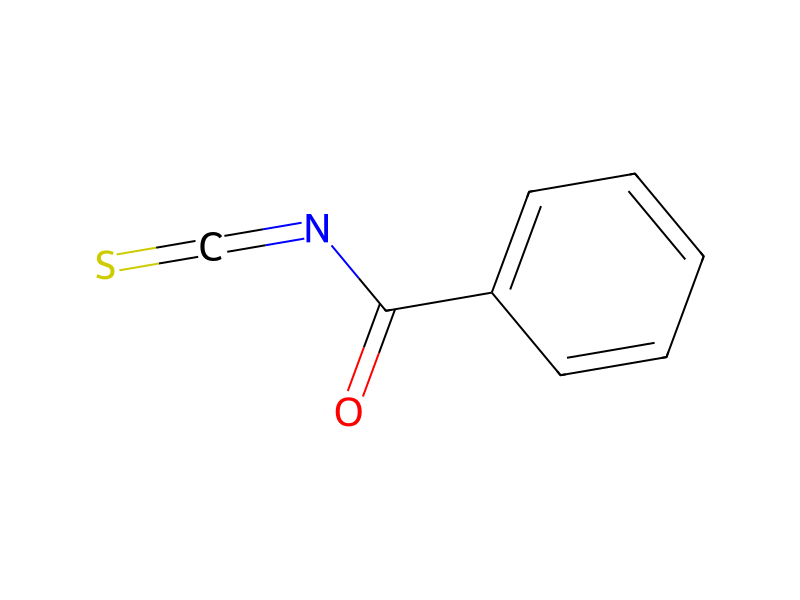
Benzoyl isothiocyanate → N-benzoyl-N'-[2-(2-thiazolylmethylthio)ethyl]thiourea
Reaction equation

[NH2:1][CH2:2][CH2:3][S:4][CH2:5][C:6]1[S:7][CH:8]=[CH:9][N:10]=1.[C:11]([N:19]=[C:20]=[S:21])(=[O:18])[C:12]1[CH:17]=[CH:16][CH:15]=[CH:14][CH:13]=1>>[C:11]([NH:19][C:20]([NH:1][CH2:2][CH2:3][S:4][CH2:5][C:6]1[S:7][CH:8]=[CH:9][N:10]=1)=[S:21])(=[O:18])[C:12]1[CH:17]=[CH:16][CH:15]=[CH:14][CH:13]=1Participants
3


Procedure
By the procedure of Example 18, 2-[(2-aminoethyl)thiomethyl]thiazole is reacted with benzoyl isothiocyanate to give N-benzoyl-N'-[2-(2-thiazolylmethylthio)ethyl]thiourea. Removing the benzoyl group by the procedure of Example 18 gives N-[2-(2-thiazolylmethylthio)ethyl]thiourea. Treating this compound with hydrobromic acid gives the hydrobromide salt.
Sources & evidence
- ORD record
- ord-9e1a83a0482d459c9cb3199b2e14cc5d
- Source dataset
- uspto-grants-1980_10
- Patent number
- US04226874
Reaction notes
Loading…