Reaction equation

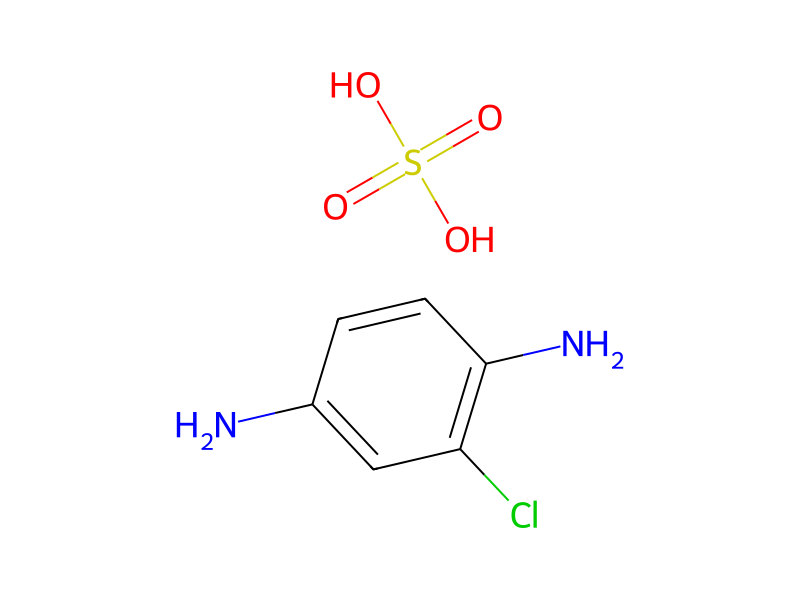
S(O)(O)(=O)=O.[Cl:6][C:7]1[CH:12]=[C:11]([NH2:13])[CH:10]=[CH:9][C:8]=1[NH2:14].[P:15]([N:23]=[C:24]=[S:25])(=[O:22])([O:19][CH2:20][CH3:21])[O:16][CH2:17][CH3:18]>C(Cl)(Cl)Cl>[CH2:17]([O:16][P:15]([NH:23][C:24]([NH:13][C:11]1[CH:10]=[CH:9][C:8]([NH:14][C:24]([NH:23][P:15](=[O:22])([O:16][CH2:17][CH3:18])[O:19][CH2:20][CH3:21])=[S:25])=[C:7]([Cl:6])[CH:12]=1)=[S:25])(=[O:22])[O:19][CH2:20][CH3:21])[CH3:18]Participants
4



Procedure
Employing the process of Example 1 in every detail except that 2-chloro-p-phenylenediamine sulfate is neutralized and allowed to react with two equivalents of diethyl phosphoroisothiocyanatidate ##STR7## in chloroform instead of methylene chloride to afford the title compound, m.p. 148°-149° C.
Sources & evidence
- ORD record
- ord-3362b68d456942cc830fca9d641d07de
- Source dataset
- uspto-grants-1980_10
- Patent number
- US04229383
Linked notes
Loading…