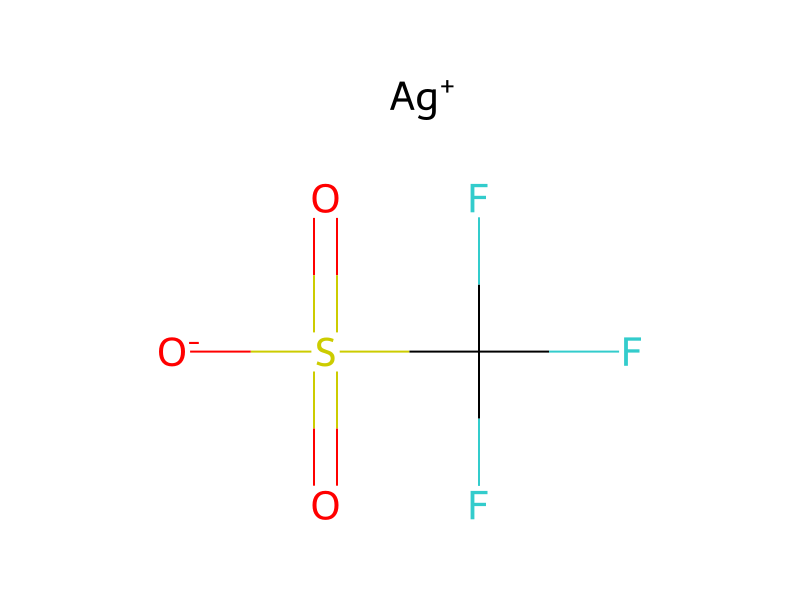
[CH2:1]([C:3]1[C:7]([C:8]2[NH:9][C:10]3[C:15]([CH:16]=2)=[CH:14][CH:13]=[CH:12][CH:11]=3)=[C:6]([CH3:17])[O:5][N:4]=1)[CH3:2].[C:18](Cl)(=[O:20])[CH3:19]>FC(F)(F)S([O-])(=O)=O.[Ag+].C(Cl)Cl>[CH2:1]([C:3]1[C:7]([C:8]2[NH:9][C:10]3[C:15]([C:16]=2[C:18](=[O:20])[CH3:19])=[CH:14][CH:13]=[CH:12][CH:11]=3)=[C:6]([CH3:17])[O:5][N:4]=1)[CH3:2]A solution of 33.5 g. (0.148 mole) of 2-(3-ethyl-5-methyl-4-isoxazolyl)-indole in 450 ml. methylene chloride is treated by the portionwise addition of 41.8 g. (0.163 mole) of silver trifluoromethanesulfonate. The resulting suspension is then treated by the dropwise addition of 12.8 g. (0.163 mole) of acetyl chloride in 50 ml. methylene chloride. The temperature rises to 35° C. during the addition. After the addition is complete the mixture is stirred at room temperature for 4 hours and then filtered. The filtrate is washed with 150 ml. 2 N sodium hydroxide, water and 2 N sodium hydroxide dried over anhydrous magnesium sulfate and evaporated in vacuo to give an oil. The oil is crystallized from ether to give 2-(3-ethyl-5-methyl-4-isoxazolyl)-3-acetyl indole, m.p. 170°-173° C.
Loading…