HomeMCPWorkbenchSkills
HomeWorkbenchNotificationsMe
llms.txt · MCP GuidePrivacy Policy · Terms of Service · Supportv1.8.0
  1. Home
  2. /Reaction

Lithium borohydride → HCID 67403042, compound

HRID 913911
Notes
Print preview

Reaction equation

HRID 913911 reaction equation
[F:1][C:2]([F:23])([F:22])[C:3]1[CH:4]=[C:5]([C:20]#N)[C:6]2[N:10]=[CH:9][N:8]([CH2:11][O:12][CH2:13][CH2:14][Si:15]([CH3:18])([CH3:17])[CH3:16])[C:7]=2[CH:19]=1.[H-].C([Al+]CC(C)C)C(C)C.C(C(C(C([O-])=O)O)O)([O-])=[O:35].[K+].[Na+].[BH4-].[Li+]>ClCCl.O1CCCC1.CC(C)=O>[F:1][C:2]([F:23])([F:22])[C:3]1[CH:4]=[C:5]([CH2:20][OH:35])[C:6]2[N:10]=[CH:9][N:8]([CH2:11][O:12][CH2:13][CH2:14][Si:15]([CH3:18])([CH3:17])[CH3:16])[C:7]=2[CH:19]=1
ParticipantsProcedureWorkupSources & evidenceReaction notes

Participants

8

Reactant 4

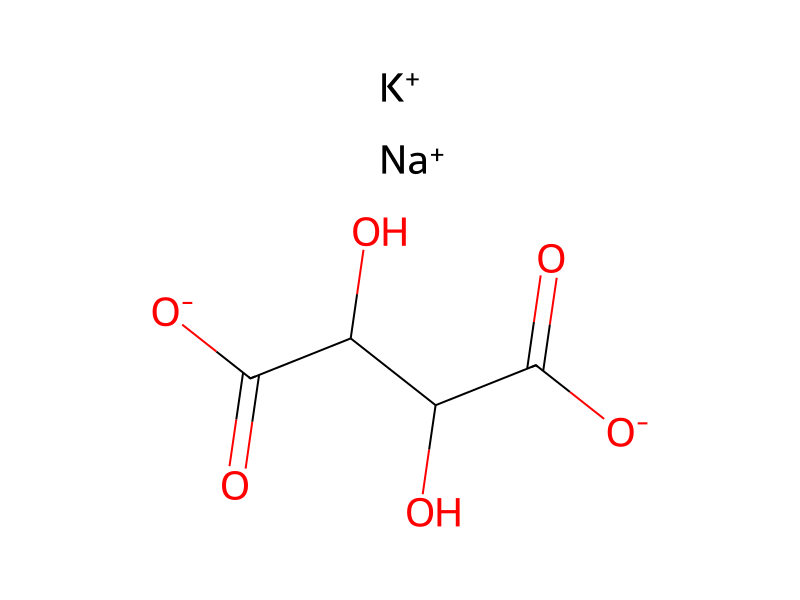
HCID 4148881Lithium borohydrideHCID 9855836Potassium sodium tartarateHCID 21225700DiisobutylaluminumhydrideHCID 674035366-(Trifluoromethyl)-1-((2-(trimethylsilyl)ethoxy)methyl)-1 H-benzo[d]imidazole-4-carbonitrile

Product 1

HCID 67403042HCID 67403042, compoundYield 20%

Reagents, catalysts & solvents

3
HCID 180AcetoneSolvent2×HCID 6344DichloromethaneSolventHCID 8028TetrahydrofuranSolvent

Procedure

A 0.05 M solution of 6-(Trifluoromethyl)-1-((2-(trimethylsilyl)ethoxy)methyl)-1 H-benzo[d]imidazole-4-carbonitrile (124 mg, 0.363 mmol) in dichloromethane (7 mL) at −78° C. was treated with diisobutylaluminum hydride (1 M in tetrahydrofuran, 0.8 mL, 2.2 equiv). After 2 h, acetone (3 mL) was added followed by the addition of a 20% aqueous sodium potassium tartrate solution (5 mL). The mixture was warmed to ambient temperature and then extracted with dichloromethane (3×20 mL). The combined organic layer washed with water, brine and dried (sodium sulfate). The organic layer was evaporated in vacuo and the residue obtained was dissolved in tetrahydrofuran (3 mL) and treated with lithium borohydride (27 mg, 3.4 equiv). After 18 h, acetone (3 mL) was added. After 1 h, the reaction was concentrated. Extractive work up with ethyl acetate (3×20 mL) and water (15 mL) followed by evaporation of the dried (sodium sulfate) organic layer gave the crude product which was purified by preparative HPLC (HPLC method 13). Pooled fractions containing the required product were evaporated in vacuo to give 25 mg (20% yield). 1H-NMR (CD3OD, 500 MHz) δ 9.14 (s, 1H), 8.12 (s, 1H), 7.83 (s, 1H), 5.87 (s, 2H), 5.13 (s, 2H), 3.67 (t, J=7.94 Hz, 2H), 0.95 (t, J=7.94 Hz, 2H), −0.03 (s, 9H); 19F NMR (471 MHz, CD3OD) −63.1, −77.8; LC/MS (HPLC method 7): tR=2.4 min, 347(MH)+.

Workup

  1. extractionextracted with dichloromethane (3×20 mL)
  2. washThe combined organic layer washed with water, brine
  3. dry with materialdried (sodium sulfate)
  4. customThe organic layer was evaporated in vacuo
  5. customthe residue obtained
  6. waitAfter 18 h
  7. waitAfter 1 h
  8. concentrationthe reaction was concentrated
  9. customExtractive work up with ethyl acetate (3×20 mL) and water (15 mL) followed by evaporation of the
  10. dry with materialdried (sodium sulfate) organic layer

Sources & evidence

ORD record
ord-26e4e7f6ee934ef8a0838a67b2adc2d5
Source dataset
uspto-grants-2011_09
DOI
10.6084/m9.figshare.5104873.v1
Patent number
US08026257B2

Reaction notes

Loading…

On this pageParticipantsProcedureWorkupSources & evidenceReaction notes