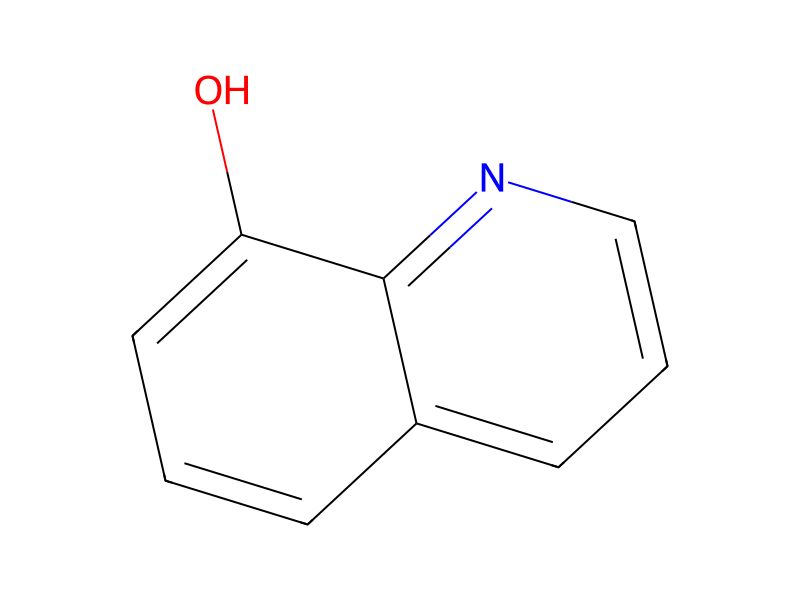
8-Hydroxyquinoline → 8-Hydroxy-1-methylquinolinium methyl sulfate
HRID 918212
Reaction equation

[OH:1][C:2]1[CH:3]=[CH:4][CH:5]=[C:6]2[C:11]=1[N:10]=[CH:9][CH:8]=[CH:7]2.[CH3:12][O:13][S:14]([O-:17])(=[O:16])=[O:15]>CC(N(C)C)=O>[CH3:12][O:13][S:14]([O-:17])(=[O:16])=[O:15].[CH3:12][N+:10]1[C:11]2[C:6](=[CH:5][CH:4]=[CH:3][C:2]=2[OH:1])[CH:7]=[CH:8][CH:9]=1Participants
4
Reactant 2

Product 1

Reagents, catalysts & solvents 1

Procedure
Into a 2-liter three-neck flask provided with a mechanical agitator, with a reflux-condenser and calcium chloride tube, and with a dropping funnel, one introduces 145 g of 8-hydroxyquinoline (i.e. 1 mole) and 200 ml of dimethyl acetamide. After dissolution of the 8-hydroxyquinoline, one cools the reaction mixture with a bath of ice water and one adds, drop by drop, by means of the dropping funnel, 126 g of freshly distilled methylsulfate (i.e. 1 mole). Shortly after the completion of the addition, a light yellow compound crystallizes little by little. One continues the agitation for 2 hours after the introduction of the methylsulfate and then leaves the mixture to rest overnight in a brine bath. The quaternary salt which is formed is dried, washed with anhydrous ether and recrystallized in methanol. Weight obtained = 219 g; Melting point = 158°C; Yield = 81%.