Reaction equation
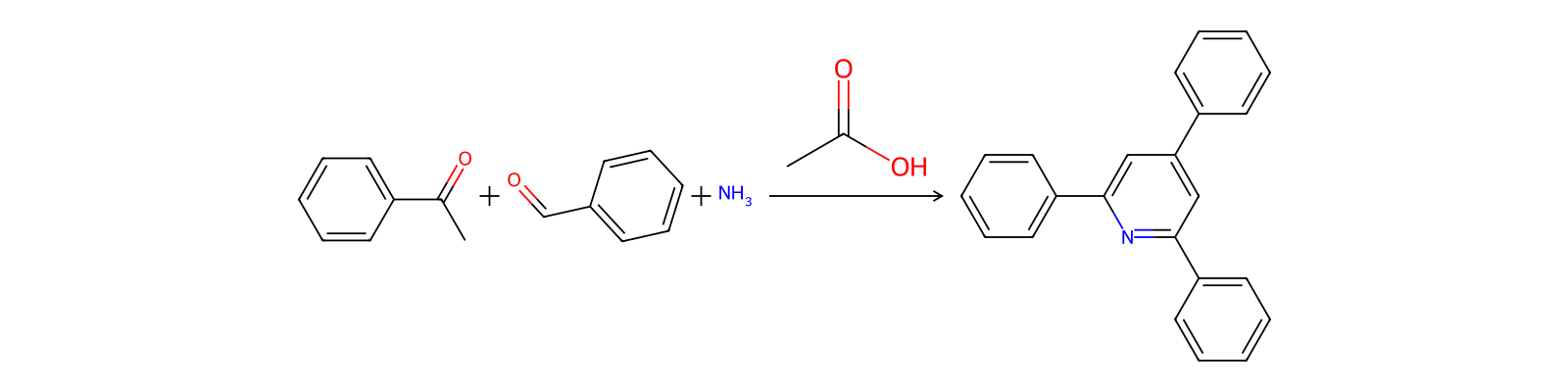
[C:1]([C:4]1[CH:9]=[CH:8][CH:7]=[CH:6][CH:5]=1)(=O)[CH3:2].[CH:10](=O)[C:11]1[CH:16]=[CH:15][CH:14]=[CH:13][CH:12]=1.[NH3:18]>C(O)(=O)C>[C:11]1([C:10]2[CH:2]=[C:1]([C:4]3[CH:9]=[CH:8][CH:7]=[CH:6][CH:5]=3)[CH:2]=[C:1]([C:4]3[CH:9]=[CH:8][CH:7]=[CH:6][CH:5]=3)[N:18]=2)[CH:16]=[CH:15][CH:14]=[CH:13][CH:12]=1Participants
5
Reactant 3


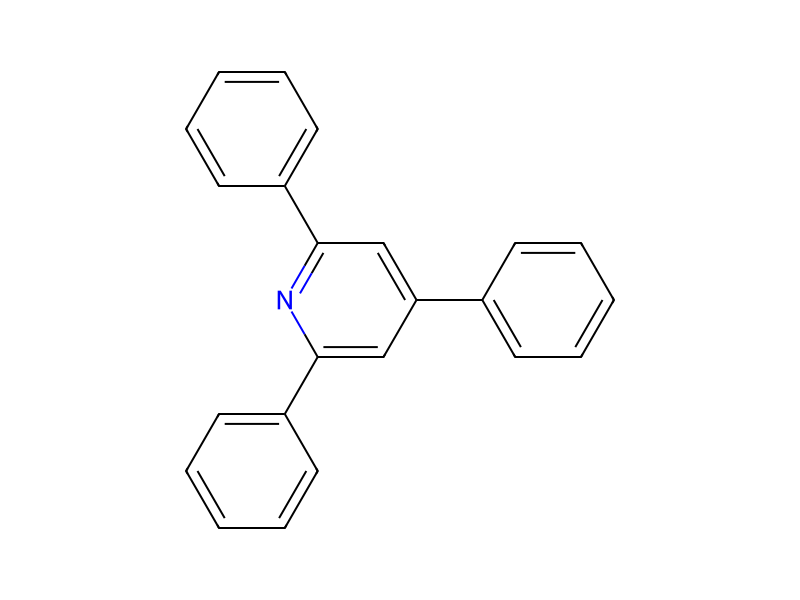
Product 1
Reagents, catalysts & solvents 1

Procedure
"Simple aldehydes and ketones without activating groups require mildly forcing conditions and produce the fully aromatic pyridines; accordingly, acetophenone, benzaldehyde, and ammonia in refluxing acetic acid gave a 68% yield of 2,4,6-triphenylpyridine and a 25% yield of β-phenylpropionophenone."
Sources & evidence
- ORD record
- ord-9efa448584b648dd916fdb58f7e36dd8
- Source dataset
- uspto-grants-1976_07
- Patent number
- US03970662
Linked notes
Loading…