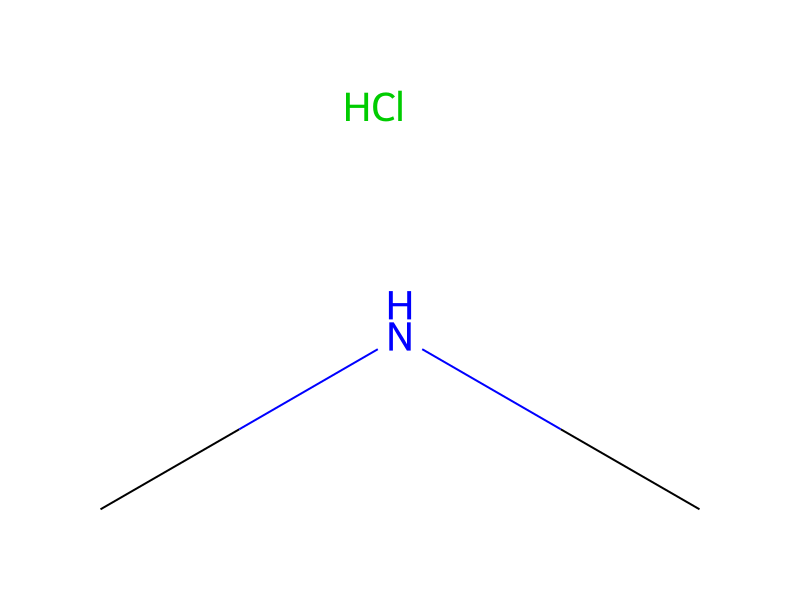
Dimethylamine, hydrochloride → 4-(Dimethylcarbamoyl)-2-methylbenzoic acid
Reaction equation

COC(C1C=CC(C(O)=O)=CC=1C)=O.Cl.CNC.[CH3:19][N:20]([CH3:34])[C:21]([C:23]1[CH:32]=[CH:31][C:26]([C:27]([O:29]C)=[O:28])=[C:25]([CH3:33])[CH:24]=1)=[O:22]>>[CH3:19][N:20]([CH3:34])[C:21]([C:23]1[CH:32]=[CH:31][C:26]([C:27]([OH:29])=[O:28])=[C:25]([CH3:33])[CH:24]=1)=[O:22]Participants


Procedure
In a sealed tube, 1.94 g of dimethyl 2-bromoterephthalate was dissolved in 4 mL of HMPA and degassed with nitrogen prior to adding 1.1 mL of tetramethyl tin and 0.077 g of palladium tetrakistriphenylphosphene. After sealing the tube, the reaction was heated to 65° C. for 16 h. The reaction was then partitioned into ethylether and water and extracted. The organic layers were washed with 5% ammonium hydroxide, 1N HCl, again with 5% ammonium hydroxide, and finally with water. Filtration of the solvent through sodium sulfate and evaporation gave 1.44 g of crude dimethyl 2-methylterephthalate. 210 mg of dimethyl 2-methylterephthalate was hydrolyzed via Procedure M to give 4-(methoxycarbonyl)-3-methylbenzoic acid. Silica gel chromatography was performed (0% to 70% EtOAc gradient in Hexanes) to yield 115 mg of 4-(methoxycarbonyl)-3-methylbenzoic acid. 4-(methoxycarbonyl)-3-methylbenzoic acid was then coupled to dimethylamine hydrochloride via Procedure G. The crude methyl 4-(dimethylcarbamoyl)-2-methylbenzoate was then hydrolyzed via Procedure M to give 110 mg of 4-(dimethylcarbamoyl)-2-methylbenzoic acid. 4-chloro-3-(pyridin-2-yl)aniline was coupled to 110 mg of 4-(dimethylcarbamoyl)-2-methylbenzoic acid via Procedure G to yield N1-(4-chloro-3-(pyridin-2-yl)phenyl)-N4,N4,2-trimethylterephthalamide. MS (Q1) 394 (M)+.
Sources & evidence
- ORD record
- ord-21291c0f3a7f451b85a282c9a2f4eb20
- Source dataset
- uspto-grants-2016_03
- Patent number
- US09278961B2
Reaction notes
Loading…