HomeMCPSkillsWorkbenchOpenChem
HomeWorkbenchNotificationsMe
llms.txt · skill.md · MCP GuidePrivacy Policy · Terms of Service · Supportv1.8.5
  1. Home
  2. /Reaction

Sodium Azide → 3-(3-azidopropyl)-5-chloro-1H-indole

HRID 925307
Print

Reaction equation

Br[CH2:2][CH2:3][CH2:4][C:5]1[C:13]2[C:8](=[CH:9][CH:10]=[C:11]([Cl:14])[CH:12]=2)[NH:7][CH:6]=1.[N-:15]=[N+:16]=[N-:17].[Na+]>CN(C=O)C>[N:15]([CH2:2][CH2:3][CH2:4][C:5]1[C:13]2[C:8](=[CH:9][CH:10]=[C:11]([Cl:14])[CH:12]=2)[NH:7][CH:6]=1)=[N+:16]=[N-:17]
ParticipantsProcedureWorkupSources & evidenceReaction notes

Participants

4

Reactant 2

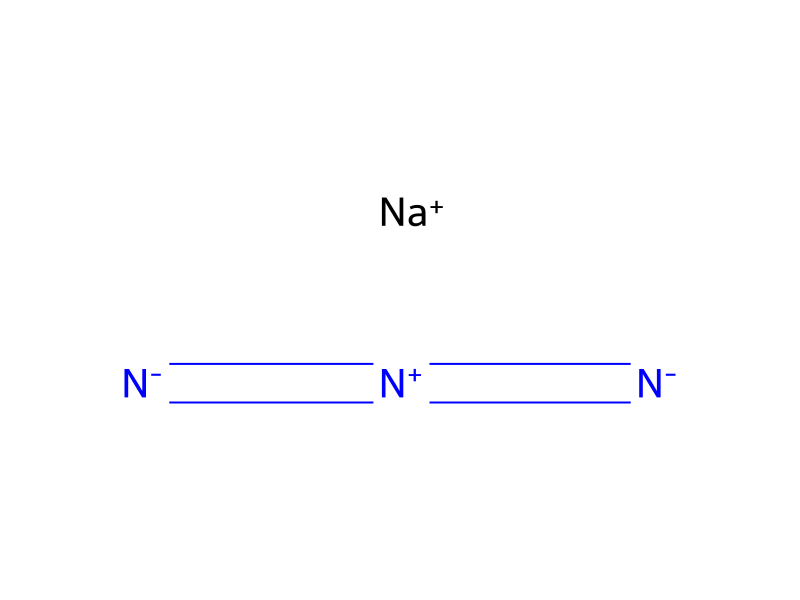
HCID 33557Sodium AzideHCID 668318443-(3-bromopropyl)-5-chloro-1H-indole

Product 1

HCID 866993903-(3-azidopropyl)-5-chloro-1H-indole

Reagents, catalysts & solvents 1

HCID 6228DimethylformamideSolvent

Procedure

A mixture of 3-(3-Bromopropyl)-5-chloro-1H-indole (0.730 g; 2.68 mmol) and sodium azide (0.522 g; 8.03 mmol) was stirred in DMF (5 mL) for 18 hours and was then concentrated under reduced pressure. The residue was partitioned between water and dichloromethane. After separation, the organic layer was dried over magnesium sulphate and the volatiles were evaporated under reduced pressure to yield quantitatively 3-(3-Azidopropyl)-5-chloro-1H-indole as an oily residue which was used without purification.

Workup

  1. concentrationwas then concentrated under reduced pressure
  2. customThe residue was partitioned between water and dichloromethane
  3. customAfter separation
  4. dry with materialthe organic layer was dried over magnesium sulphate
  5. customthe volatiles were evaporated under reduced pressure

Sources & evidence

ORD record
ord-0f02a9ee8a9e4707b8b5de880445fb71
Source dataset
uspto-grants-2016_03
DOI
10.6084/m9.figshare.5104873.v1
Patent number
US09284271B2

Reaction notes

On this pageParticipantsProcedureWorkupSources & evidenceReaction notes