Reaction equation
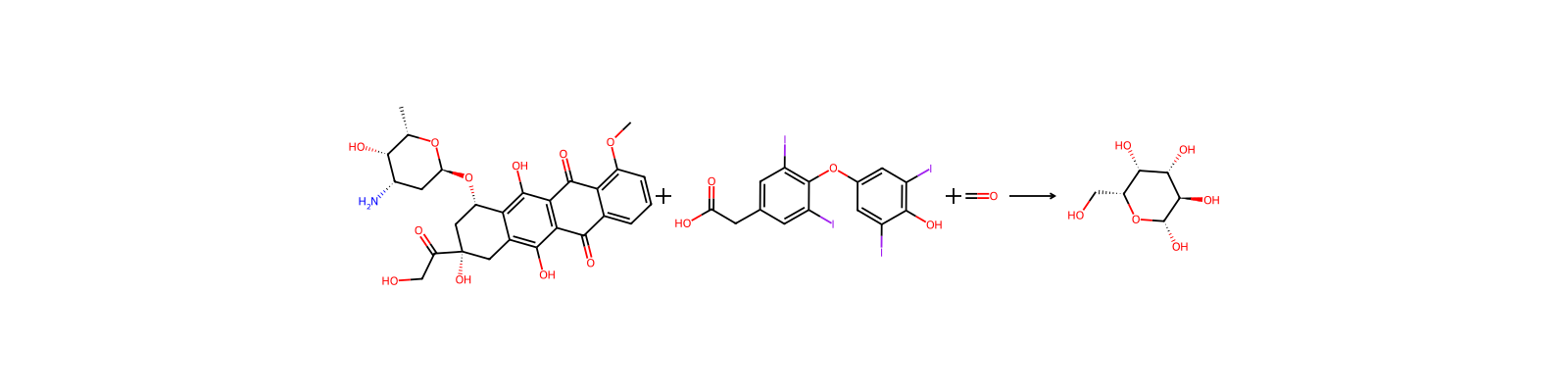
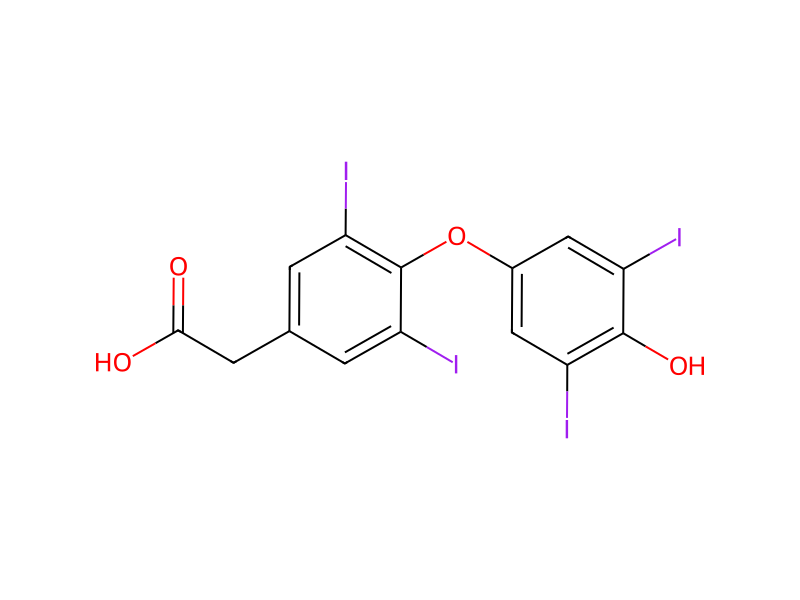
C[C@@H]1O[C@@H]([O:8][C@@H:9]2C3=C(O)C4C(=O)C5C(=CC=CC=5OC)C(=O)C=4C(O)=C3C[C@@:11]([OH:37])([C:33]([CH2:35][OH:36])=[O:34])[CH2:10]2)C[C@H](N)[C@@H]1O.C1C(CC(O)=O)=CC(I)=C([O:47]C2C=C(I)C(O)=C(I)C=2)C=1I.[CH2:62]=[O:63]>>[OH:63][C@@H:62]1[O:47][C@H:10]([CH2:9][OH:8])[C@H:11]([OH:37])[C@H:33]([OH:34])[C@H:35]1[OH:36]Participants
4



Procedure
Cells were seeded on 100-mm culture dishes and treated with doxorubicin, tetrac or both for 24 h, after which the cells were subjected to trypsin treatment at 37° C. for 3 min, fixed with 4% formalin in PBS, and washed with PBS. Then they were incubated with 0.1 μg/ml Hoechst 33248 (bisbenzimide, Sigma-Aldrich) and spotted on slides for microscopy. Positive cells are counted and their fractions between non treated and treated populations are compared.
Workup
- customat 37° C.
- customfor 3 min
- washwashed with PBS
- additiontheir fractions between non treated
- additiontreated populations
Sources & evidence
- ORD record
- ord-3844cc9d50d1424fa227ef18187debb2
- Source dataset
- uspto-grants-2016_03
- Patent number
- US09289395B2
Linked notes
Loading…