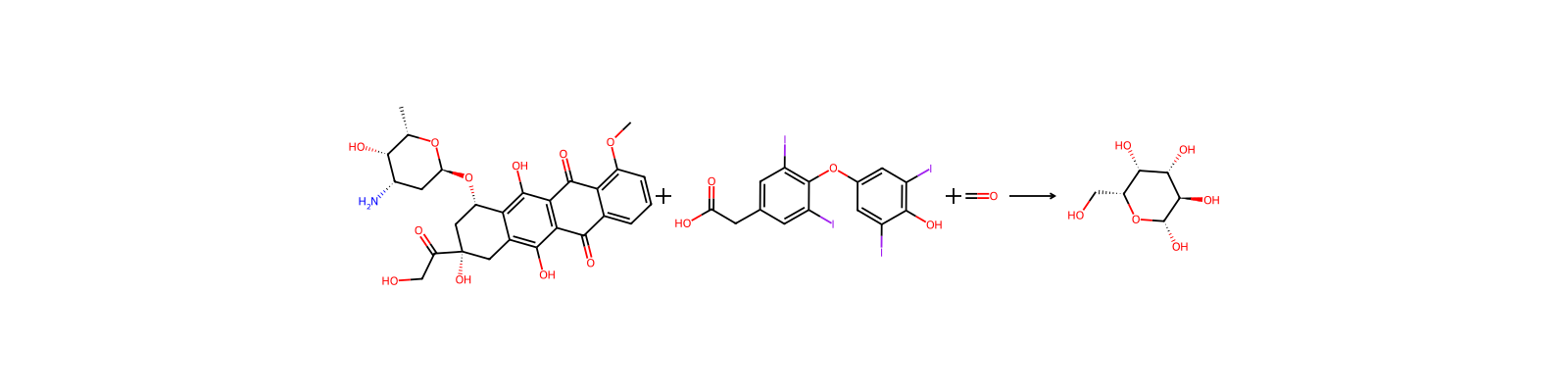

Basic information
- CAS
7296-64-2- Standard SMILES
OC[C@H]1O[C@@H](O)[C@H](O)[C@@H](O)[C@H]1O- InChIKey
WQZGKKKJIJFFOK-FPRJBGLDSA-N- Molecular formula
- C6H12O6
- Average molar mass
- 180.16 g/mol
- Monoisotopic mass
- 180.0633881
Names & identifiers
- Preferred name
- beta-D-Galactopyranose
- IUPAC
- (2R,3R,4S,5R,6R)-6-(hydroxymethyl)oxane-2,3,4,5-tetrol
- English name
- .beta.-D-Galactopyranose
- Molecular formula
- C6H12O6
- Molecular weight
- 180.16
Names & synonyms
beta-D-galactosebeta-D-galactopyranose7296-64-2beta-Galactose(2R,3R,4S,5R,6R)-6-(hydroxymethyl)oxane-2,3,4,5-tetrolRQ6K52J67ACHEBI:27667DTXSID001015884RefChem:6900GlyTouCan:G65889KEDTXCID701474039G65889KE
Show more names
β-D-Galactoseβ-D-galactopyranose-β-D-Galactose.beta.-D-Galactopyranose(2R,3R,4S,5S,6R)-6-(hydroxymethyl)oxane-2,3,4,5-tetrol
b-D-Galactosebeta-D-Galbeta-D-GalactosideGalactitol,1,5-anhydro-1-C-phenyl-9031-11-2CHEMBL300520beta-Galactosidase(2R,3R,4S,5R,6R)-6-(Hydroxymethyl)tetrahydro-2H-pyran-2,3,4,5-tetraol
Database identifiers
- CAS
7296-64-2、9031-11-2- PubChem CID
- 439353
- DTXSID
DTXSID001015884- ChEMBL
CHEMBL300520- ChEBI
CHEBI:27667- UNII
- RQ6K52J67A
- EC Number
- 232-864-1
- Nikkaji
- J292.886H
Properties
Computed structural properties
- XLogP
- -2.6
- Topological polar surface area
- 110 Ų
- Hydrogen bond donors
- 5
- Hydrogen bond acceptors
- 6
- Rotatable bonds
- 1
- Heavy atoms
- 12
- Formal charge
- 0
- Complexity
- 151
Experimental & physicochemical properties
SolubilitySlightly soluble
Isoelectric Point4.5
Physical Description
Powder; [Sigma-Aldrich MSDS]
Solid
Physicochemical properties
- Melting point
- 179 · 179-179.5 °C
- Boiling point
- 410.8 · 410.8±45.0 °C(Predicted)
- Density
- 1.732 · 1.732±0.06 g/cm3(Predicted)
- storage temp.
- Hygroscopic, Refrigerator, under inert atmosphere
- solubility
- Water (Slightly)
- form
- Solid
- pka
- 12.12 · 12.12±0.70(Predicted)
- color
- White to Off-White
- Stability
- Hygroscopic
- FDA UNII
- 6 K52J67A · RQ6K52J67A
Safety & regulation
GHS classification
GHS Classification
Danger
H334 (99.9%): May cause allergy or asthma symptoms or breathing difficulties if inhaled [Danger Sensitization, respiratory]
P233, P260, P271, P284, P304+P340, P342+P316, P403, and P501 (click each P-code to see the statement)
Aggregated GHS information provided per 1506 reports by companies from 4 notifications to the ECHA C&L Inventory.;Information may vary between notifications depending on impurities, additives, and other factors. The percentage value in parenthesis indicates the notified classification ratio from companies that provide hazard codes. Only hazard codes with percentage values above 10% are shown. For more detailed information, please visit ECHA C&L website.
Hazard information
Regulatory Information
Chemical: Galactosidase, .beta.-
Galactosidase, .beta.-: Does not have an individual approval but may be used under an appropriate group standard
.beta.-D-Galactopyranose: Does not have an individual approval but may be used under an appropriate group standard
Other Safety InformationIMAP assessments - Galactosidase, .beta.-: Environment tier I assessment
Hazards SummaryMay cause irritation; May cause allergic reactions in sensitive individuals; [Sigma-Aldrich MSDS] See ENZYMES.
Hazard Classes and CategoriesResp. Sens. 1 (99.9%)
Regulatory information
Regulatory Information
Chemical: Galactosidase, .beta.-
Galactosidase, .beta.-: Does not have an individual approval but may be used under an appropriate group standard
.beta.-D-Galactopyranose: Does not have an individual approval but may be used under an appropriate group standard
Chemistry & industry
Pharmacology
ATC Code
A - Alimentary tract and metabolism;A09 - Digestives, incl. enzymes;A09A - Digestives, incl. enzymes;A09AA - Enzyme preparations;A09AA04 - Tilactase
QA - Alimentary tract and metabolism;QA09 - Digestives, incl. enzymes;QA09A - Digestives, incl. enzymes;QA09AA - Enzyme preparations;QA09AA04 - Tilactase
Protein BindingTilactase is not absorbed and thus the plasma protein binding is not possible.
Pharmacodynamics
The use of a single oral administration of tilactase has been shown to be highly effective in decreasing the symptoms and hydrogen excretion of hypolactasia in tests of lactose H(2)-breath. The analysis has shown a decrease of approximately 80% in both malabsorbers and intolerants.The administration of tilacatase also decreases the presence of bloating and flatus.
Mechanism of Action
Lactose is the primary disaccharide found in dairy products. Tilactase is a type of lactase which is the enzyme that is in charge of the breakdown of lactose to glucose and galactose which can be used by the body. Basically, tilactase acts by replacing the missing lactase in the body and allows avoidance of the reach of lactose to the small intestine and the normal bacteria and thus, preventing the symptoms of the lactose intolerance. Once tilactase has metabolized the lactose, the metabolism products are reabsorbed by the normal process of digestion.
Biological Half-LifeTilactase half-life at 35ºC is registered to be 123.77 min. This half-life can be affected by temperature in an inversely proportional manner.
Metabolism/MetabolitesTilactase is degraded by the stomach acid and by the normal flora bacterial metabolism.
Absorption, Distribution and Excretion
Tilactase is not absorbed in the GI tract and thus the pharmacokinetic parameters related to absorption are not relevant.
Tilactase is completely eliminated in the feces either unchanged or as metabolites.
Tilactase is not absorbed and thus the volume of distribution is not relevant.
Tilactase is not absorbed and thus the clearance rate is not relevant.
Tissue LocationsBladder;Brain;Epidermis;Fibroblasts;Intestine;Kidney;Liver;Neuron;Ovary;Placenta;Platelet;Skeletal Muscle;Spleen;Testis
Cellular LocationsExtracellular;Lysosome
Uses & manufacturing
Uses
A group of enzymes that catalyzes the hydrolysis of terminal, non-reducing beta-D-galactose residues in beta-galactosides. Deficiency of beta-Galactosidase A1 may cause GANGLIOSIDOSIS, GM1. [ChemIDplus] Available commercially as a catalyst to hydrolyze milk lactose into glucose and galactose; [REPROTOX]
Applications
Usesβ-D-Galactose s the beta anomer of D-Galactose (G155250), the C-4 epimer of Glucose (G595000). D-Galactose is found in milk and sugar beets as well as being synthesized by the body.
Upstream & downstream products
Upstream raw materials
Downstream products
Suppliers100 total
国药集团化学试剂有限公司86-21-63210123 · [email protected]
北京华美互利生物化工010-56205725 · [email protected]
郑州阿尔法化工有限公司+86-18530059196 · [email protected]
上海阿拉丁生化科技股份有限公司400-6206333 13167063860 · [email protected]
上海康朗生物科技有限公司021-61998208 18217752821 · [email protected]
合肥翰刚医药科技有限公司+8618062405514 · [email protected]
河北创之源生物科技有限公司13012111162
湖北金梭生物科技有限公司00123456789 · [email protected]
陕西帕尼尔生物科技有限公司029-84385017; +8613259417953 · [email protected]
陕西晨明生物科技有限公司15529026321
T&W GROUP021-61551611 13296011611 · [email protected]
陕西帕尼尔生物科技有限公司029-84385017-8007 17602929471
Baoji Guokang Healthchem co.,ltd+8615604608665 15604608665 · [email protected]
上海如吉生物科技发展有限公司+86-21-65211385-8001 36031160 · [email protected]
Dayang Chem (Hangzhou) Co.,Ltd.+86-0571-88938639 17705817739 · [email protected]
Hebei Yanxi Chemical Co., Ltd.+86-17531190177 · [email protected]
上海弘顺生物科技有限公司15901914505 · [email protected]
上海晶抗生物工程有限公司021-54721350 13524668266 · [email protected]
上海瀚鸿科技股份有限公司021-54306202 13764082696 · [email protected]
上海泰坦科技股份有限公司400-6009262 15618770481 · [email protected]
西安康诺化工有限公司029-86107037-8009 13279399072
西安康诺化工有限公司84385017 18991787332 · [email protected]
HONG KONG IPURE BIOLOGY CO.,LIMITED86 18062405514 18062405514 · [email protected]
四川库利南科技有限公司400-1166-196 18981987031 · [email protected]
天津希恩思生化科技有限公司400 638 7771 · [email protected]
湖南汇百侍生物科技有限公司0731-85526065 13308475853 · [email protected]
斯百全化学(上海)有限公司021-021-021-67601398-809-809-809 15221380277 · [email protected]
上海源叶生物科技有限公司13636370518 · [email protected]
艾科试剂4008-755-333 18080918076 · [email protected]
武汉普洛夫生物科技有限公司17612776928 · [email protected]
南京杜莱生物技术有限公司025-84699383-8003;025-846993838003-8003 18013301590 · [email protected]
上海倍卓生物科技有限公司021-61119791,13386096464 · [email protected]
湖北威德利化学试剂有限公司186-02735115 18602735115 · [email protected]
上海将来实业股份有限公司400-0066400 13621662912 · [email protected]
上海麦克林生化科技股份有限公司15221275939 15221275939 · [email protected]
湖北巨胜科技有限公司027-59599241 18871490274 · [email protected]
上海宝曼生物科技有限公司021-62130998 · [email protected]
池州凯隆进出口贸易有限公司[email protected]
Sigma-Aldrich西格玛奥德里奇(上海)贸易有限公司021-61415566 800-8193336 · [email protected]
西安康诺化工有限公司029-86107037 15829389671 · [email protected]
TargetMol中国(陶术生物)021-021-33632979 15002134094 · [email protected]
湖北康恩化学有限公司180-64105258 18064105258
上海陶术生物科技股份有限公司+1-781-999-5354; +1-00000000000 · [email protected]
湖北威德利化学试剂有限公司18327179646 · [email protected]
杭州鼎燕化工有限公司0571-87157530-8003 18267553885 · [email protected]
厦门志信化学有限公司+86-5922680277 +86-13806087780 · [email protected]
山东萍聚生物科技有限公司18613662662; 18613662662
浙江珲达生物科技有限公司0571-89903022 18679456698 · [email protected]
Qiuxian Baitai New Material Co., LTD+86-19932103556 · [email protected]
北京华威锐科化工科技有限公司89508211 18501085097 · [email protected]
Additional notes
DefinitionChEBI: A D-galactopyranose having beta-configuration at the anomeric centre.
Related reactions
6 records


Compound notes
Loading…