Benzoyl isothiocyanate → 2-Bromo-6-benzoylthioureidopyridine
HRID 929661
Reaction equation

[NH2:1][C:2]1[CH:7]=[CH:6][CH:5]=[C:4]([Br:8])[N:3]=1.[C:9]([N:17]=[C:18]=[S:19])(=[O:16])[C:10]1[CH:15]=[CH:14][CH:13]=[CH:12][CH:11]=1>CC(C)=O>[Br:8][C:4]1[N:3]=[C:2]([NH:1][C:18]([NH:17][C:9](=[O:16])[C:10]2[CH:11]=[CH:12][CH:13]=[CH:14][CH:15]=2)=[S:19])[CH:7]=[CH:6][CH:5]=1Participants
4
Reactant 2
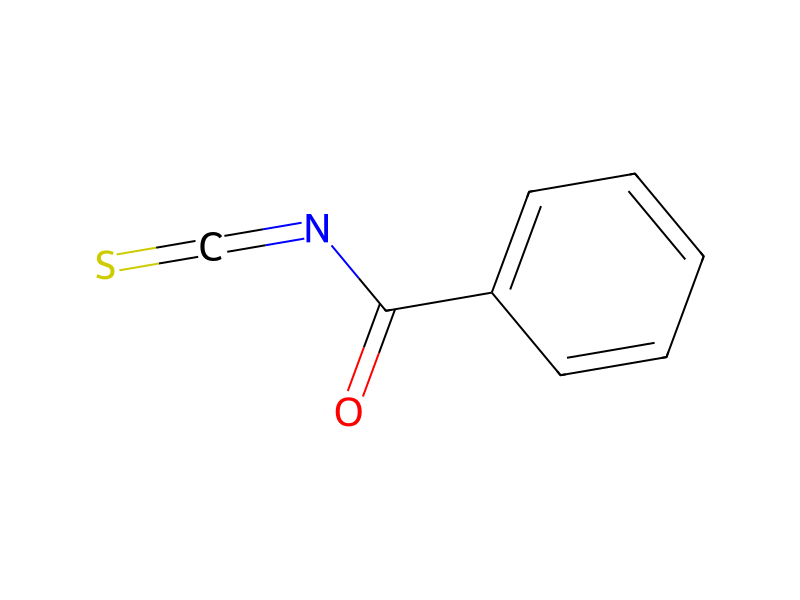

Product 1

Reagents, catalysts & solvents 1

Conditions
- Temperature
- 65 °C
Procedure
2.604 g (14.75 mmol) 2-amino-6-bromopyridine was dissolved in 20 mL acetone, and 2.02 mL (14.75 mmol) undiluted benzoyl isothiocyanate was then added dropwise. The solution turned a brown color. The reaction mixture was then heated for 2 hr at 65° C. (oil bath temperature) with stirring. The light yellow solid which formed was filtered under vacuum and washed with pentane. The solvent of the mother liquor was also removed under vacuum. The resulting solids from the crystallizate (1.338 g) and from the mother liquor (3.595 g) were identical according to thin-layer chromatography (silica gel, eluents: dichloromethane/methanol (9:1)). A total of 4.933 g (14.67 mmol, 99.5%) N-{[(6-bromopyridin-2-yl)amino]carbonothioyl}benzamide was isolated.