Reaction equation
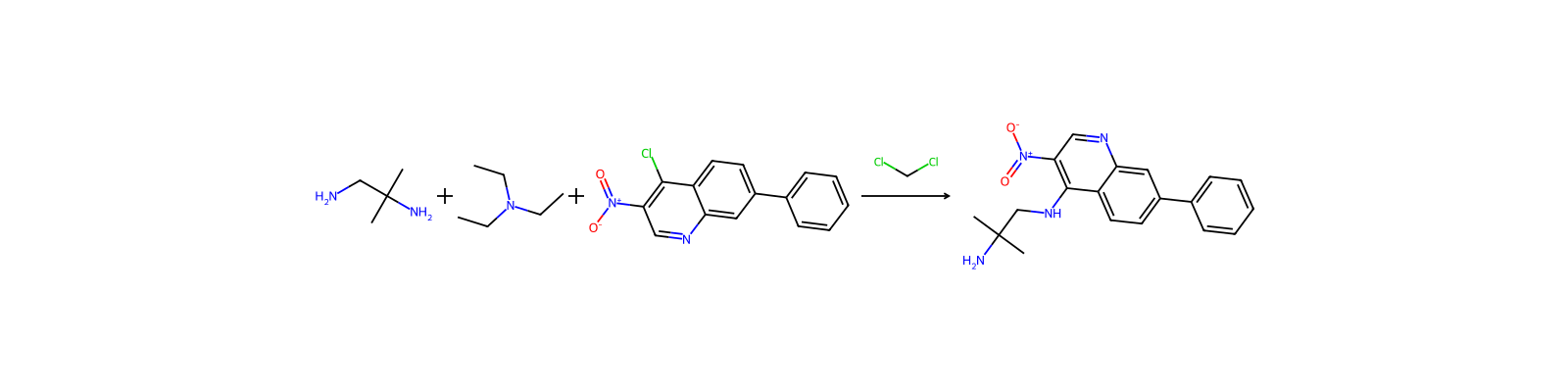
[NH2:1][CH2:2][C:3]([NH2:6])([CH3:5])[CH3:4].C(N(CC)CC)C.Cl[C:15]1[C:24]2[C:19](=[CH:20][C:21]([C:25]3[CH:30]=[CH:29][CH:28]=[CH:27][CH:26]=3)=[CH:22][CH:23]=2)[N:18]=[CH:17][C:16]=1[N+:31]([O-:33])=[O:32]>ClCCl>[N+:31]([C:16]1[CH:17]=[N:18][C:19]2[C:24]([C:15]=1[NH:1][CH2:2][C:3]([CH3:5])([NH2:6])[CH3:4])=[CH:23][CH:22]=[C:21]([C:25]1[CH:30]=[CH:29][CH:28]=[CH:27][CH:26]=1)[CH:20]=2)([O-:33])=[O:32]Participants
5




Procedure
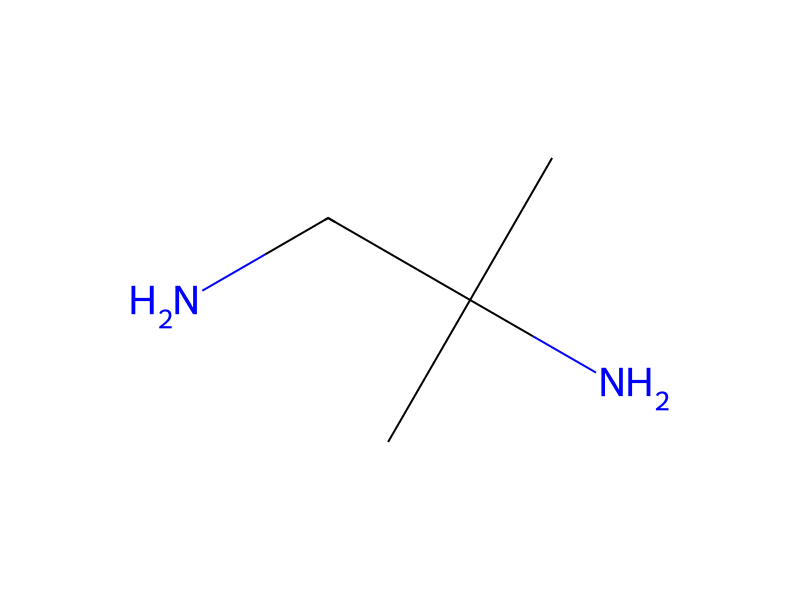
A solution of 1,2-diamino-2-methylpropane (9.3 mL, 88.9 mmol) and triethylamine (5.0 mL, 35.5 mmol) in dichloromethane (100 mL) was cooled to 0° C. A solution of 4-chloro-3-nitro-7-phenylquinoline (5.06 g, 17.8 mmol) in dichloromethane (50 mL) was added over a period of 45 minutes, and then the reaction was allowed to warm to ambient temperature. The solution was washed sequentially with water (2×100 mL) and brine (150 mL), dried over sodium sulfate, filtered, and concentrated under reduced pressure to provide N1-(3-nitro-7-phenylquinolin-4-yl)-2-methylpropane-1,2-diamine as an orange solid.
Workup
- washThe solution was washed sequentially with water (2×100 mL) and brine (150 mL)
- dry with materialdried over sodium sulfate
- filtrationfiltered
- concentrationconcentrated under reduced pressure
Sources & evidence
- ORD record
- ord-488bb10254d64e94955ce5a59e9d54b2
- Source dataset
- uspto-grants-2006_08
- Patent number
- US07091214B2
Linked notes
Loading…