HomeMCPWorkbenchSkills
HomeWorkbenchNotificationsMe
llms.txt · MCP GuidePrivacy Policy · Terms of Service · Supportv1.8.3
  1. Home
  2. /Reaction

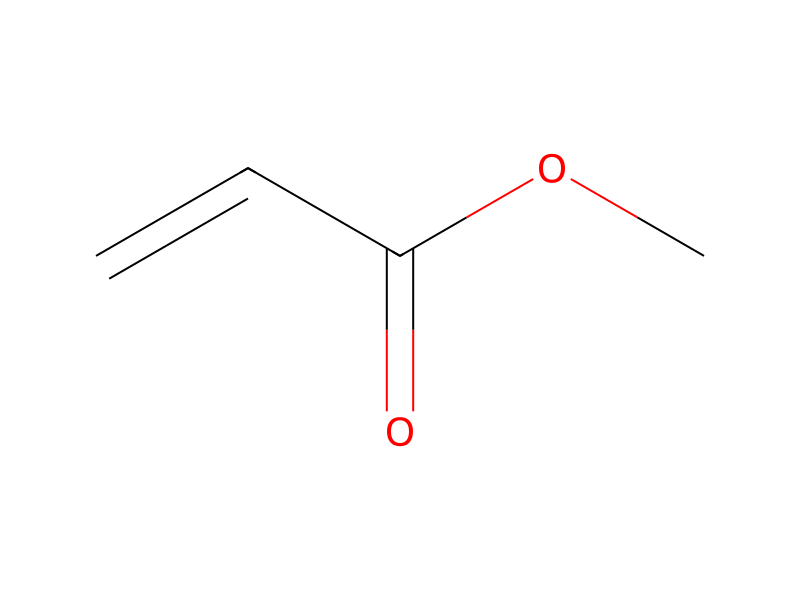
Methyl Acrylate → Methyl 3-(2-acetyl-4-benzyloxy-6-nitrophenyl)acrylate

HRID 969457
Print

Reaction equation

HRID 969457 reaction equation
F[B-](F)(F)F.C([PH+](C(C)(C)C)C(C)(C)C)(C)(C)C.C1(C(N)C2CCCCC2)CCCCC1.[C:33]([O:37][CH3:38])(=[O:36])[CH:34]=[CH2:35].FC(F)(F)S(O[C:45]1[C:50]([N+:51]([O-:53])=[O:52])=[CH:49][C:48]([O:54][CH2:55][C:56]2[CH:61]=[CH:60][CH:59]=[CH:58][CH:57]=2)=[CH:47][C:46]=1[C:62](=[O:64])[CH3:63])(=O)=O>[I-].C([N+](CCCC)(CCCC)CCCC)CCC.O1CCOCC1.C1C=CC(/C=C/C(/C=C/C2C=CC=CC=2)=O)=CC=1.C1C=CC(/C=C/C(/C=C/C2C=CC=CC=2)=O)=CC=1.C1C=CC(/C=C/C(/C=C/C2C=CC=CC=2)=O)=CC=1.[Pd].[Pd].C(OCC)C>[C:62]([C:46]1[CH:47]=[C:48]([O:54][CH2:55][C:56]2[CH:61]=[CH:60][CH:59]=[CH:58][CH:57]=2)[CH:49]=[C:50]([N+:51]([O-:53])=[O:52])[C:45]=1[CH:35]=[CH:34][C:33]([O:37][CH3:38])=[O:36])(=[O:64])[CH3:63]
ParticipantsConditionsProcedureWorkupSources & evidenceReaction notes

Participants

9

Reactant 4

HCID 7294Methyl AcrylateHCID 2734635Tri-tert-butylphosphine tetrafluoroborateHCID 10774245alpha-CyclohexylcyclohexanemethanamineHCID 210728242-Acetyl-4-benzyloxy-6-nitrophenyl trifluoromethanesulfonate

Product 1

HCID 66751245Methyl 3-(2-acetyl-4-benzyloxy-6-nitrophenyl)acrylate

Reagents, catalysts & solvents

4
HCID 67553Tetrabutylammonium IodideCatalystHCID 9811564Bis(dibenzylideneacetone)palladiumCatalystHCID 3283Diethyl EtherSolventHCID 312751,4-DioxaneSolvent

Conditions

Temperature
80 °C

Procedure

5.88 g (6.42 mmol) tris-(dibenzylideneacetone)-dipalladium, 3.50 g (12.01 mmol) tri-tert-butylphosphonium tetrafluoroborate, 81.2 mL (371 mmol) dicyclohexylmethylamine, 105.8 g (286 mmol) tetrabutylammonium iodide and 32.6 mL (362 mmol) methyl acrylate are added to a solution of 100 g (238 mmol) 2-acetyl-4-benzyloxy-6-nitro-phenyl trifluoromethanesulphonate in 360 mL dioxane. The reaction mixture is stirred for 2 hours at 80° C. under a nitrogen atmosphere and then combined with 2 L diethyl ether and 500 g silica gel. After 10 minutes the silica gel is suction filtered, while again being washed repeatedly with diethyl ether. The combined organic phases are washed successively with 1 N hydrochloric acid, sodium carbonate solution and sodium chloride solution. The solvent is distilled off, the residue recrystallised from ethanol and the solid is filtered off and washed with ethanol. Yield: 32.2 g (38%); mass spectroscopy: [M+H]+=356.

Workup

  1. waitAfter 10 minutes the silica gel is
  2. filtrationsuction filtered
  3. washwhile again being washed repeatedly with diethyl ether
  4. washThe combined organic phases are washed successively with 1 N hydrochloric acid, sodium carbonate solution and sodium chloride solution
  5. distillationThe solvent is distilled off
  6. customthe residue recrystallised from ethanol
  7. filtrationthe solid is filtered off
  8. washwashed with ethanol

Sources & evidence

ORD record
ord-a4ad7a1af7d548f7925692e525c49fb7
Source dataset
uspto-grants-2007_12
DOI
10.6084/m9.figshare.5104873.v1
Patent number
US07307076B2

Reaction notes

On this pageParticipantsConditionsProcedureWorkupSources & evidenceReaction notes