Hydrazine hydrate (1:1) → HCID 20309483, compound
HRID 972797
Reaction equation
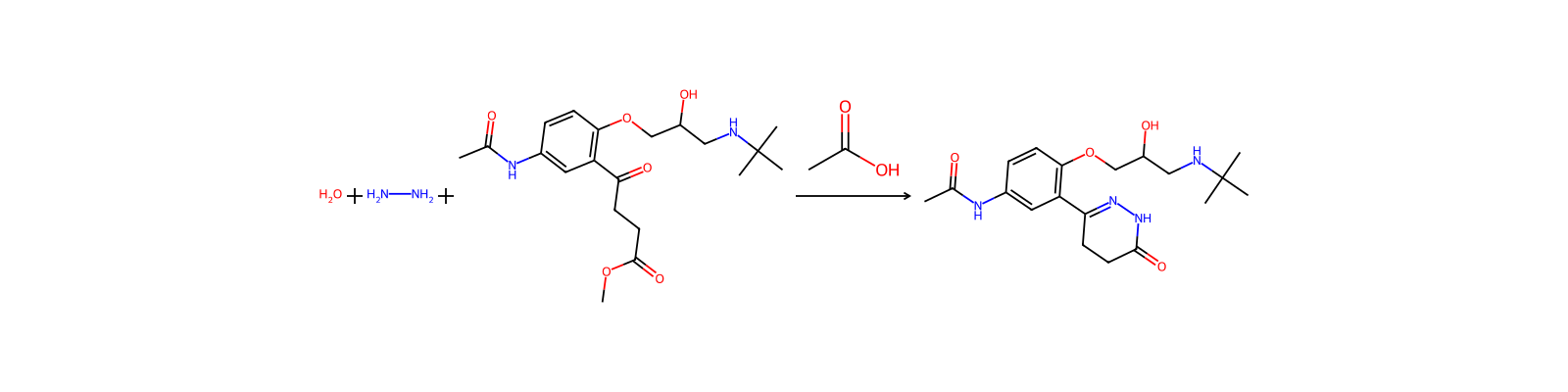
O.[NH2:2][NH2:3].[C:4]([NH:7][C:8]1[CH:9]=[CH:10][C:11]([O:22][CH2:23][CH:24]([OH:31])[CH2:25][NH:26][C:27]([CH3:30])([CH3:29])[CH3:28])=[C:12]([CH:21]=1)[C:13]([CH2:15][CH2:16][C:17](OC)=[O:18])=O)(=[O:6])[CH3:5]>C(O)(=O)C>[C:4]([NH:7][C:8]1[CH:9]=[CH:10][C:11]([O:22][CH2:23][CH:24]([OH:31])[CH2:25][NH:26][C:27]([CH3:30])([CH3:29])[CH3:28])=[C:12]([C:13]2[CH2:15][CH2:16][C:17](=[O:18])[NH:2][N:3]=2)[CH:21]=1)(=[O:6])[CH3:5]Participants
4
Reactant 2


Product 1

Reagents, catalysts & solvents 1

Procedure
Hydrazine hydrate (0.0785 ml, 0.00157 mole) was added to a stirred solution of methyl 3-[5-acetamido-2-(3-t-butylamino-2-hydroxypropoxy)benzoyl]propionate (0.21 g, 0.0005 mole) in glacial acetic acid (2 ml) and the solution was heated under reflux for 90 minutes. The residue after evaporation was treated with an excess of sodium bicarbonate solution and the solution evaporated to dryness under reduced pressure. The residue was extracted with dichloromethane and the dried extract evaporated to dryness. An aqueous solution of the residue was washed with two small portions of dichloromethane and then evaporated to an oily residue, which with ethyl acetate gave 6-[5-acetamido-2-(3-t-butylamino-2-hydroxypropoxy)phenyl]-4,5-dihydro-3(2H)-pyridazinone