Reaction equation

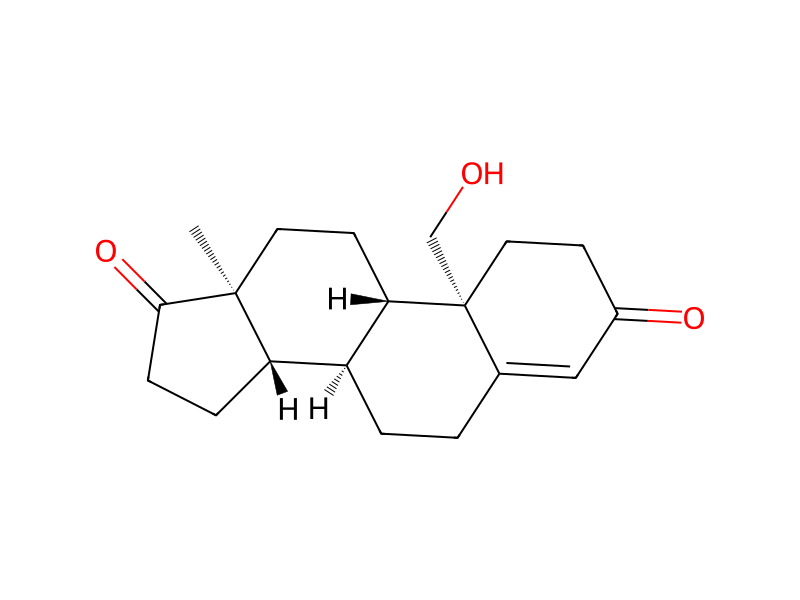
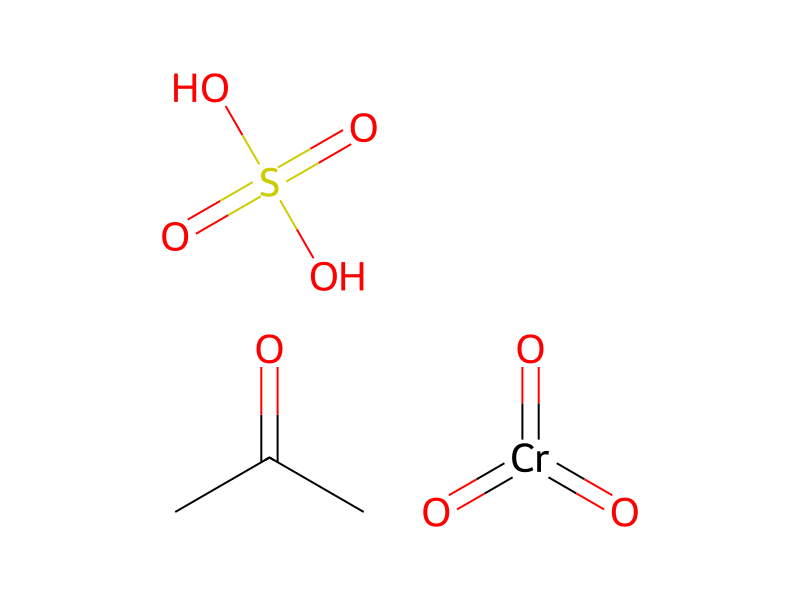
[OH:1][CH2:2][C@@:3]12[C@@H:20]3[C@H:11]([C@H:12]4[C@@:16]([CH2:18][CH2:19]3)([CH3:17])[C:15](=[O:21])[CH2:14][CH2:13]4)[CH2:10][CH2:9][C:8]1=[CH:7][C:6](=[O:22])[CH2:5][CH2:4]2.CC(C)=O.OS(O)(=O)=O.O=[Cr](=O)=O>CC(C)=O>[O:22]=[C:6]1[CH2:5][CH2:4][C@@:3]2([CH:2]=[O:1])[C:8]([CH2:9][CH2:10][C@@H:11]3[C@@H:20]2[CH2:19][CH2:18][C@@:16]2([CH3:17])[C@H:12]3[CH2:13][CH2:14][C:15]2=[O:21])=[CH:7]1Participants
4
Reactant 2
Product 1

Reagents, catalysts & solvents 1

Procedure
To a solution of 30 g. of 19-hydroxyandrost-4-ene-3,17-dione in 3 liters of acetone cooled in an ice bath is added 28 ml of Jones reagent over a one hour period. The reaction mixture is stirred for an additional fifteen minutes, filtered and the solvent removed under reduced pressure at 35° C. The residue is taken up in a large volume of ether and 1.5 liters of water. The ether layer is collected, dried over magnesium sulfate, filtered and the solvent removed. The residue is crystallized from acetone-hexane to give 3,17-dioxoandrost-4en-19-al, M.P. 126°-129° C.
Workup
- filtrationfiltered
- customthe solvent removed under reduced pressure at 35° C
- customThe ether layer is collected
- dry with materialdried over magnesium sulfate
- filtrationfiltered
- customthe solvent removed
- customThe residue is crystallized from acetone-hexane
Sources & evidence
- ORD record
- ord-8f54adf58e09490dbfec06707d1f4d48
- Source dataset
- uspto-grants-1977_10
- Patent number
- US04054651
Linked notes
Loading…