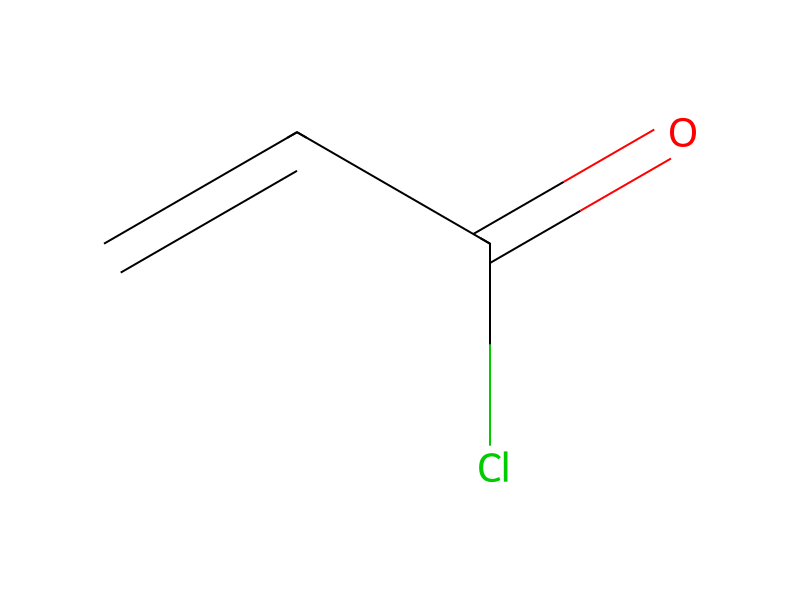
Acryloyl chloride → N-Ethyl-N-pyridin-4-ylmethyl-acrylamide
HRID 978000
Reaction equation

[N:1]1[CH:6]=[CH:5][C:4]([CH2:7][NH:8][CH2:9][CH3:10])=[CH:3][CH:2]=1.[C:11](Cl)(=[O:14])[CH:12]=[CH2:13]>C(N(CC)CC)C>[CH2:9]([N:8]([CH2:7][C:4]1[CH:5]=[CH:6][N:1]=[CH:2][CH:3]=1)[C:11](=[O:14])[CH:12]=[CH2:13])[CH3:10]Participants
4
Reactant 2

Product 1

Reagents, catalysts & solvents 1

Procedure
Following the method of Example 3, 4-picolyl-ethylamine (4.27 g, 0.035 mole) was reacted with acryloyl chloride (3.15 g, 0.035 mole) was triethylamine (21 ml) and purified by chromatography on silica.
Workup
- custompurified by chromatography on silica
Sources & evidence
- ORD record
- ord-d11255fb17e042c1bc9e605e9c18ced8
- Source dataset
- uspto-grants-1987_05
- Patent number
- US04663333