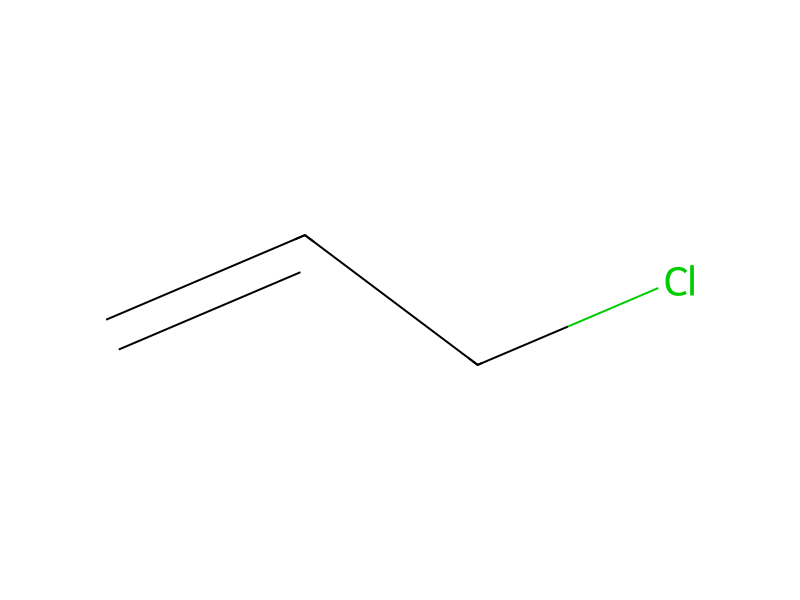
Allyl chloride → N-Allyl-N-(1,1-dimethoxyprop-2-yl)-urethane
Reaction equation

[CH3:1][O:2][CH:3]([O:12][CH3:13])[CH:4]([NH:6][C:7]([O:9][CH2:10][CH3:11])=[O:8])[CH3:5].[H-].[Na+].[H][H].[CH2:18](Cl)[CH:19]=[CH2:20]>C1(C)C=CC=CC=1>[CH2:20]([N:6]([CH:4]([CH3:5])[CH:3]([O:2][CH3:1])[O:12][CH3:13])[C:7]([O:9][CH2:10][CH3:11])=[O:8])[CH:19]=[CH2:18]Participants
6





Conditions
- Temperature
- 90 °C
Procedure
131 g (0.686 mol) of N-(1,1-dimethoxyprop-2-yl)urethane are added dropwise to 25 g of sodium hydride (80% strength) in 700 ml of absolute toluene at 90° C. When the evolution of hydrogen has ended, 61.2 g (0.8 mol) of allyl chloride are added dropwise at 90° C. and the mixture is stirred overnight at 90° C. The sodium chloride which has precipitated out is dissolved with water, the organic phase is separated off, dried over K2CO3 and concentrated and the residue is distilled.
Workup
- customThe sodium chloride which has precipitated out
- dissolutionis dissolved with water
- customthe organic phase is separated off
- dry with materialdried over K2CO3
- concentrationconcentrated
- distillationthe residue is distilled
Sources & evidence
- ORD record
- ord-6f69106455d1494da81173f22870e22c
- Source dataset
- uspto-grants-1991_02
- Patent number
- US04990517
Reaction notes
Loading…